
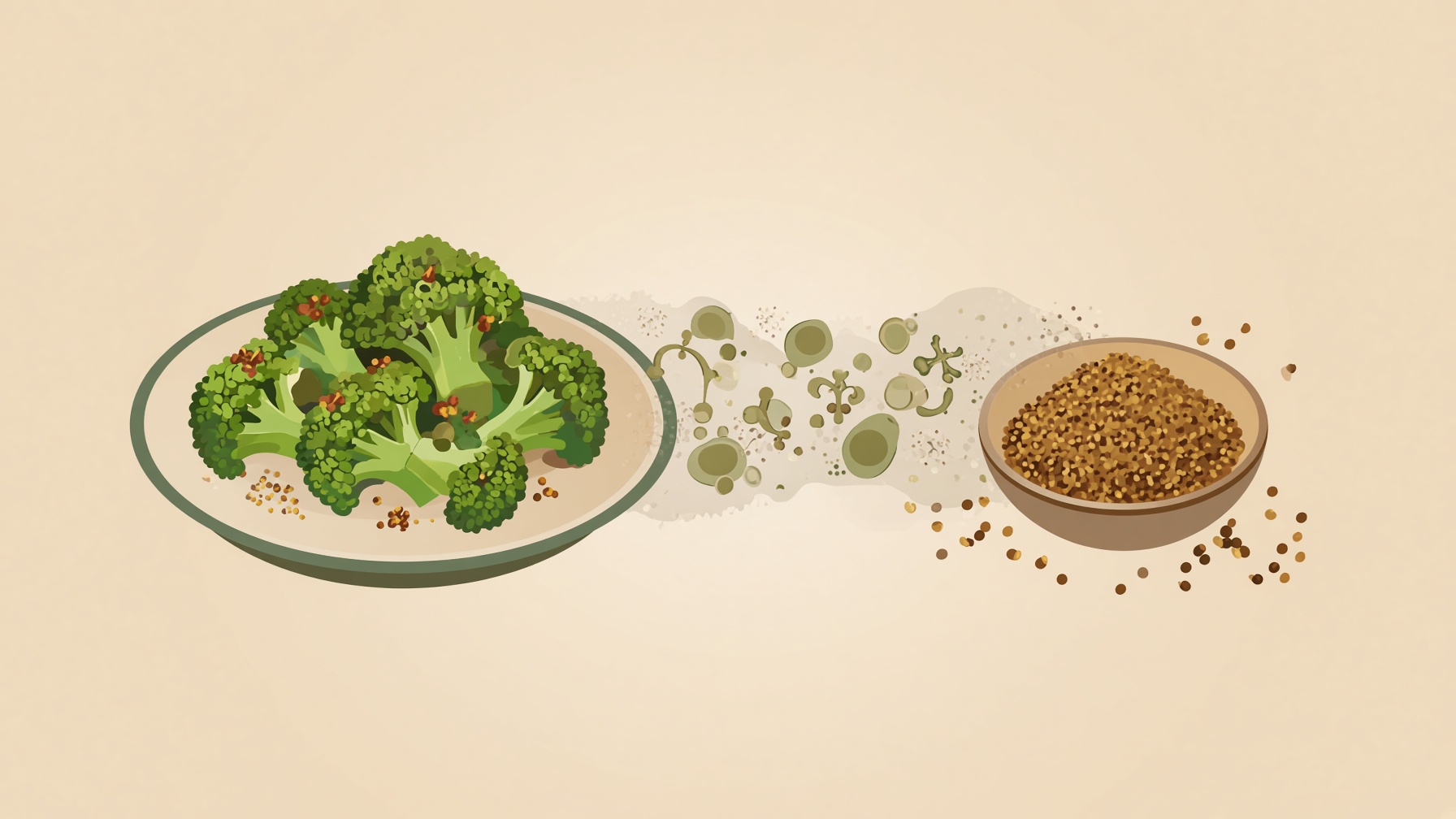
Once broccoli is cooked, seasoning can seem like a question of flavor alone. Does adding ground brown mustard seed at the end change anything beyond the taste?
Broccoli contains glucoraphanin, a precursor from which sulforaphane can form. The enzyme myrosinase initiates that conversion. Enzyme activity helps determine how much of that starting material can be converted into sulforaphane. The amount of starting material in the food is therefore not the same thing as an amount of sulforaphane already formed and ready to be absorbed.1
Under the cooking conditions used in the experiment, the broccoli's myrosinase was inactivated. Ground brown mustard seed offered another source of active enzyme, making further conversion possible. Laboratory tests conducted alongside the human comparison supported this explanation for how the powder could help sulforaphane form.1
Twelve apparently healthy adults each ate the same cooked-broccoli preparation with and without mustard on separate visits in random order. To compare the two versions, the researchers used each person's response to broccoli without mustard as their reference. The broccoli portions were weighed at 200 grams before cooking, then cooled and blended with water into a purée. For the mustard version, 1 gram of ground brown seed was added immediately before serving. Over the following 24 hours, researchers measured a marker called SF-NAC, a breakdown product of sulforaphane, in urine collected throughout that period. Its level was significantly higher after the mustard meal. This small comparison supports greater sulforaphane-related exposure under the tested conditions.1
The human result and laboratory findings address different parts of the same question. The laboratory work supports the conversion explanation, while the meal comparison shows a change after people ate the prepared food. The human test changed the seed powder as a whole, so it did not isolate the enzyme's contribution. Its findings apply to this cooled purée and ground brown seed, rather than every broccoli dish or mustard condiment.1
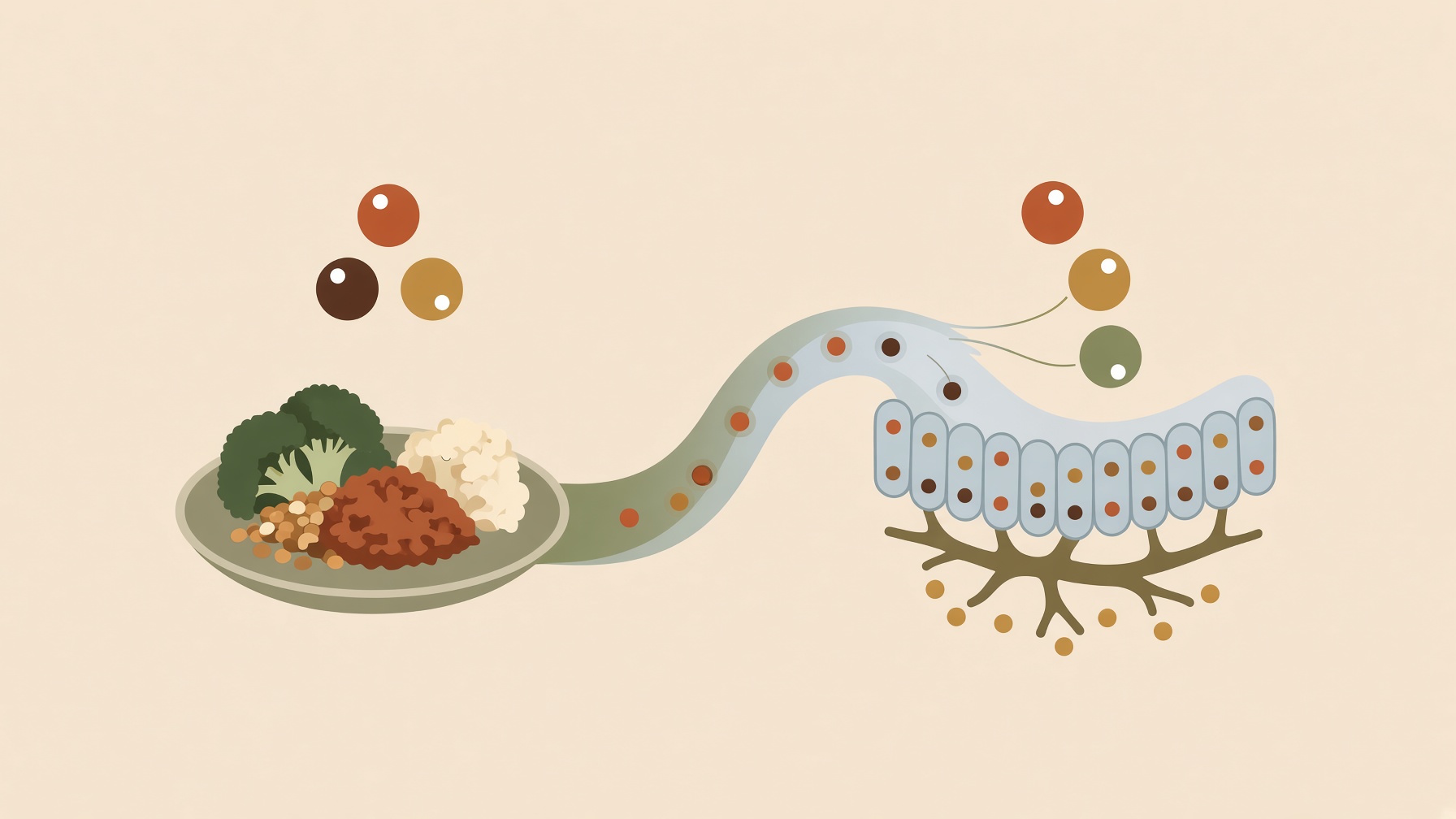
The urinary marker records what happened after the meal, rather than measuring a ready-made amount of sulforaphane on the plate. The measurement reflects how much sulforaphane formed, how much was absorbed, and what happened as the body metabolized and excreted it. That is why the higher result cannot be translated into an absorption percentage or an amount reaching blood or tissues. Health outcomes were not measured: a higher exposure marker does not demonstrate that the meal became healthier.1
The appeal of the mustard idea is straightforward: a small addition to something you're already cooking. That makes it tempting to expect a simple answer about health as well. Keeping the kitchen change separate from the larger health question helps you understand the idea without making it a requirement for every plate of broccoli.


Join the discussion
No account or email is required. Your display name and comment will be public.