
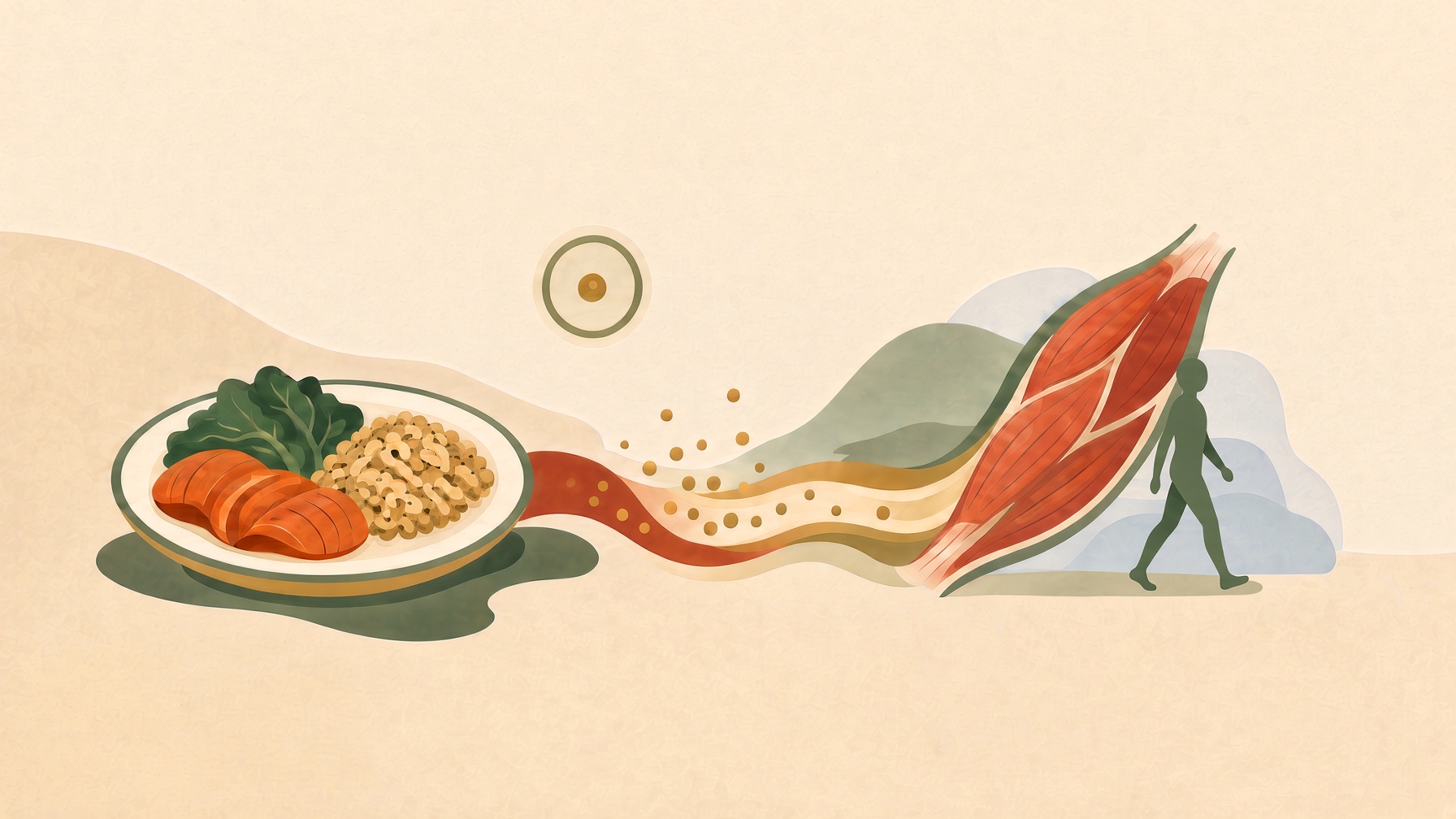
A Short Walk After Eating: What It Changes for Blood Sugar
Walking after meals can reduce post-meal glucose excursions, but studies do not establish one ideal start time or a requirement to walk after every meal.
Wikis
GLUT4 increases glucose entry when insulin or muscle contraction moves more transporters to the cell surface, where glucose crosses down its gradient.
GLUT4 is a glucose transporter protein encoded by the SLC2A4 gene. It is expressed most prominently in skeletal muscle and adipose tissue, where it provides a regulated route for glucose to move from the extracellular space into cells. Unlike transporters that remain largely at the cell surface, much of GLUT4 is stored inside the cell when insulin signaling is low .1,2
After insulin binds its receptor, an intracellular signaling cascade causes GLUT4-containing vesicles to move and fuse with the cell membrane. This translocation increases the number of GLUT4 transporters available at the surface and raises the cell's capacity for glucose uptake. Muscle contraction can also stimulate GLUT4 translocation through signaling pathways that are partly independent of insulin, which helps working muscle increase glucose uptake during exercise .1,2
GLUT4 is therefore not insulin itself and does not actively pump glucose. It is a facilitative transporter that allows glucose to cross the membrane down its concentration gradient when present at the cell surface. Its importance comes from the regulated movement between intracellular storage compartments and the membrane. Altered GLUT4 expression or trafficking can contribute to impaired glucose disposal in insulin-resistant states .1,2
From this collection
Walking after meals can reduce post-meal glucose excursions, but studies do not establish one ideal start time or a requirement to walk after every meal.