
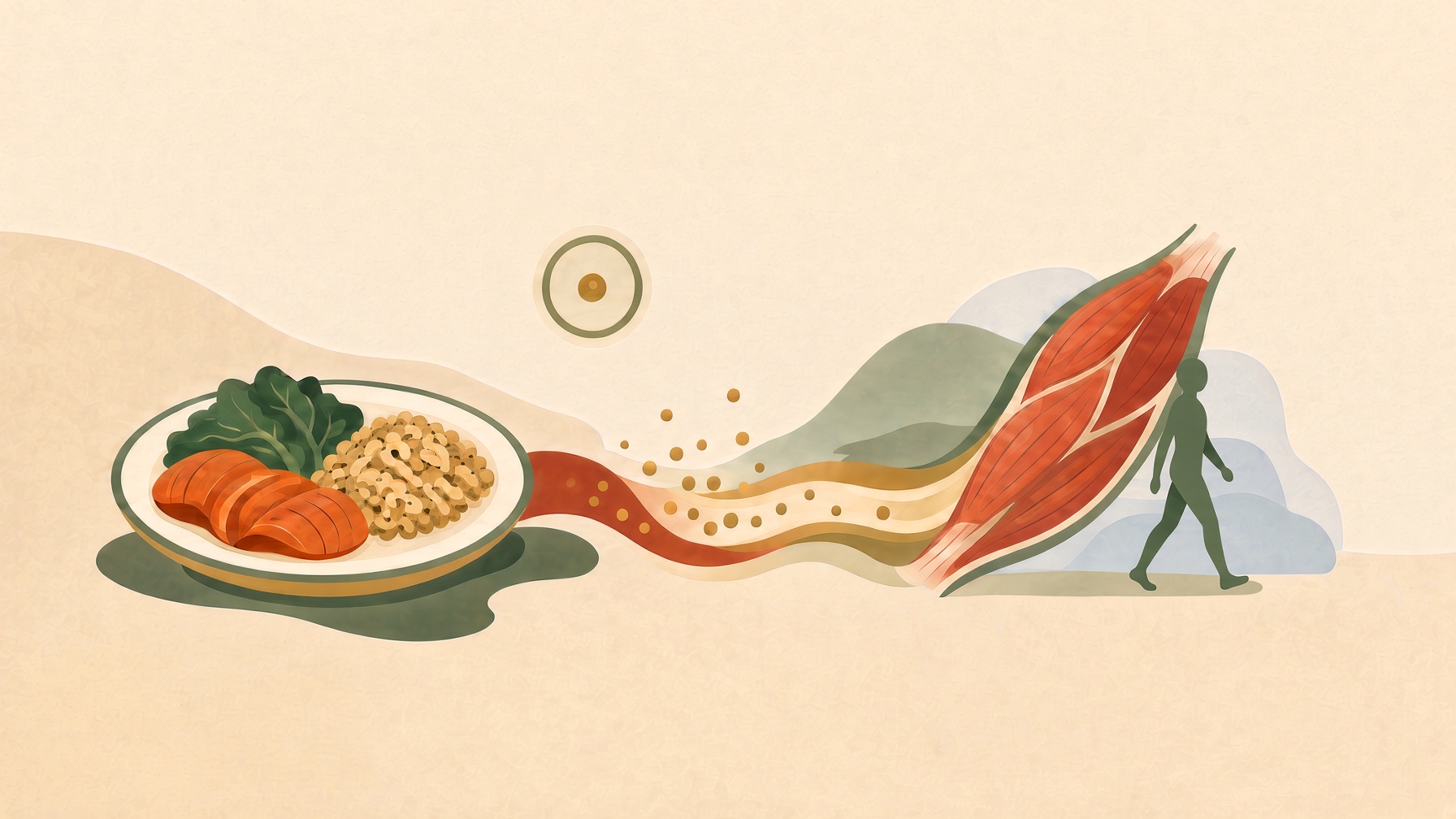
A walk after dinner can feel too ordinary to count as a metabolic strategy. There is no equipment, no workout clothes, and sometimes no more than a few minutes involved. Could the timing of that ordinary walk change what researchers observe after a meal?
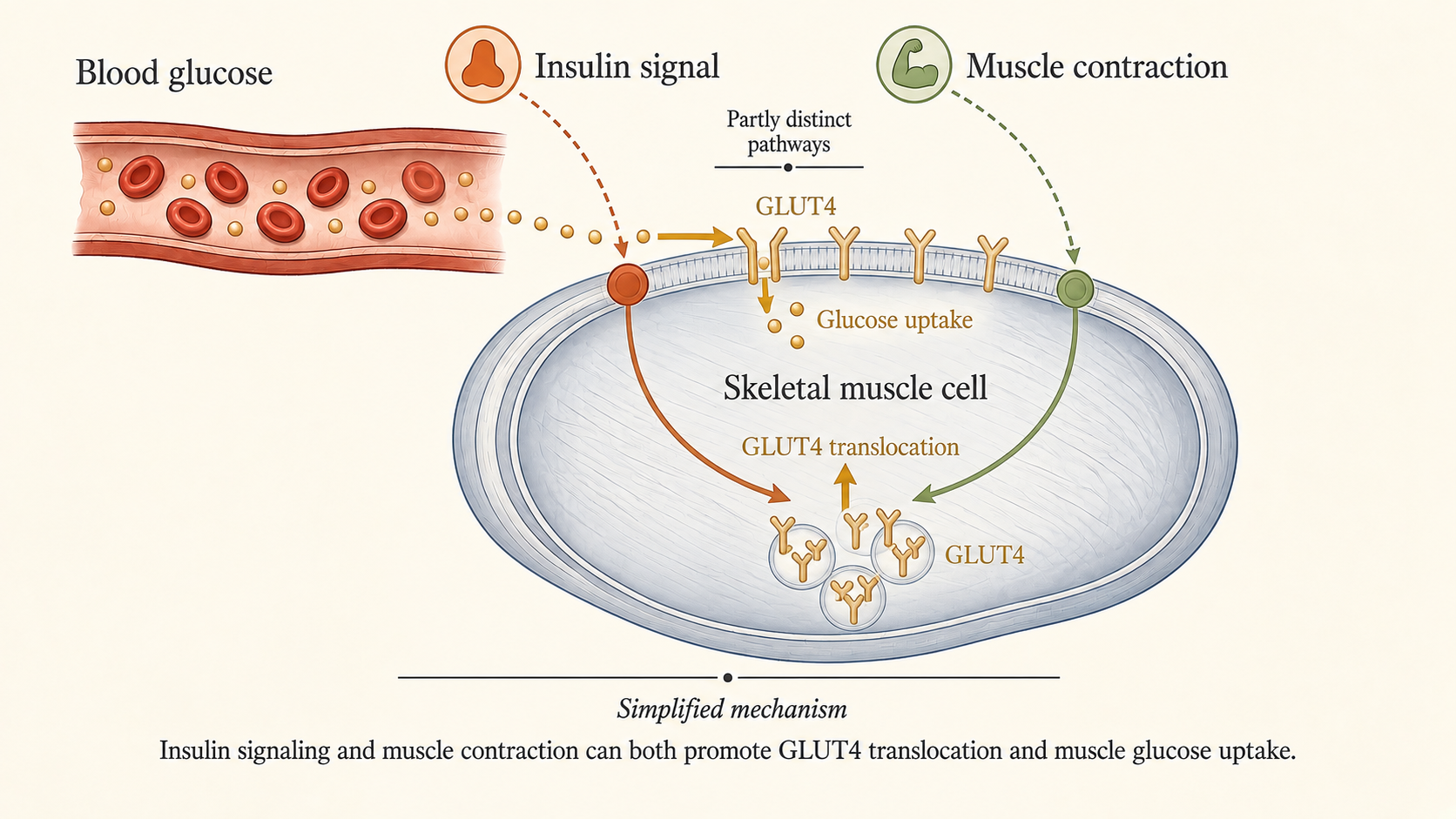
After a meal, glucose entering the bloodstream can be taken up by skeletal muscle. Muscle contraction provides an additional signal for glucose uptake, stimulating movement of the glucose transporter GLUT4 toward the muscle-cell membrane through pathways that are partly distinct from insulin signaling. This helps explain why active muscle can increase glucose uptake even when insulin sensitivity is reduced, as can occur in type 2 diabetes.1
Timing matters because activity can overlap with the period when glucose from a meal is entering circulation. A 2023 systematic review and meta-analysis included eight randomized crossover trials with 116 participants, some with type 2 diabetes and some without. Across the pooled trials, exercise performed after eating reduced post-meal glucose excursions more than either pre-meal exercise or inactivity. Earlier post-meal activity also tended to produce larger effects. The evidence base was small, however, and all included studies were rated at high risk of bias. In participants with type 2 diabetes specifically, post-meal exercise remained favorable compared with inactivity, but the difference from pre-meal exercise was not statistically significant.2
The activity does not have to resemble a conventional workout. In a randomized crossover study of 41 adults with type 2 diabetes, participants were advised either to walk for 30 minutes once daily without a specified relation to meals or to walk for 10 minutes after each of their three main meals. The total prescribed walking time was the same. Continuous glucose monitoring showed lower postprandial glucose exposure with the three post-meal walks, with the largest difference occurring after the evening meal.3
That acute effect should be kept separate from longer-term outcomes. A change in one post-meal glucose curve does not establish an improvement in HbA1c, a marker used to assess longer-term glycemia. The timing strategy needs to be evaluated over a sustained period as well.2,4
Some longer-term evidence suggests that repeated post-meal walking can matter, although the evidence is less secure than the acute findings. In a randomized crossover trial involving 64 people with type 2 diabetes, participants completed 15 minutes of brisk walking after each meal for 60 days and, during another study period, a single 45-minute brisk walk before breakfast each day. The post-meal phase was associated with greater improvements in the measured daily glucose profile and HbA1c than the single pre-breakfast walking phase. But the study had no washout period between interventions, an especially important limitation when interpreting HbA1c, and glucose was assessed with intermittent finger-stick measurements rather than continuous monitoring.4
The broader evidence for exercise is much stronger than the evidence for one exact timing strategy. A 2026 meta-analysis of 100 randomized trials involving 7,195 adults with type 2 diabetes found that continuous aerobic exercise, resistance training, combined training, and high-intensity interval training all reduced HbA1c on average. Post-meal walking is therefore best understood as one practical way to target glucose excursions, not as a replacement for a broader exercise program.5
There is also no universal requirement to walk after every meal. Post-meal glucose responses vary with meal size and composition, metabolic health, and glucose-lowering treatment. The studies support the idea that strategically timed movement can influence the glucose curve, but they do not establish a single optimal start time or a rule that every meal needs to be followed by exercise.2,3
The appeal of a post-meal walk is not that it turns dinner into a medical procedure. It offers a simple question to consider in the space between finishing a meal and settling into the rest of the evening.
Join the discussion
No account or email is required. Your display name and comment will be public.