
Fatty Liver: An Alcohol Problem or a Carb Problem?
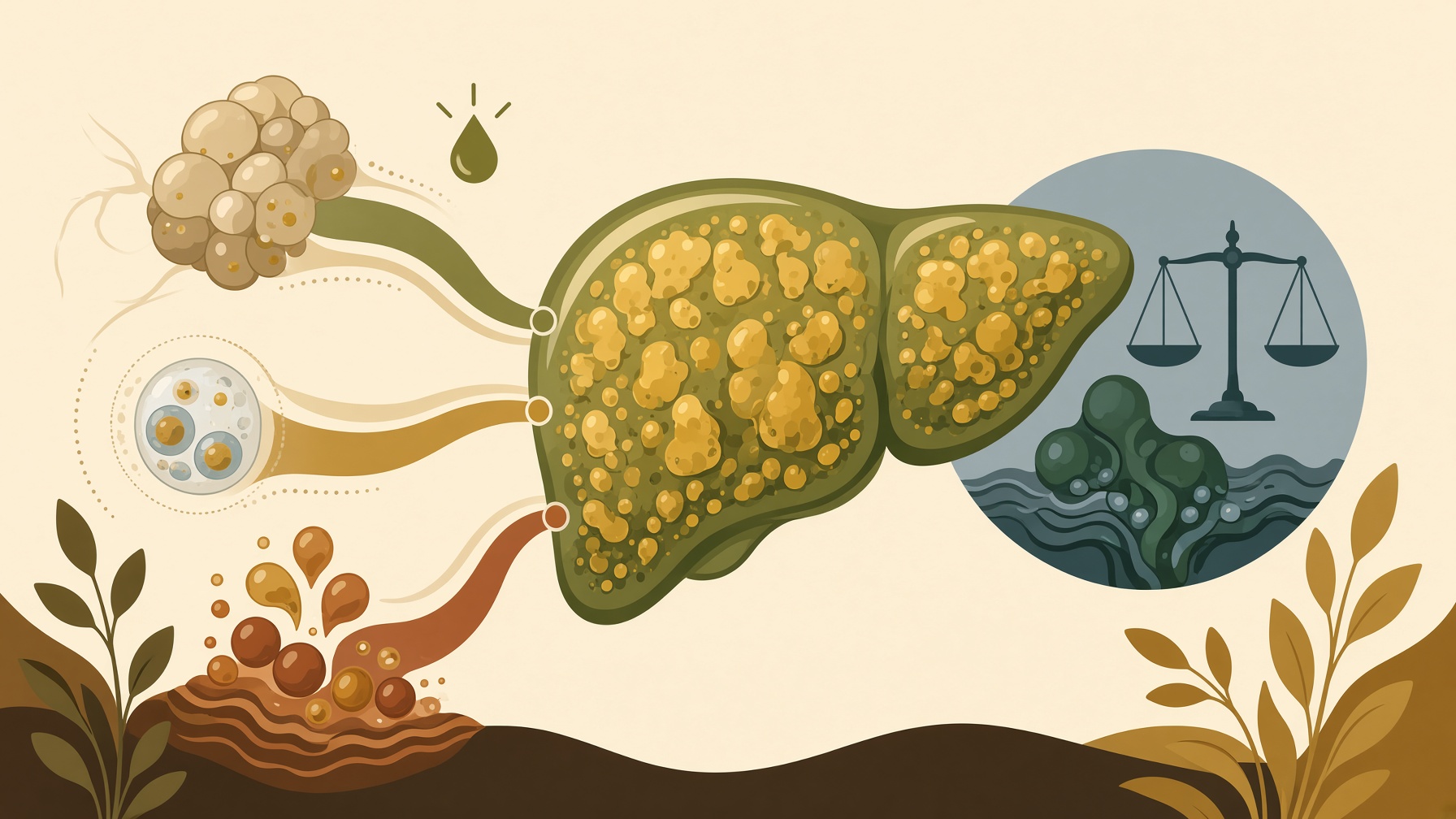
Fatty liver develops when incoming fat and fat synthesis outpace oxidation and export, so carbohydrates alone cannot explain metabolic liver fat.
Wikis
Hepatic steatosis accumulates fat inside liver cells when supply exceeds disposal, describing a tissue finding rather than one disease or liver scarring.
Hepatic steatosis is an abnormal accumulation of fat, mainly triglyceride-rich lipid droplets, within liver cells called hepatocytes. It develops when the flow and synthesis of fatty acids in the liver exceed their disposal through oxidation or export in lipoproteins. Steatosis can range from relatively limited fat accumulation to involvement of a large proportion of hepatocytes .1
Several different processes can lead to hepatic steatosis. These include metabolic dysfunction, substantial alcohol exposure, some medications, and certain infections or other diseases. Steatosis therefore describes a tissue finding rather than one single disease, and its significance depends on the underlying cause and accompanying liver changes .1
Hepatic steatosis should also be distinguished from liver inflammation and fibrosis. Fat can be present without major inflammatory injury or scar formation, although these processes can coexist and may develop in some forms of liver disease. Imaging can estimate liver fat noninvasively, while histology can directly show intracellular lipid and other tissue changes. The term itself refers specifically to fat accumulation in the liver .1
From this collection
Fatty liver develops when incoming fat and fat synthesis outpace oxidation and export, so carbohydrates alone cannot explain metabolic liver fat.