
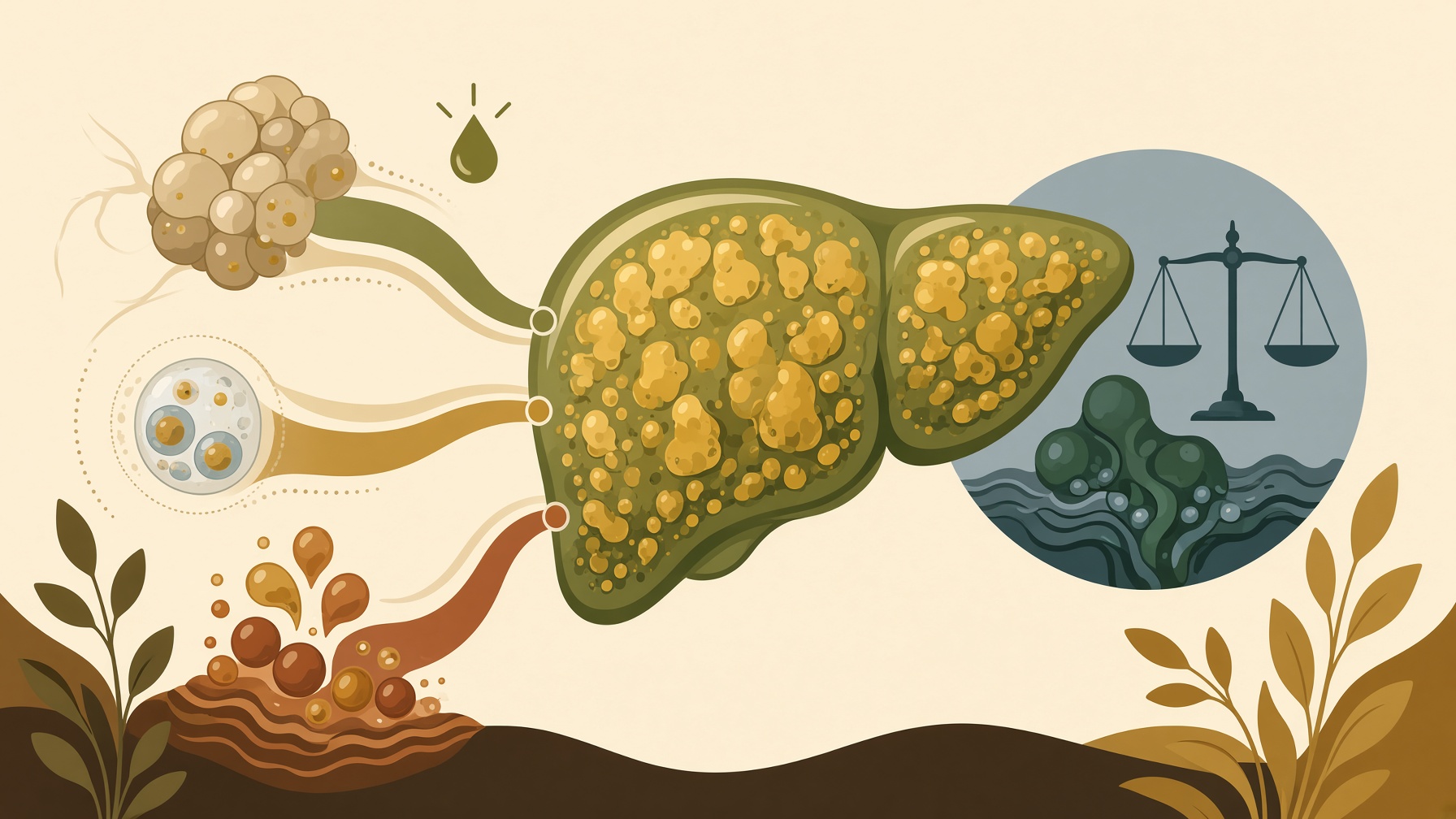
Fatty liver still invites a search for a culprit. For one person, the obvious suspect is alcohol; for another, it is sugar, bread, or carbohydrates in general. The story becomes more interesting when no single nutrient is allowed to carry the whole case.
Modern liver medicine uses the term metabolic dysfunction-associated steatotic liver disease, or MASLD, for hepatic steatosis that occurs alongside cardiometabolic risk. Alcohol still matters, but metabolic fatty liver is not simply a diagnosis made by ruling alcohol out. The more useful starting point is that several metabolic pathways can contribute to fat accumulating in the liver.1
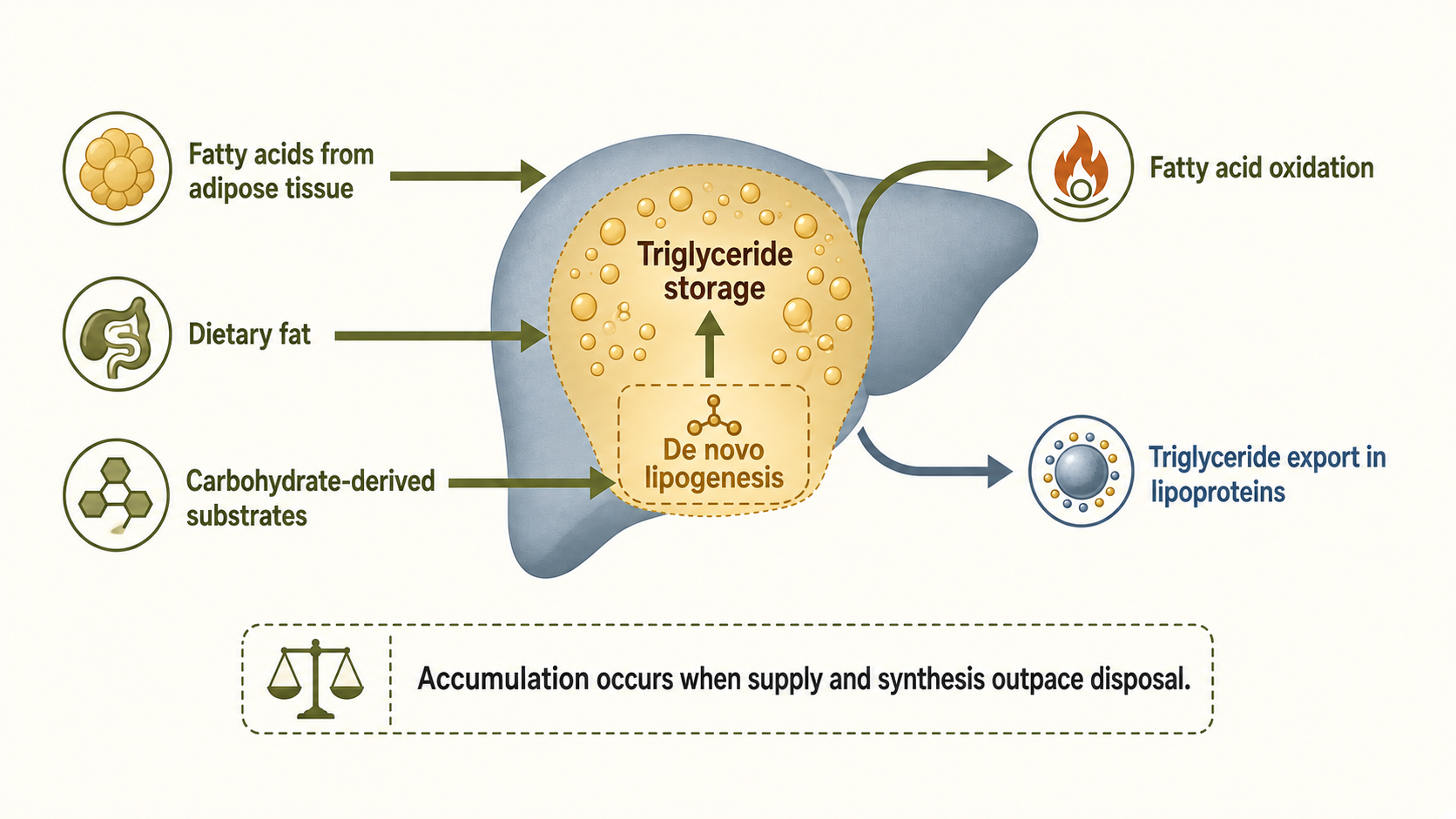
Carbohydrates do have one route into liver fat. Through de novo lipogenesis, the liver can convert carbohydrate-derived substrates into fatty acids. But liver triglycerides can also be built from fat arriving directly from food and, importantly, from circulating fatty acids released by adipose tissue. In a small human tracer study, circulating fatty acids supplied the largest estimated share of the fat stored in the liver, while de novo lipogenesis and dietary fat contributed smaller shares. The exact percentages varied and should not be treated as universal, but the study shows why MASLD cannot be reduced to a single nutrient pathway.2,3
The liver also has ways to dispose of fat: fatty acids can be oxidized for energy, and triglycerides can be exported in lipoproteins. Liver fat rises when incoming supply and synthesis outpace those disposal pathways. MASLD is therefore better understood as an imbalance among several interacting processes than as a simple conversion of one food into liver fat.2
Sugar becomes particularly relevant when food source and excess energy are considered together. A meta-analysis of controlled trials found that fructose-containing sugars increased liver fat when they were added to the diet as extra calories, with sugar-sweetened beverages showing the clearest adverse signal. When sugars replaced other sources of energy without raising total calorie intake, the overall analysis did not show the same increase. That does not make every source of carbohydrate equivalent; it means both the food and the energy context matter.4
Fat source matters too. In a short randomized overfeeding experiment, excess calories from saturated fat produced a larger increase in liver fat than the same excess from unsaturated fat, while simple sugars strongly stimulated de novo lipogenesis. The study was deliberately extreme and should not be translated directly into ordinary eating, but it reinforces the same point: equal excess energy from different sources can have different metabolic effects, and neither carbohydrate nor fat tells the whole story by itself.5
That is why current MASLD guidance does not revolve around eliminating one macronutrient. It emphasizes sustained weight loss when appropriate, regular physical activity, and overall diet quality, including limiting sugar-sweetened beverages, refined carbohydrates, and foods high in saturated fat while favoring patterns rich in vegetables, fruits, legumes, whole grains, nuts, olive oil, and fish.1
The liver is hidden enough to make simple explanations especially attractive. But replacing “alcohol did it” with “carbs did it” does not make the story more accurate. Liver fat reflects the balance among fatty acids arriving from adipose tissue and food, fat created through de novo lipogenesis, and the liver’s ability to oxidize or export that fat.2,3
The more useful question is not which nutrient is guilty. It is why several metabolic pathways have begun pointing toward the same organ.
Join the discussion
No account or email is required. Your display name and comment will be public.