
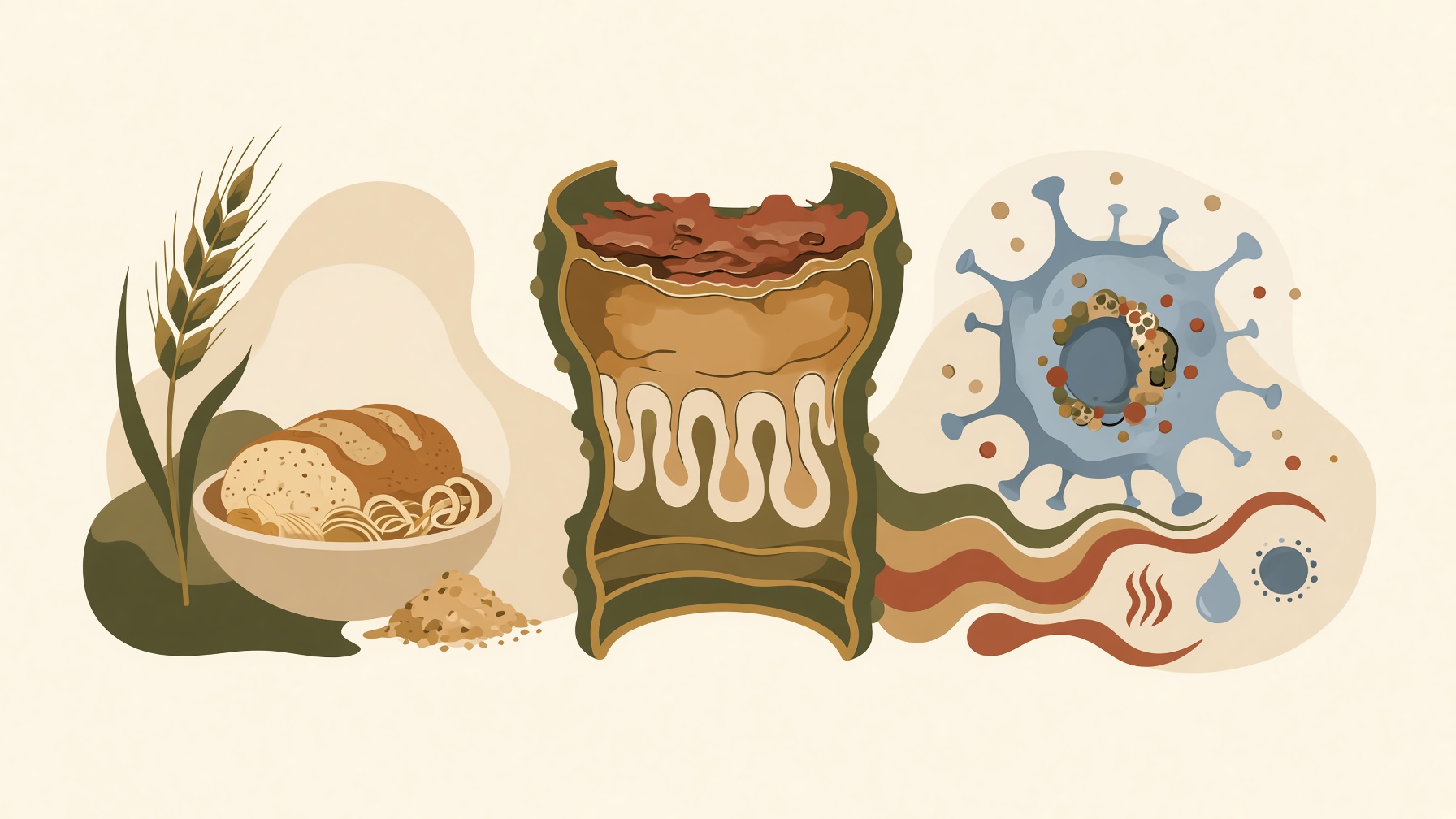
Why Celiac Disease Is Different from a Food Allergy
Celiac disease causes gluten-triggered autoimmune damage to the small intestine, a different immune process from the reactions behind food allergy.
Wikis
IgE-mediated food allergy is a type of food allergy in which immunoglobulin E, or IgE, antibodies mediate an allergic reaction to specific food allergens, usually proteins. It is characterized by reproducible symptoms after exposure to the triggering food and typically produces reactions within minutes to a few hours. It is one of several immune mechanisms that can underlie food allergy .1,2
The process involves sensitization, during which the immune system produces IgE antibodies that recognize the food allergen. These antibodies bind to high-affinity IgE receptors on immune cells, particularly mast cells and basophils. During a later exposure, the allergen can cross-link allergen-specific IgE on these cells, triggering rapid release of histamine and other inflammatory mediators .2
The resulting reaction can affect several organ systems. Manifestations may include hives or swelling, gastrointestinal symptoms, respiratory symptoms, and cardiovascular effects. Reactions vary in severity, and IgE-mediated food allergy can cause anaphylaxis, a potentially life-threatening systemic allergic reaction .1,2
IgE-mediated food allergy is not the same as IgE sensitization. Detectable food-specific IgE on a blood test or a positive skin-prick test shows allergic sensitization but does not by itself prove that eating the food causes symptoms. Diagnosis therefore combines the clinical history with tests for sensitization, and an oral food challenge is a reference standard when the diagnosis remains uncertain .1
From this collection
Celiac disease causes gluten-triggered autoimmune damage to the small intestine, a different immune process from the reactions behind food allergy.