
What Makes Air Move In and Out of Your Lungs?
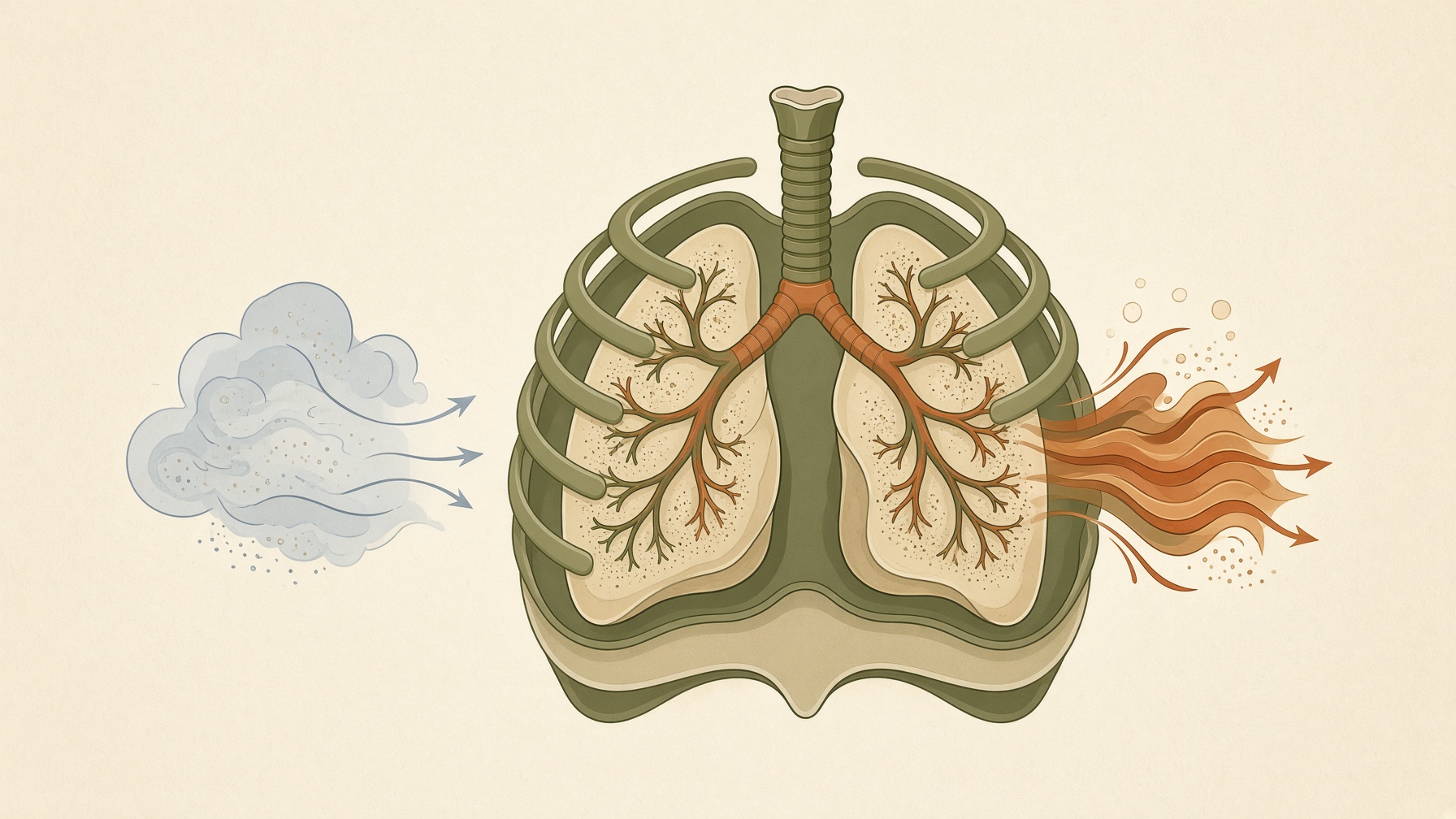
Breathing moves air through pressure differences created as the lungs expand and recoil, with airflow traveling from higher to lower pressure.
Wikis
Intrapleural pressure, also called pleural pressure, is the pressure within the pleural space between the visceral pleura covering the lungs and the parietal pleura lining the inside of the chest wall. During normal quiet spontaneous breathing, this pressure is usually lower than atmospheric pressure and is therefore often described as negative or subatmospheric .1,2
This pressure relationship arises from opposing elastic forces. At resting lung volume, the lungs tend to recoil inward while the chest wall tends to recoil outward. Because the two pleural surfaces are mechanically coupled by a thin layer of pleural fluid, these opposing forces create subatmospheric pressure within the pleural space and help keep the lungs expanded against the chest wall .1,2
Intrapleural pressure changes during breathing. When the diaphragm and other inspiratory muscles expand the chest during inspiration, intrapleural pressure becomes more negative. This increases the pressure that distends the lungs, allowing them to expand. During quiet expiration, the inspiratory muscles relax and intrapleural pressure becomes less negative as the respiratory system returns toward its resting configuration .1,2
Intrapleural pressure is distinct from alveolar pressure, which is the pressure of gas inside the alveoli. The difference between alveolar pressure and intrapleural pressure is called transpulmonary pressure. This pressure difference represents the distending pressure across the lung and helps determine lung volume .2
From this collection
Breathing moves air through pressure differences created as the lungs expand and recoil, with airflow traveling from higher to lower pressure.