
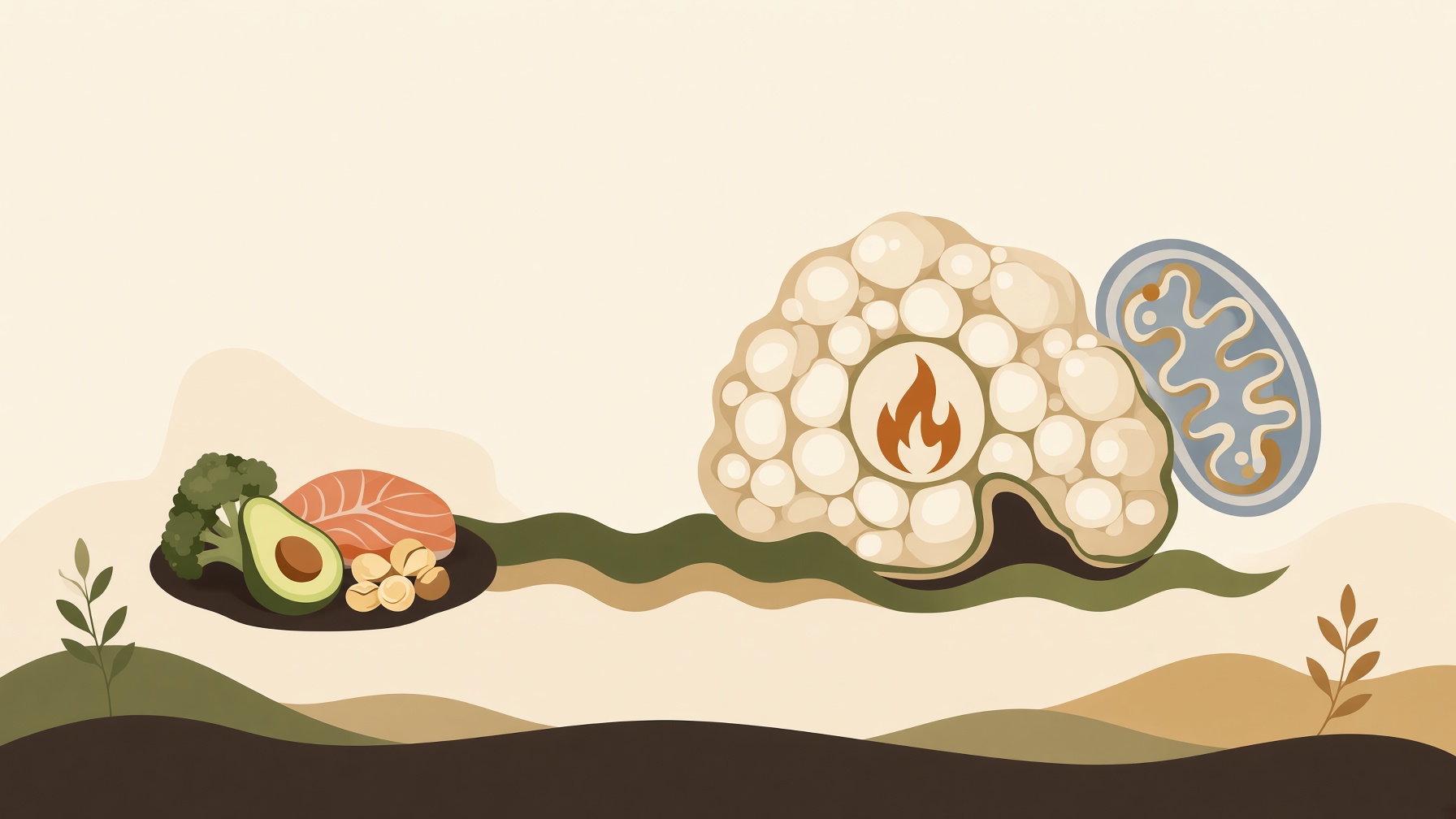
Why Fat Burning Is Not the Same as Fat Loss
Low-carbohydrate diets can increase fat burning, but losing stored body fat still requires an energy deficit sustained over time.
Wikis
Lipolysis is the enzymatic breakdown of triacylglycerols, also called triglycerides, into fatty acids and glycerol. It occurs in many tissues but is especially important in adipose tissue, where large amounts of energy are stored as triglycerides inside lipid droplets. Lipolysis makes stored fatty acids available for metabolism within adipose tissue or by other tissues .1,2
In adipocytes, triglyceride breakdown occurs through a sequence of reactions. Adipose triglyceride lipase (ATGL) converts triacylglycerol to diacylglycerol while releasing a fatty acid. Hormone-sensitive lipase (HSL) primarily hydrolyzes diacylglycerol to monoacylglycerol, and monoacylglycerol lipase completes the process by hydrolyzing monoacylglycerol to glycerol and a fatty acid. Released fatty acids can enter the circulation or be re-esterified into triglycerides within the cell .1,2
Lipolysis is tightly regulated according to metabolic conditions. During fasting or increased energy demand, catecholamine signaling can stimulate adipocyte lipolysis through pathways involving cyclic AMP and protein kinase A. Insulin generally suppresses adipose-tissue lipolysis, helping favor triglyceride storage when nutrients are readily available .1,2
Lipolysis is distinct from fat oxidation. Lipolysis makes fatty acids available by releasing them from triglycerides, whereas fat oxidation breaks down fatty acids, mainly through beta-oxidation, so that their energy can contribute to ATP production. An increase in lipolysis therefore does not necessarily mean that all released fatty acids will be oxidized, because some can be re-esterified and stored again .1,2
From this collection
Low-carbohydrate diets can increase fat burning, but losing stored body fat still requires an energy deficit sustained over time.