

Low-carbohydrate diets are often explained through a simple chain of events: eat fewer carbohydrates, lower insulin, burn more fat, and therefore lose more body fat. Parts of that sequence are physiologically real. The problem is the final leap. Changing which fuel the body is using at a particular moment is not the same thing as guaranteeing a net reduction in stored body fat over time.
Low-carbohydrate diets reduce carbohydrate intake, but they do so to varying degrees. Depending on the plan, portions of grains, fruits, and starchy vegetables may be restricted, although these foods are not excluded by every low-carbohydrate diet. The insulin part of the explanation also has a genuine physiological basis. Insulin suppresses lipolysis, reducing the breakdown and release of stored fat from adipose tissue, and it helps regulate glucose uptake, use, and storage. Carbohydrate restriction can reduce post-meal insulin secretion and may lower average circulating insulin levels, although the magnitude depends on energy intake, weight change, and metabolic status. That response is not identical in every situation, however. Energy balance, protein intake, metabolic status, and changes in body weight can all influence the insulin response to a lower-carbohydrate diet .1,3
Carbohydrate restriction can also increase fat oxidation, meaning that a greater share of fuel being used at a given time comes from fat. But greater fat oxidation should not automatically be interpreted as greater loss of stored body fat. The body can oxidize more fat while also taking in and storing energy. For body-fat stores to decline over time, total energy expenditure must exceed total energy intake over that period. Energy balance therefore remains a fundamental determinant of changes in body weight and body fat during low-carbohydrate dieting just as it does with other dietary patterns. Lower insulin and altered fuel use are meaningful metabolic changes, but reduced insulin by itself is not sufficient to guarantee that stored body fat will shrink .1
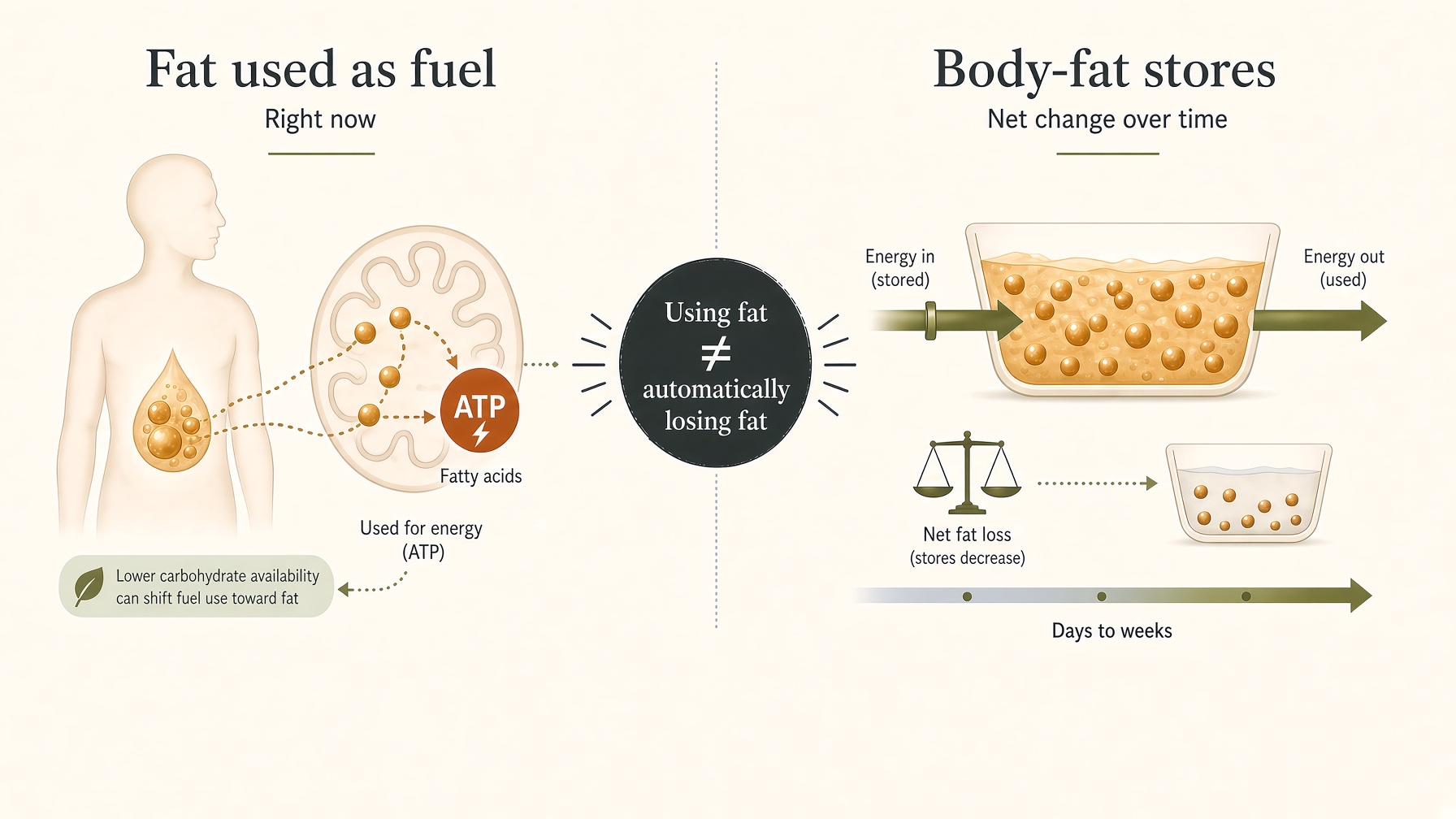
None of this means low-carbohydrate diets cannot work for weight loss. They can. The more useful question is whether their proposed insulin mechanism gives them a unique long-term advantage over other weight-loss approaches. Over periods of roughly one to two years, low-carbohydrate and other calorie-controlled diets with different macronutrient distributions generally produce similar average weight loss. It does show why the ability of a low-carbohydrate diet to reduce insulin or increase fat oxidation should not be confused with proof that it will necessarily produce greater long-term weight loss than a balanced-carbohydrate diet .2
Carbohydrate percentage also does not tell you everything about the nutritional quality or broader effects of a diet. Some low-carbohydrate patterns emphasize whole, minimally processed foods, and many reduce refined grains and added sugars. Neither feature is guaranteed simply because a diet carries the low-carbohydrate label. Two diets with similar carbohydrate levels can therefore look quite different in the foods they contain. Low-carbohydrate diets can also improve some cardiometabolic risk factors, including triglycerides and glycemic control, but those effects vary among people and outcomes, and some lipid markers can worsen. Evaluating the diet requires looking beyond carbohydrate quantity to the foods chosen and the pattern's broader metabolic effects .3
The strongest version of the low-carbohydrate claim goes too far. Carbohydrate restriction can lower insulin exposure, increase fat oxidation, and produce weight loss, but those facts do not make energy balance disappear. Net loss of stored body fat still requires an energy deficit over time, and longer-term average weight loss is generally similar to that seen with balanced-carbohydrate approaches. What ultimately matters is not only how much carbohydrate a diet contains, but also the foods within the pattern and its broader cardiometabolic effects.

Join the discussion
No account or email is required. Your display name and comment will be public.