
What Happens to Food Before It Reaches Your Stomach?
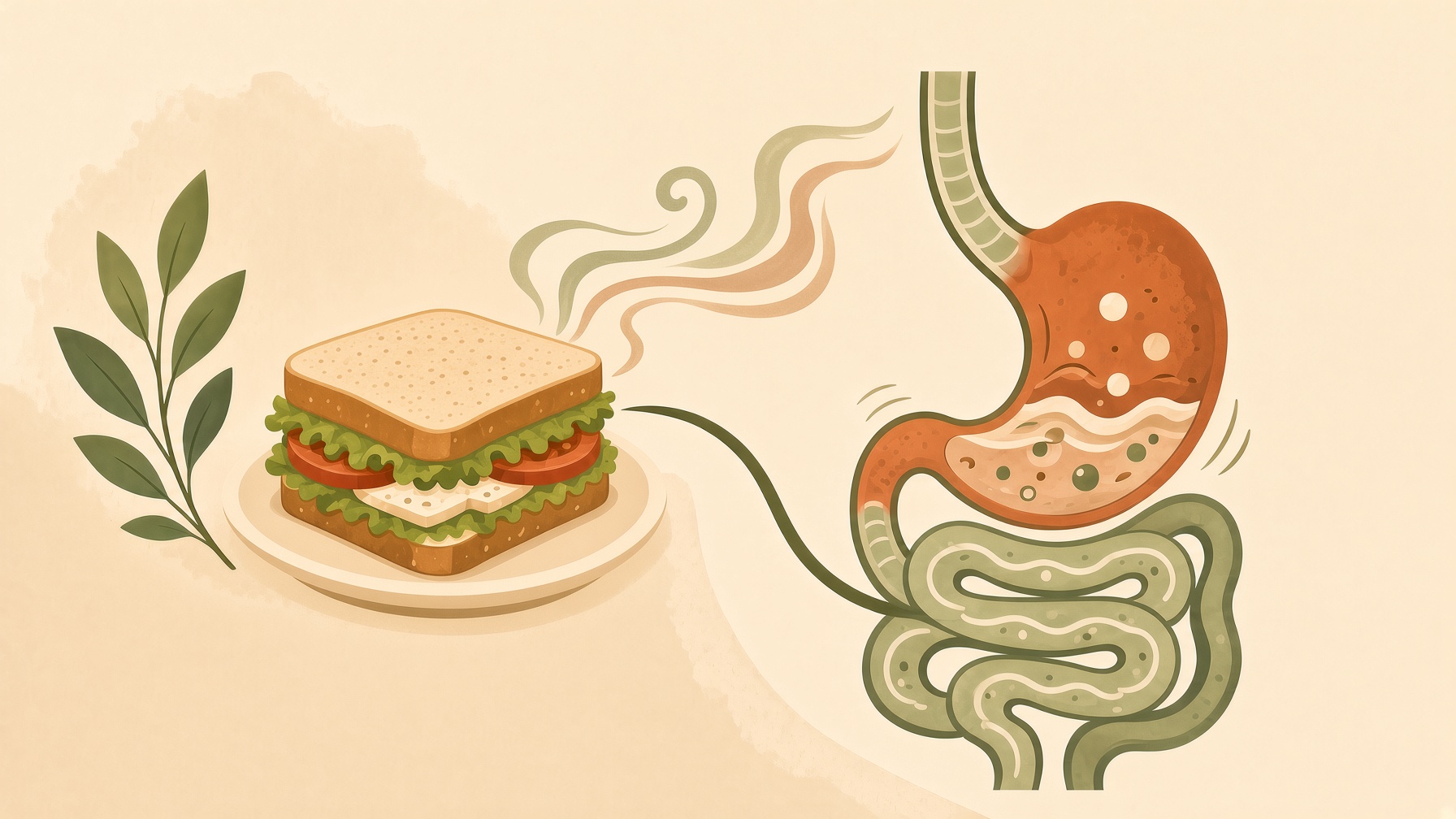
Digestion starts with chewing and starch breakdown in the mouth, while swallowing moves food toward a stomach already preparing for the meal.
Wikis
The lower esophageal sphincter, or LES, is a specialized high-pressure zone at the junction between the esophagus and stomach. Its main function is to help prevent the backward movement, or reflux, of stomach contents into the esophagus while allowing swallowed food and liquid to enter the stomach .1,2
At rest, smooth muscle in the LES maintains a degree of continuous contraction called tonic contraction. During swallowing, inhibitory nerve signals cause the sphincter to relax, allowing the swallowed bolus to pass into the stomach as the esophageal peristaltic wave progresses. After the bolus has passed, sphincter pressure returns toward its resting level .1
Despite its name, the LES is not simply a distinct circular ring of muscle. The pressure barrier at the gastroesophageal junction is produced by interacting components, including smooth muscle in the lower esophagus and the surrounding crural diaphragm, which provides an additional external sphincter-like component .1,2
The LES can also relax independently of swallowing. These transient lower esophageal sphincter relaxations are normal physiological events that can permit the release of gas from the stomach, such as during belching. Because they temporarily reduce the antireflux barrier, they can also allow stomach contents to enter the esophagus .1
From this collection
Digestion starts with chewing and starch breakdown in the mouth, while swallowing moves food toward a stomach already preparing for the meal.