
Fatty Liver: An Alcohol Problem or a Carb Problem?
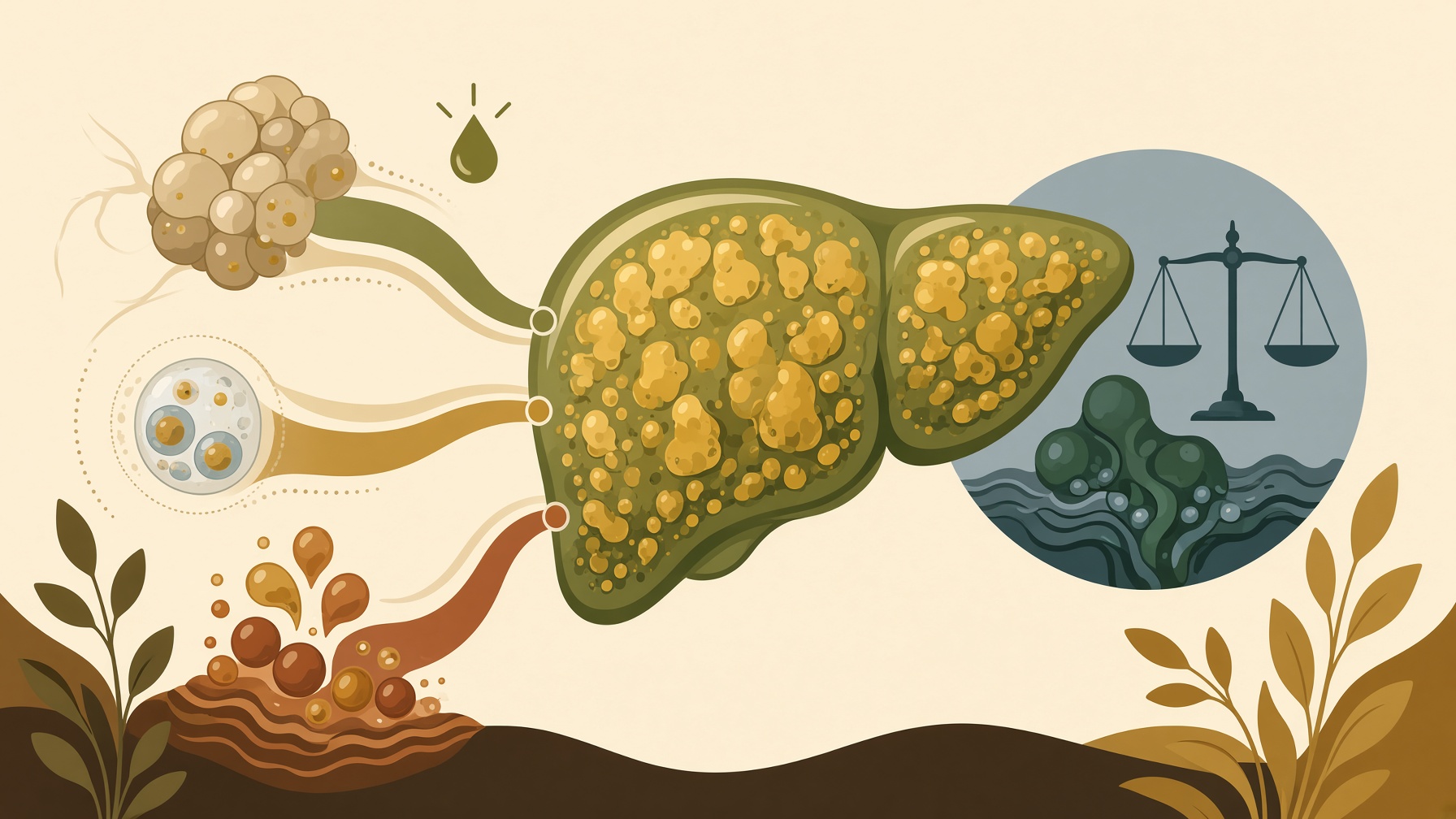
Fatty liver develops when incoming fat and fat synthesis outpace oxidation and export, so carbohydrates alone cannot explain metabolic liver fat.
Wikis
MASLD classifies excess liver fat alongside specified cardiometabolic risk, with categories that distinguish metabolic disease from other causes.
Metabolic dysfunction-associated steatotic liver disease, or MASLD, is a category of steatotic liver disease defined by excess fat in the liver together with at least one specified cardiometabolic risk factor, in the absence of another condition that places the person in a different steatotic-liver-disease category. The name was introduced through a multisociety consensus process in 2023 .1
The defining liver feature is hepatic steatosis, meaning abnormal triglyceride accumulation in hepatocytes. The metabolic criteria capture features such as excess adiposity, abnormal glucose regulation, elevated blood pressure, or atherogenic lipid patterns. MASLD can exist with simple steatosis or with additional inflammation, cell injury, and fibrosis. The latter inflammatory phenotype is termed metabolic dysfunction-associated steatohepatitis, or MASH .1
MASLD replaced the older term nonalcoholic fatty liver disease, or NAFLD, in the new nomenclature. The change was intended to use a positive metabolic definition rather than defining the condition mainly by absence of substantial alcohol use. MASLD is also distinct from MetALD, which describes steatotic liver disease with metabolic dysfunction plus alcohol intake within a specified higher range. These categories are definitions used to classify disease mechanisms and risk, not descriptions of liver fat alone .1
From this collection
Fatty liver develops when incoming fat and fat synthesis outpace oxidation and export, so carbohydrates alone cannot explain metabolic liver fat.