
What Happens to Food Before It Reaches Your Stomach?
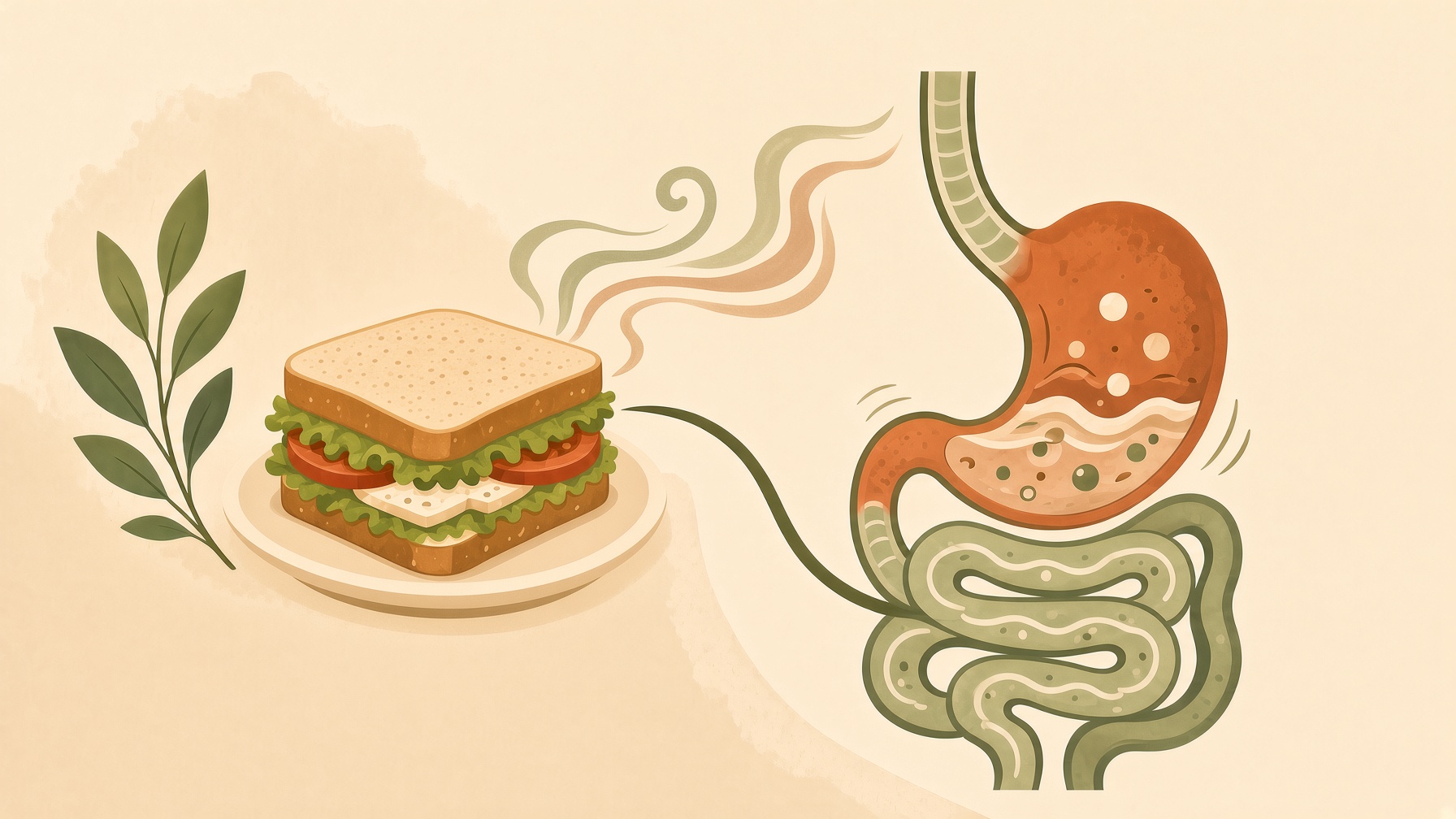
Digestion starts with chewing and starch breakdown in the mouth, while swallowing moves food toward a stomach already preparing for the meal.
Wikis
Mastication is the process of chewing food in preparation for swallowing. It involves coordinated movements of the jaw, teeth, tongue, and muscles of the face and mouth. These movements break food into smaller particles and repeatedly reposition it between the teeth so that it can be formed into a mass suitable for swallowing .1
Saliva is an important part of mastication. As chewing proceeds, saliva moistens and lubricates food particles and helps bind them into a cohesive mass called a bolus. The properties of the food influence this process. Food hardness and texture can affect chewing force, jaw movements, and the number of chewing cycles before swallowing .1,2
Mastication is a form of mechanical food processing because it physically breaks down and reorganizes food. It is distinct from chemical digestion, which involves enzymes and other processes that break larger molecules into smaller components. Some chemical digestion can begin in the mouth while mastication is taking place, but mastication itself refers specifically to the mechanical and sensory-motor processing of food .1,3
Mastication also differs from swallowing, or deglutition. Mastication prepares food and forms a suitable bolus, whereas swallowing is the subsequent coordinated process that transfers the bolus from the mouth through the pharynx and esophagus toward the stomach .1,2
From this collection
Digestion starts with chewing and starch breakdown in the mouth, while swallowing moves food toward a stomach already preparing for the meal.