
How Your Body Digests and Absorbs Dietary Fat
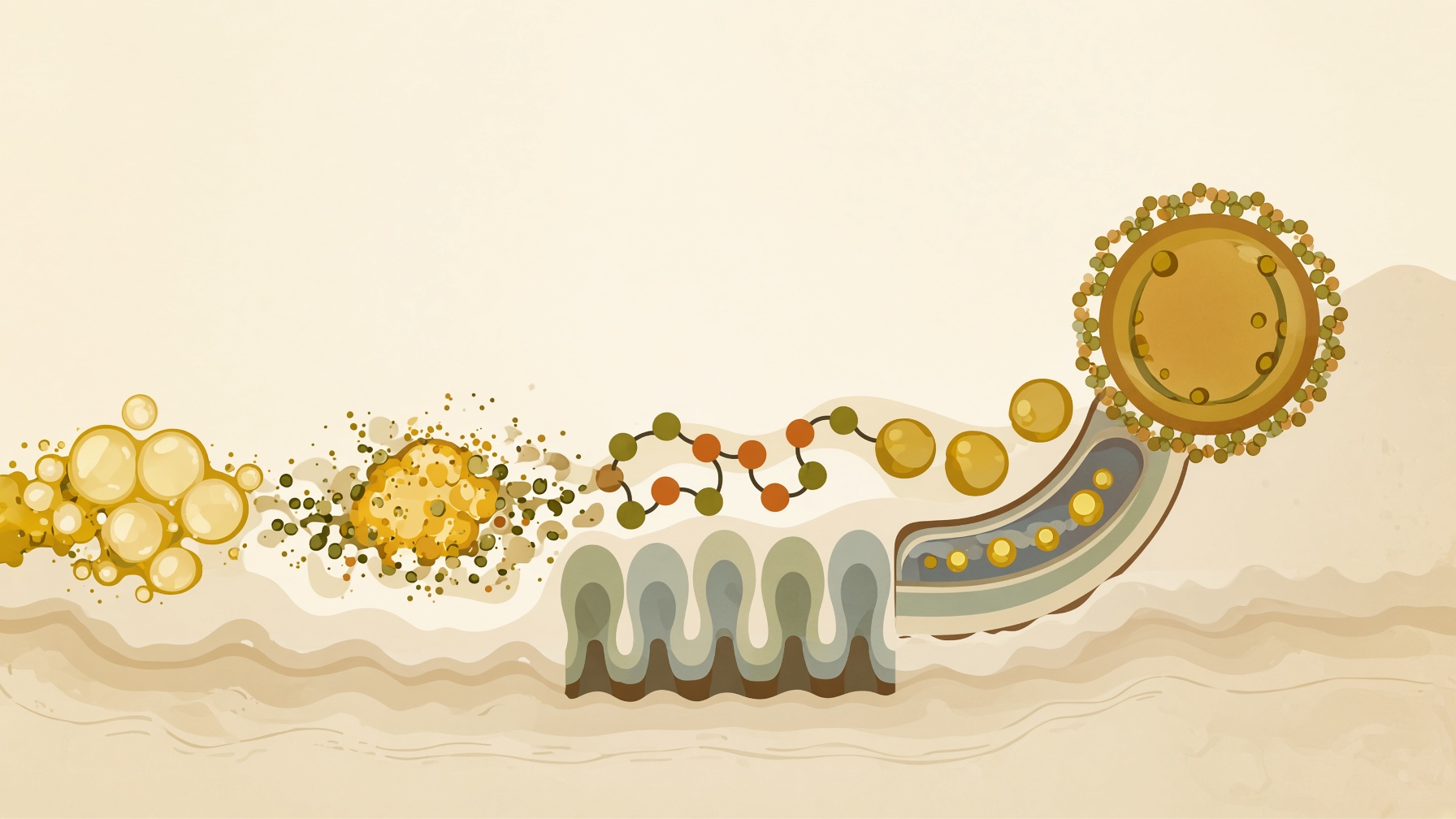
Dietary fat digestion combines physical dispersal by bile salts with enzyme breakdown, producing lipid components that intestinal cells can absorb.
Wikis
A monoacylglycerol (MAG) is a glycerolipid consisting of a glycerol molecule with one fatty acyl group attached by an ester bond. Because glycerol has three carbon positions, the fatty acyl group can be attached at different sites. The main positional forms are 1-monoacylglycerol and 2-monoacylglycerol. The older term “monoglyceride” is also widely used for monoacylglycerol .1
Monoacylglycerols are important intermediates in dietary fat digestion. Most dietary fat is present as triacylglycerol, which contains three fatty acyl groups attached to glycerol. In the small intestine, pancreatic lipase preferentially removes fatty acids from the first and third positions of triacylglycerol. This produces free fatty acids and predominantly 2-monoacylglycerol, which are incorporated into mixed micelles and delivered to the surface of enterocytes for absorption .2
After entering an enterocyte, monoacylglycerol can be used to rebuild triacylglycerol. Monoacylglycerol acyltransferase adds a fatty acyl group from fatty acyl-CoA to produce diacylglycerol, and diacylglycerol acyltransferase adds another to produce triacylglycerol. Much of this newly synthesized triacylglycerol is then packaged into chylomicrons for transport from the intestine through the lymphatic system .2,3
Monoacylglycerol is therefore distinct from glycerol, diacylglycerol, and triacylglycerol. Glycerol has no fatty acyl groups attached, whereas monoacylglycerol has one, diacylglycerol has two, and triacylglycerol has three. These molecules participate in related pathways of lipid digestion, synthesis, and metabolism .1,2
From this collection
Dietary fat digestion combines physical dispersal by bile salts with enzyme breakdown, producing lipid components that intestinal cells can absorb.