
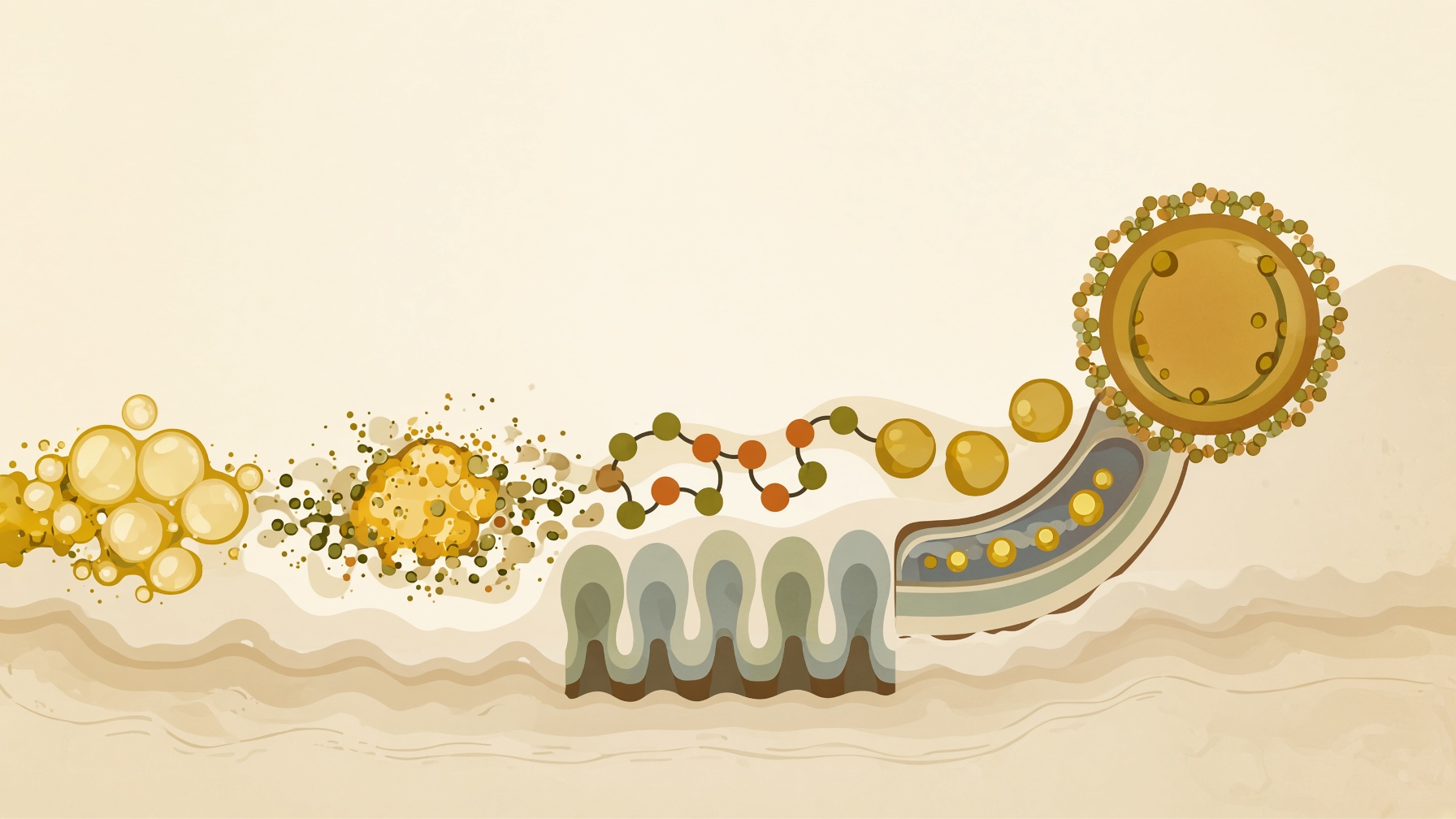
Dietary fat has to pass through several steps before the intestine can absorb and process it. Because triglycerides do not mix easily with the watery environment of the digestive tract, their digestion depends on both physical changes and enzymatic reactions. What begins as large dietary fat droplets is gradually transformed into lipid components that can reach and enter intestinal cells.
Dietary triglycerides undergo extensive digestion in the small intestine, although some lipid digestion begins earlier in the mouth and stomach. Here, bile salts help emulsify dietary fat, physically dispersing it rather than chemically hydrolyzing the triglycerides. That emulsification facilitates the action of pancreatic lipase, a principal enzyme involved in small-intestinal triglyceride digestion. Bile salts and pancreatic lipase therefore participate in complementary but distinct steps: one helps disperse the fat, while the other performs enzymatic digestion .1
Pancreatic lipase hydrolyzes dietary triglycerides, producing free fatty acids and 2-monoacylglycerol. These digestion products can associate with bile salts in mixed micelles, which help keep them dispersed in the watery intestinal environment and bring them close to the surface of enterocytes. The lipid components can then leave the micelles and enter the intestinal cells. This marks the transition from digestion within the intestinal contents to uptake into the cells themselves .1,2
Within enterocytes, long-chain fatty acids and monoacylglycerols are commonly used to re-form triglycerides. These triglycerides can then be packaged into chylomicrons for transport through the lymphatic system and eventually into the bloodstream. Shorter-chain fatty acids follow a different route and can enter the portal circulation without first being packaged into chylomicrons .1,2
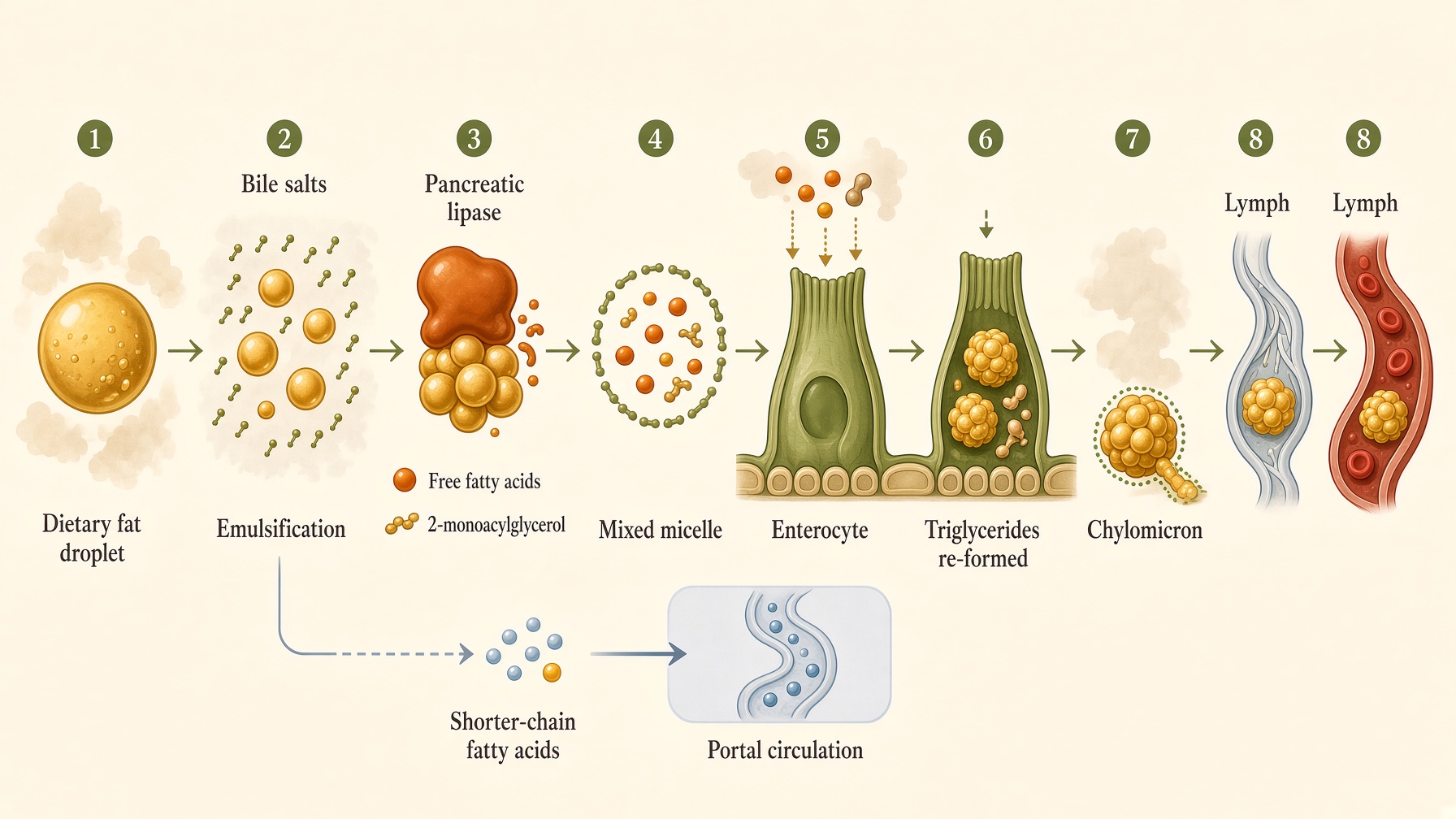
By the time dietary fat enters an intestinal cell, it has undergone several changes in both physical form and chemical structure. The intestine then has to process those absorbed lipids before they can be transported to the rest of the body. This makes fat absorption more than a simple digestive breakdown: it is a coordinated transition from an insoluble dietary lipid to forms that can move through the intestinal environment, enter cells, and eventually reach other tissues.
Join the discussion
No account or email is required. Your display name and comment will be public.