
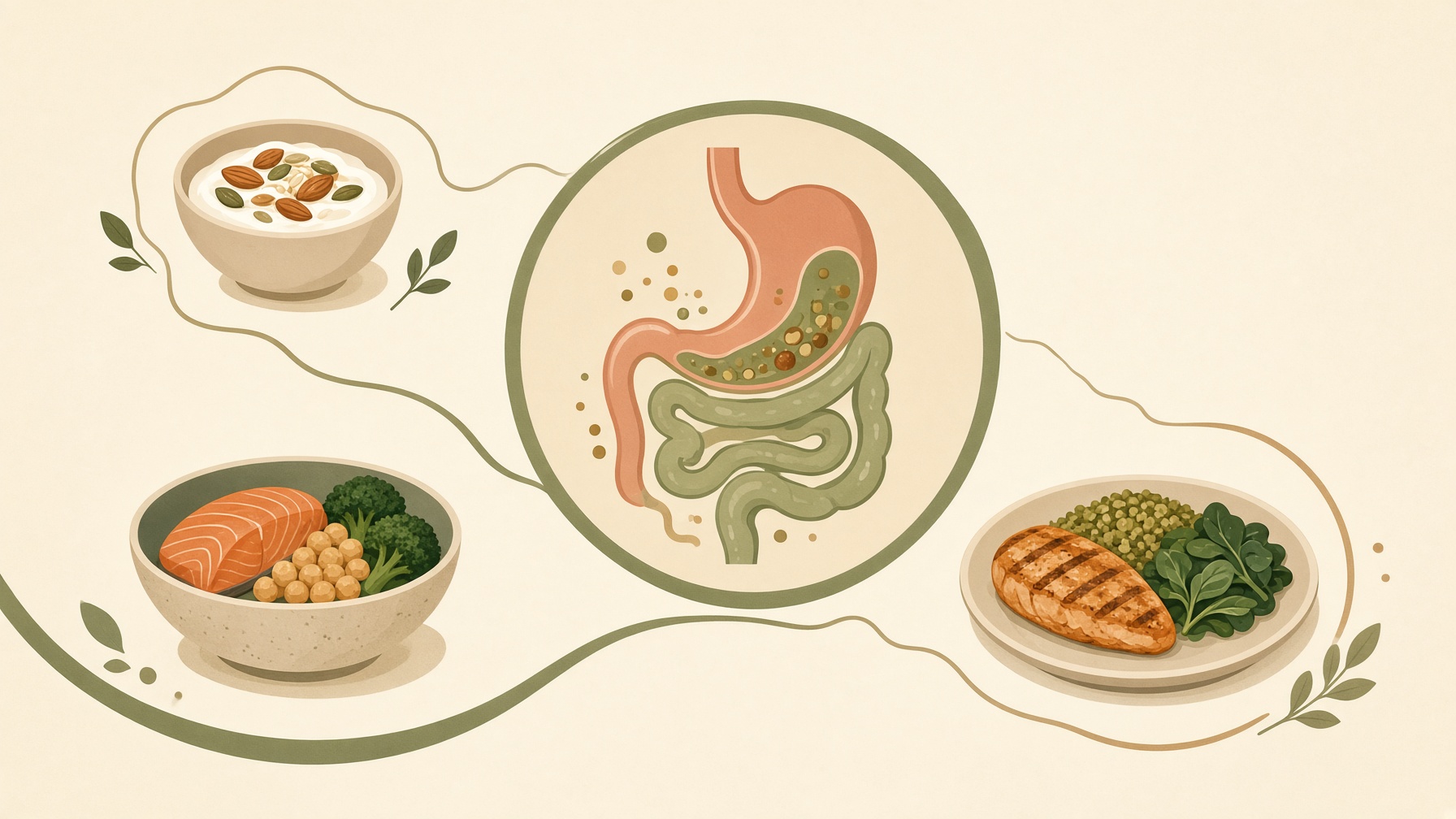
The Daily Protein Target: Why Hitting It Across Ordinary Meals Is Harder Than It Looks
Protein targets can fit familiar meals without perfectly equal portions, since total intake and meal distribution address different questions.
Wikis
Muscle protein synthesis builds new proteins from amino acids, but lasting muscle growth depends on the balance between synthesis and breakdown.
Muscle protein synthesis is the cellular process by which skeletal muscle builds new proteins from amino acids. It includes synthesis of many kinds of muscle proteins, such as contractile, structural, mitochondrial, and enzyme proteins. Researchers often measure the fractional rate at which amino acids are incorporated into muscle protein over a defined period .1
Muscle protein synthesis changes dynamically in response to feeding, exercise, hormones, and other physiological conditions. Essential amino acids, particularly after protein-containing meals, stimulate synthesis, and resistance exercise can increase both the rate and the muscle's sensitivity to amino acids for a period after training. Different protein fractions may respond differently depending on the exercise stimulus and timing .1
Muscle protein synthesis is not the same as muscle growth. Muscle size changes reflect net protein balance over time, meaning the relationship between protein synthesis and protein breakdown across repeated days and weeks. A temporary rise in synthesis does not guarantee hypertrophy if breakdown or other factors offset it. The term therefore describes one side of muscle protein turnover and is most useful for understanding the acute processes that contribute to longer-term remodeling and adaptation .1
From this collection
Protein targets can fit familiar meals without perfectly equal portions, since total intake and meal distribution address different questions.