
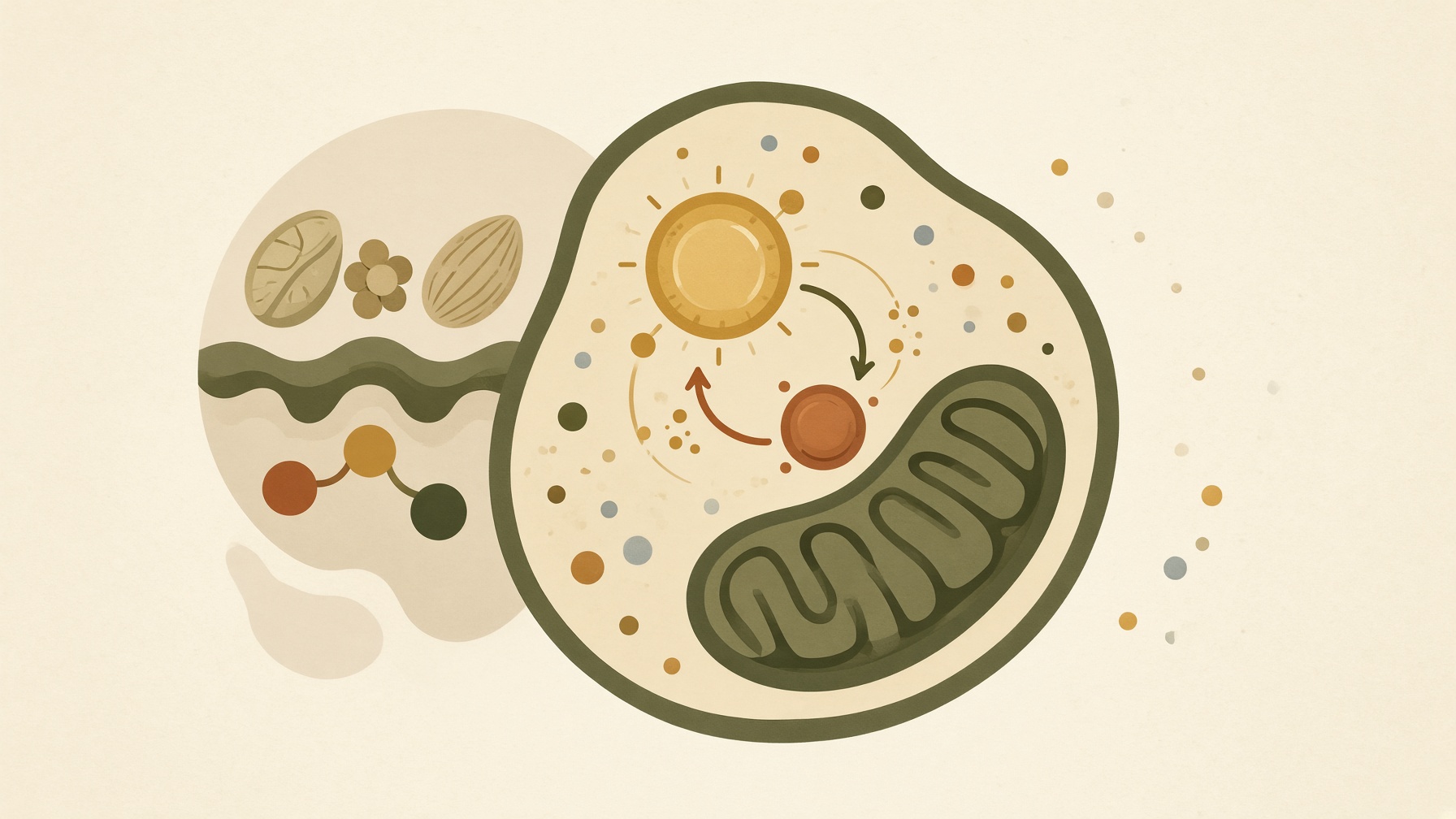
How Cells Keep Their Energy Supply Going
Cells repeatedly regenerate ATP as cellular work consumes the small available supply, making continuous turnover more important than stockpiling.
Wikis
Myosin refers to a large superfamily of actin-associated molecular motor proteins. Myosins use energy from adenosine triphosphate, or ATP, to generate mechanical force or movement relative to actin filaments, which are part of the cell's cytoskeleton. They therefore help convert chemical energy into mechanical work inside cells .1,2
A typical myosin heavy chain contains three functional regions. The relatively conserved motor, or head, domain binds actin and contains the site that binds and hydrolyzes ATP. It is followed by a neck region that associates with myosin light chains and functions as part of a lever-like structure. The tail is more variable among myosins and helps determine where a particular myosin operates and which molecules, membranes, or structures it interacts with .1
During the myosin motor cycle, ATP binding and hydrolysis are coupled to changes in the conformation of the motor domain and in how strongly myosin binds actin. These coordinated changes produce movement of the lever region and can generate force and, when mechanical conditions permit, displacement relative to the actin filament. Different myosins have adaptations that affect properties such as their speed, direction of movement, and how long they remain attached to actin .1,2
Myosin should not be considered solely a muscle protein. Class II myosins form the thick filaments that interact with actin in skeletal and cardiac muscle, producing force and contraction through ATP-dependent cross-bridge cycling. Other myosin classes perform different cellular functions, including transporting intracellular cargo and generating forces involved in cell shape and division .1,2
From this collection
Cells repeatedly regenerate ATP as cellular work consumes the small available supply, making continuous turnover more important than stockpiling.
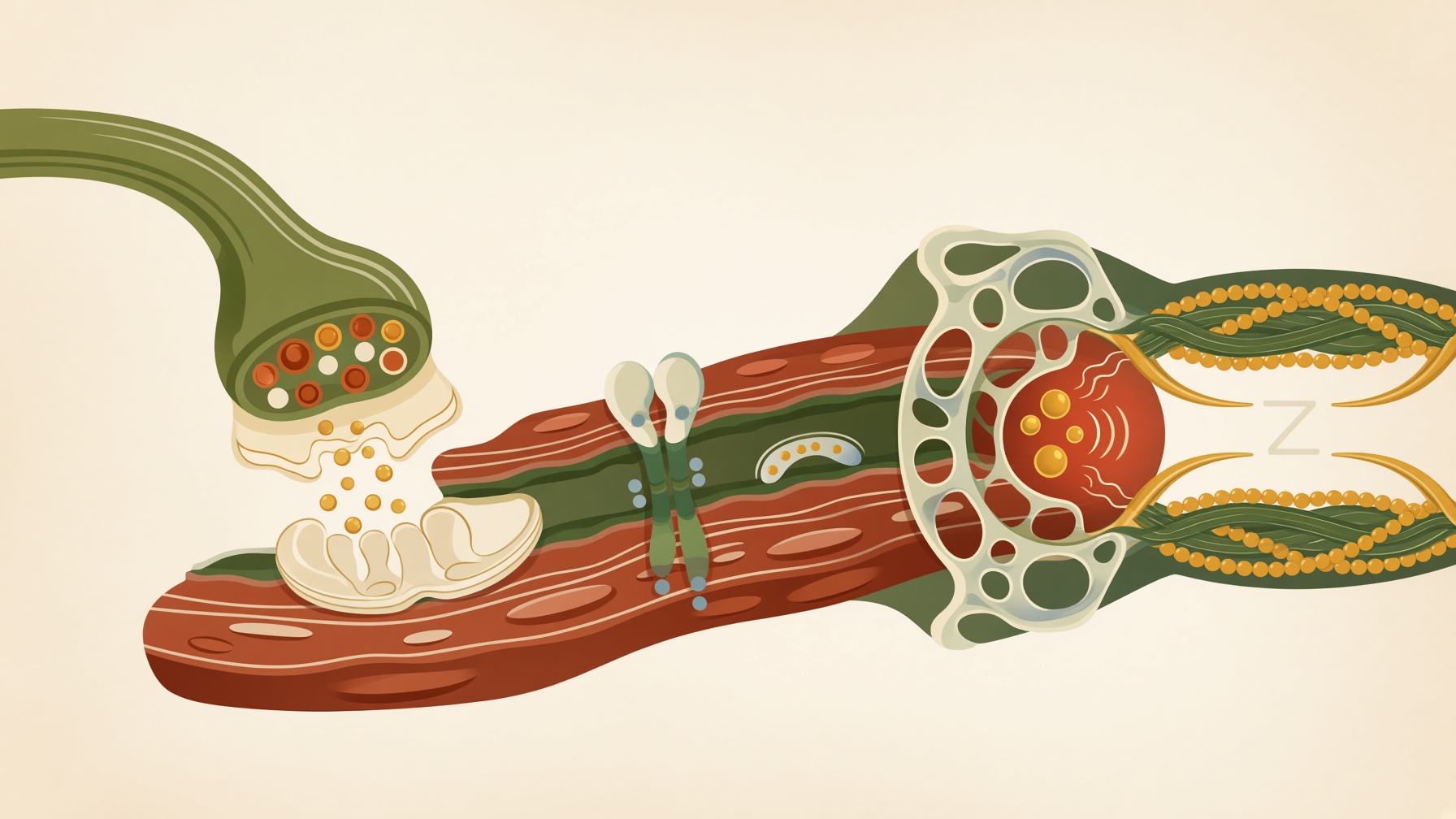
A motor nerve signal triggers electrical changes and calcium release in a muscle fiber, allowing the contractile proteins to generate movement.
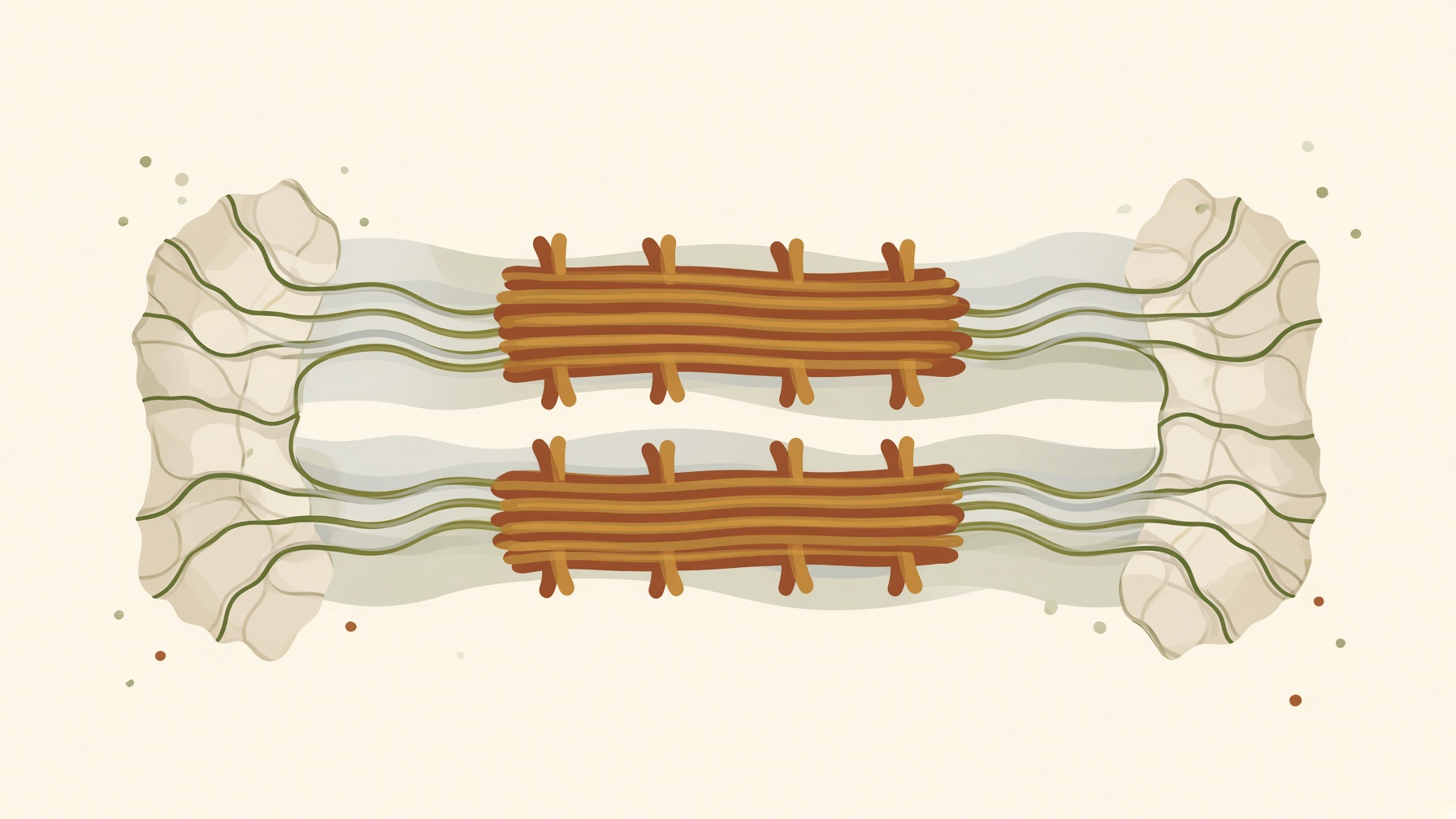
Sarcomeres shorten as thin filaments slide alongside thick filaments, increasing overlap without reducing the length of the filaments themselves.