
Same Beetroot Juice, Different Nitrite Response: Where Do Oral Bacteria Come In?
Oral bacteria help convert dietary nitrate into nitrite in saliva, allowing the mouth's role in the process to continue after swallowing.
Wikis
The nitrate–nitrite–nitric oxide pathway converts nitrate through nitrite to nitric oxide, with local conditions shaping how much forms.
The nitrate–nitrite–nitric oxide pathway is a series of chemical conversions through which nitrate can be converted to nitrite and then nitric oxide. Nitric oxide is a signaling molecule involved in functions such as regulating blood-vessel tone. Nitrate and nitrite can therefore serve as sources of nitric oxide rather than being only inactive end products of its breakdown .1
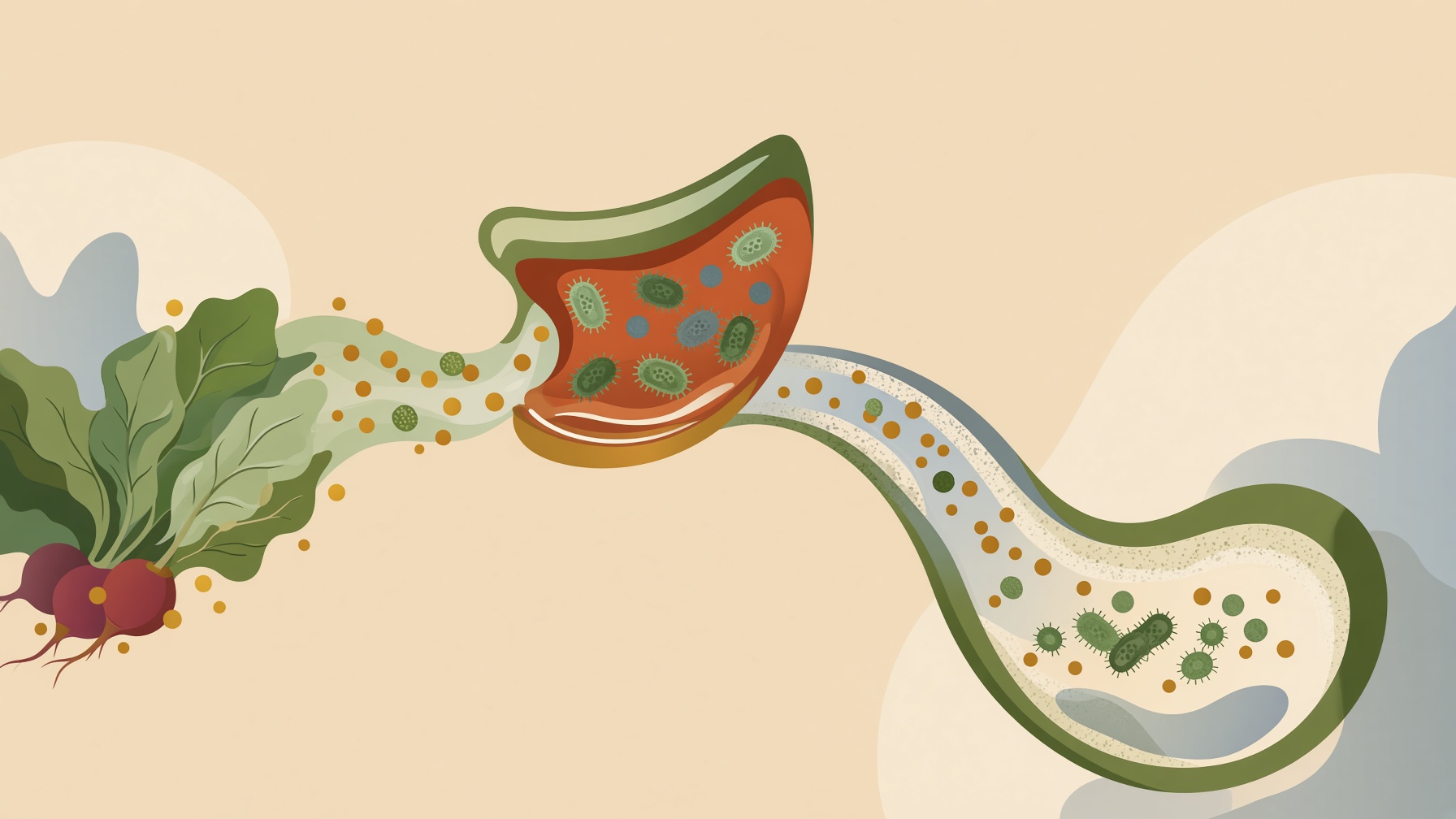
Nitrate comes from both the diet and the body's own nitric oxide metabolism. An important part of the pathway links the circulation, saliva, mouth, and digestive tract. Salivary glands concentrate circulating nitrate into saliva, where nitrate-reducing oral bacteria convert some of it to nitrite. This circulation of nitrate through blood, saliva, and the digestive tract is called enterosalivary circulation .1,2
After saliva is swallowed, nitrite can form nitric oxide in the acidic stomach. Nitrite can also be converted to nitric oxide in blood and tissues, with this route becoming particularly important when oxygen availability is low. Conversion is dependent on local conditions, so nitrate intake does not translate into a fixed amount of nitric oxide .1,2
This pathway complements nitric oxide synthesis from the amino acid L-arginine by nitric oxide synthase enzymes .1
From this collection
Oral bacteria help convert dietary nitrate into nitrite in saliva, allowing the mouth's role in the process to continue after swallowing.