
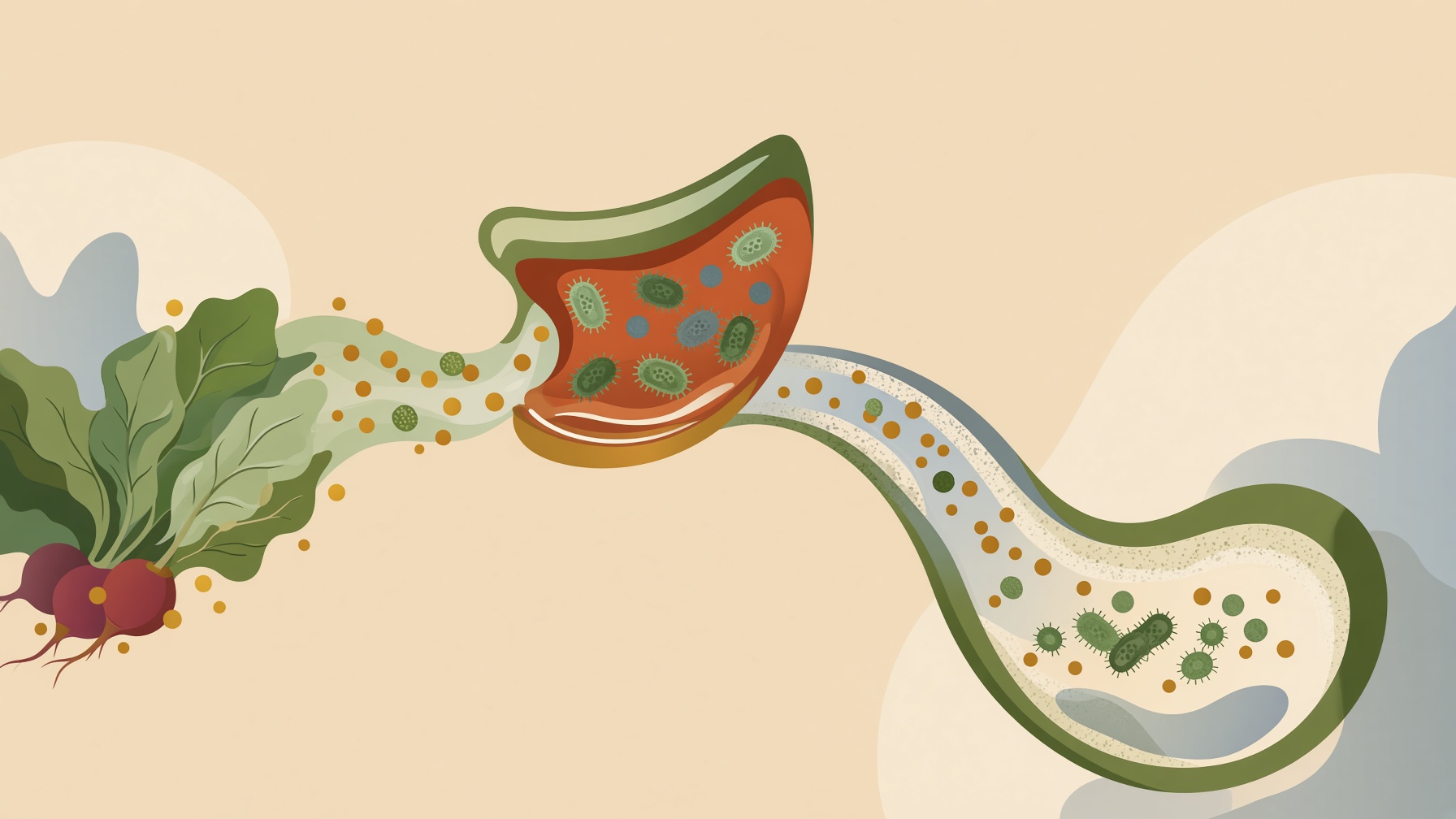
A beetroot drink and a mouthwash belong to different parts of a daily routine. The drink is easy to think about in terms of its ingredients. Could a rinse also matter to what happens to the nitrate it contains, after the drink has been swallowed?
In a small experiment described in a systematic review, 12 apparently healthy men drank concentrated beetroot juice containing the same amount of nitrate on each visit. Each man took part under different rinse conditions on separate visits in random order, allowing the responses to be compared within the same participants. The men had normal blood pressure, and water served as the comparison rinse. Compared with water, some tested formulations produced lower nitrite responses in saliva and blood plasma. These were short-term experimental conditions with repeated rinsing, rather than ordinary meals or routine long-term mouthwash use.1
The mouth's contribution can continue after swallowing. Nitrate absorbed through the digestive tract can return from the blood to saliva, where oral bacteria help convert it to nitrite. The similar names describe different compounds: nitrate is what was consumed, and nitrite is produced during this conversion step. Nitrite can then be swallowed and contribute to later nitric oxide formation. This is one of the body's routes to nitric oxide; oral bacteria are contributing a particular step, not converting nitrate directly into the final compound. The rinse comparison fits with a role for oral bacteria in processing the beetroot drink's nitrate.1,2
Researchers measured nitrite both in saliva and in plasma, the liquid part of blood. That makes 'the nitrite response' more specific than a single number: a rinse could show a different pattern in the two samples. In that comparison, an essential-oil rinse lowered salivary nitrite compared with water, while its plasma-nitrite difference was not statistically significant. Other tested formulations lowered plasma nitrite. A difference that was not statistically significant does not establish that the responses were identical.1
These nitrite measurements do not quantify nitric oxide production or changes in a food's health benefits. They do not establish a reason to stop or reschedule prescribed mouthwash or other dental care.1,2
The label tells you what's in the drink, but it doesn't describe the person drinking it. That helps explain why a question about beetroot juice could also involve mouthwash. The question includes what happens when you drink it, as well as what went into the bottle.

Join the discussion
No account or email is required. Your display name and comment will be public.