
What Happens to Proteins When You Cook Them?
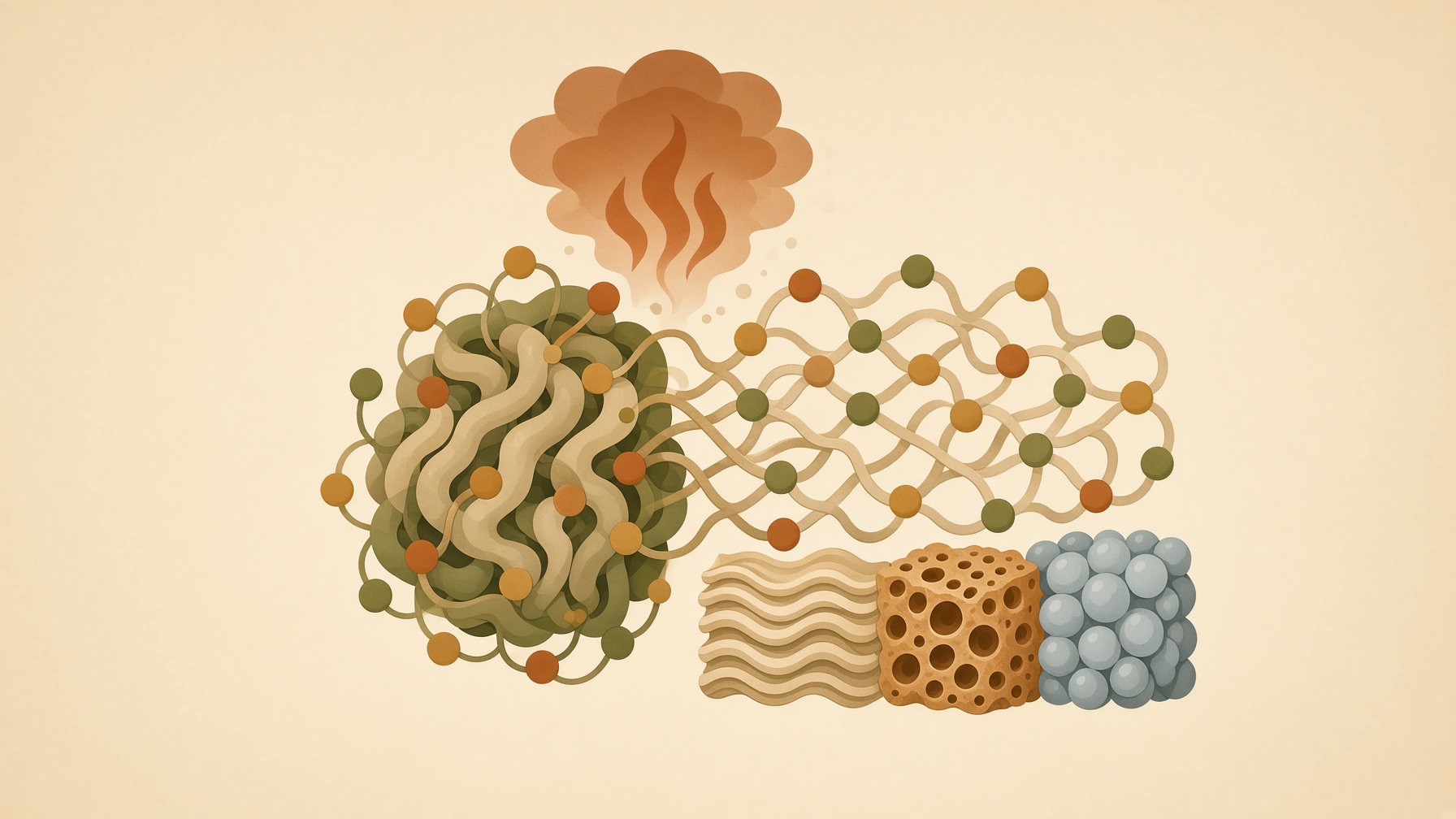
Cooking changes protein folding by disrupting bonds that stabilize shape, while usually leaving the chain of amino acids intact.
Wikis
Noncovalent interactions are attractive or repulsive interactions between atoms or molecules that do not involve formation of a covalent bond between the interacting groups. In biological molecules, they help stabilize three-dimensional structures and allow molecules to associate with one another. Important examples include hydrogen bonds, electrostatic interactions, and van der Waals forces .1,2
Individual noncovalent interactions are generally weaker than covalent bonds. However, many such interactions acting together can produce strong and highly specific associations. For example, a protein can bind tightly to another molecule when numerous weak interactions form simultaneously between complementary surfaces .2
The hydrophobic effect is also important in many biological structures and assemblies. In water, nonpolar molecular groups tend to associate in ways that reduce their exposure to the surrounding aqueous environment. This effect contributes substantially to protein folding, formation of cell membranes, and interactions between biological molecules. Unlike a conventional chemical bond, the hydrophobic effect arises largely from the behavior of water around nonpolar surfaces .2
Noncovalent interactions are distinct from covalent bonds, which involve shared electron pairs and generally form more persistent connections between atoms. Their relatively weak and often reversible nature makes noncovalent interactions especially useful in biology, where molecular structures and binding partners frequently need to assemble, separate, and rearrange without changing their underlying covalent structure .1,2
From this collection
Cooking changes protein folding by disrupting bonds that stabilize shape, while usually leaving the chain of amino acids intact.