
What Happens to Fiber Your Small Intestine Can’t Digest?
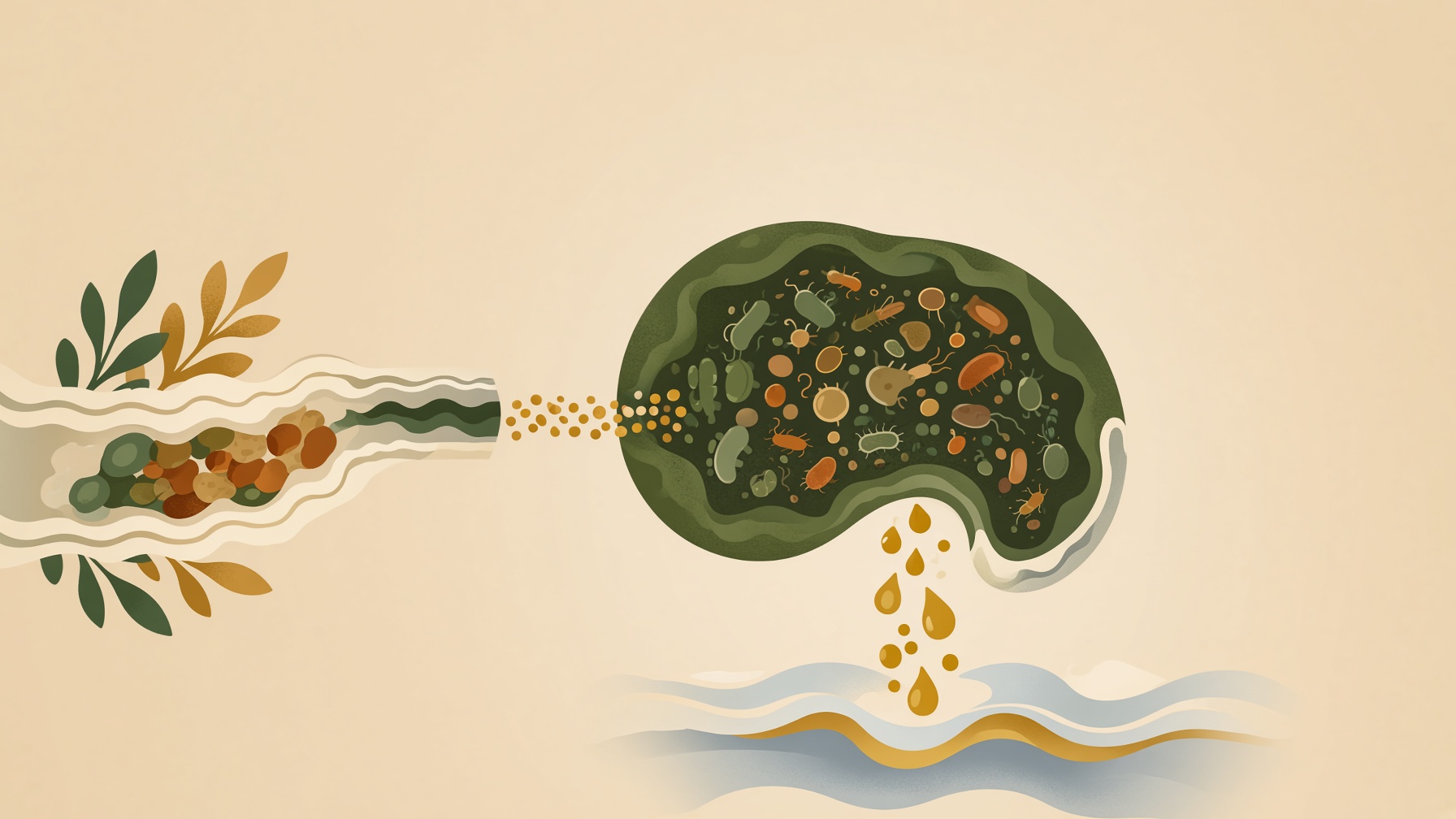
Colon microbes ferment some dietary fiber into short-chain fatty acids that the body can absorb, recovering energy human enzymes cannot release.
Wikis
A nondigestible carbohydrate is a carbohydrate that resists digestion and absorption in the human small intestine and therefore reaches the large intestine to some extent. Rather than being fully broken down into absorbable sugars by human digestive enzymes, it remains at least partly available for further processing in the colon. Nondigestible carbohydrates are a chemically diverse group rather than a single type of molecule .1,2
Examples include nonstarch polysaccharides, resistant starches, and certain oligosaccharides. Their resistance to small-intestinal digestion can arise for different reasons. Some contain chemical bonds that human digestive enzymes cannot break, while others, such as resistant starch, may be physically inaccessible to enzymes or have structures that make them resistant to digestion .1,2
Reaching the colon undigested does not mean that a carbohydrate remains chemically unchanged. Many nondigestible carbohydrates can be fermented by members of the gut microbiota. Depending on the carbohydrate and microbial community, fermentation can produce short-chain fatty acids such as acetate, propionate, and butyrate, along with gases and microbial biomass. Other nondigestible carbohydrates are fermented only partly or very little .2
Nondigestible carbohydrate and dietary fiber are closely related but are not interchangeable terms. Definitions of dietary fiber include many nondigestible carbohydrates but may apply additional criteria, and some definitions also include lignin, which is not a carbohydrate .1,2
From this collection
Colon microbes ferment some dietary fiber into short-chain fatty acids that the body can absorb, recovering energy human enzymes cannot release.