
How Your Body Digests and Absorbs Protein
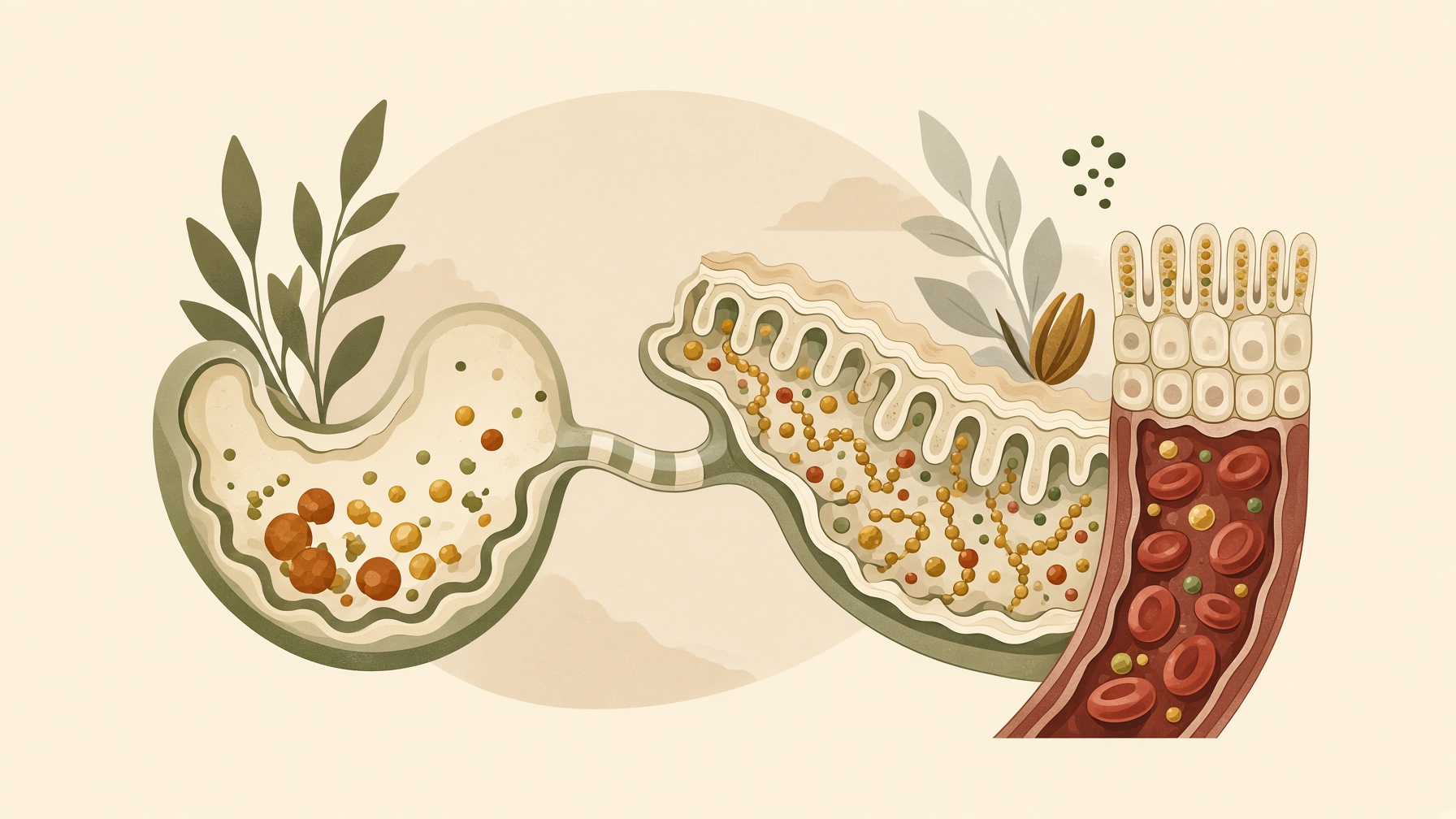
Protein digestion breaks food proteins into amino acids and small peptides that intestinal cells can absorb for the body’s ongoing protein turnover.
Wikis
Pancreatic proteases are protein-digesting enzymes produced by the exocrine pancreas and released into the small intestine. The major pancreatic proteases include trypsin, chymotrypsin, elastase, and carboxypeptidases A and B. Together, they hydrolyze peptide bonds in dietary proteins and peptides, producing smaller peptides and free amino acids. The smaller peptides can undergo further digestion before absorption .1,2
Most pancreatic proteases are synthesized in pancreatic acinar cells as inactive precursors called zymogens. These include trypsinogen, chymotrypsinogen, proelastase, and procarboxypeptidases. Secretion in inactive forms helps limit proteolytic activity within the pancreas itself. After the zymogens reach the duodenum, the intestinal enzyme enteropeptidase converts trypsinogen to active trypsin. Trypsin then activates additional trypsinogen and other pancreatic protease zymogens, creating an activation cascade .1,2
The pancreatic proteases differ in where they cleave protein chains. Trypsin, chymotrypsin, and elastase are endopeptidases, which hydrolyze peptide bonds within proteins or peptides. Their substrate preferences differ, allowing them to act at different sites. Carboxypeptidases are exopeptidases and remove amino acids from the carboxyl-terminal end of peptide chains .1,2
Pancreatic proteases are distinct from pepsin. Pepsin begins protein digestion in the acidic environment of the stomach, whereas pancreatic proteases act mainly in the small intestine, where bicarbonate-rich pancreatic secretions neutralize gastric acid and create conditions more suitable for their activity .1
From this collection
Protein digestion breaks food proteins into amino acids and small peptides that intestinal cells can absorb for the body’s ongoing protein turnover.