
How Your Kneecap Helps You Move
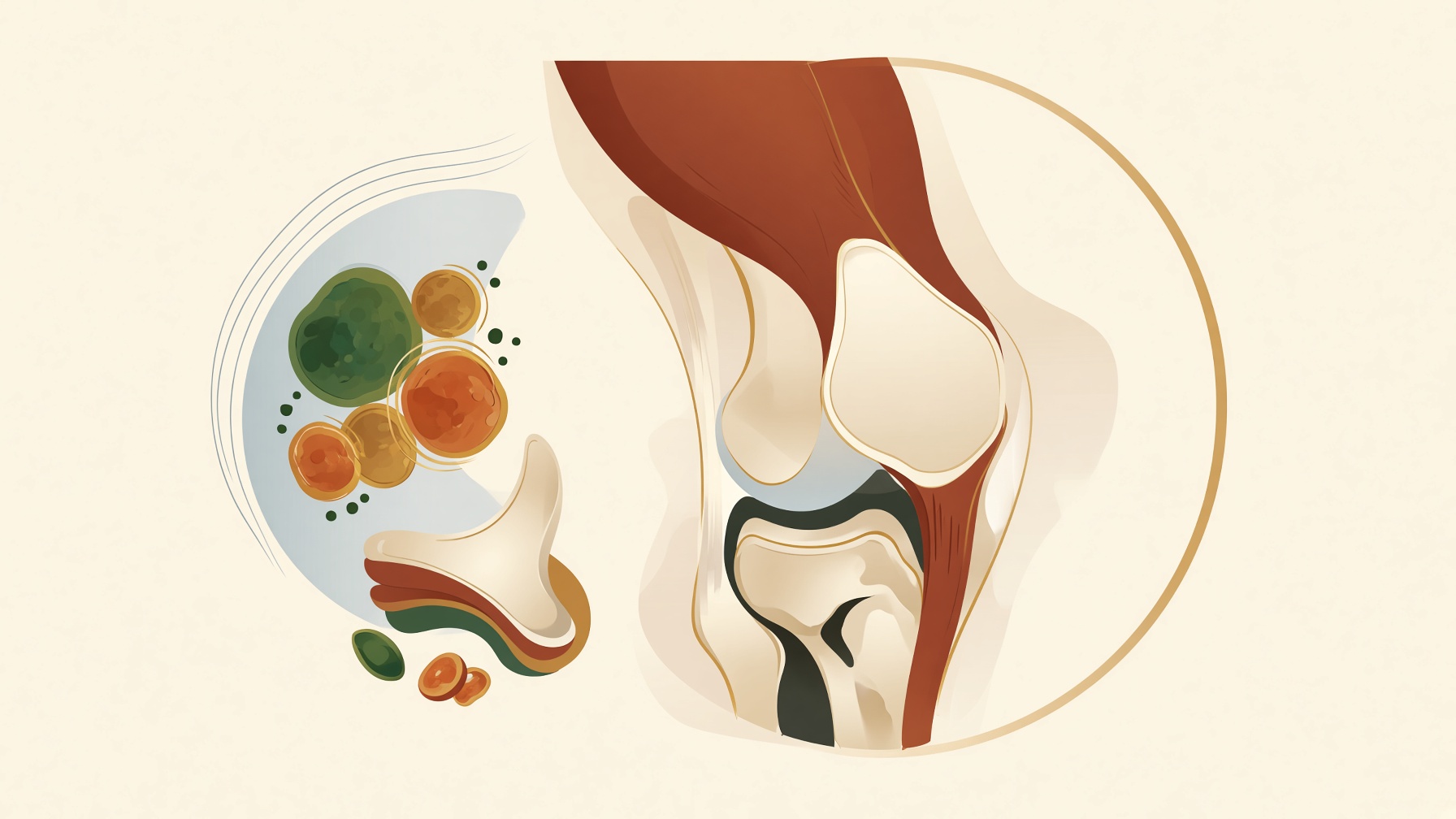
The kneecap improves the quadriceps muscle’s leverage by holding the tendon away from the knee joint, helping the muscle straighten the leg.
Wikis
The patella, commonly called the kneecap, is a small triangular bone located at the front of the knee. It is the largest sesamoid bone in the human body, meaning that it develops within a tendon. The patella lies within the quadriceps tendon and forms the patellofemoral joint by articulating with the trochlear surface of the femur .1,2
The quadriceps tendon attaches to the superior portion of the patella, while the patellar ligament extends from its inferior portion to the tibial tuberosity. Together, the quadriceps muscles, quadriceps tendon, patella, and patellar ligament form the knee extensor mechanism, which transmits muscular force to the tibia and produces knee extension .1,2
An important mechanical function of the patella is to increase the effective moment arm of the knee extensor mechanism. By displacing the extensor mechanism anteriorly relative to the knee's axis of rotation, the patella increases the joint torque that can be produced for a given quadriceps force. As the knee flexes and extends, the patella glides within the femoral trochlear groove, and the location and area of contact between the patella and femur change .1,2
The patella also helps protect the anterior knee and guides the extensor mechanism as forces are transmitted across the joint. Its posterior surface is covered by thick articular cartilage that helps accommodate the substantial compressive forces transmitted through the patellofemoral joint. The patella is therefore not simply a protective kneecap but an integral mechanical component of knee extension .1,2
From this collection
The kneecap improves the quadriceps muscle’s leverage by holding the tendon away from the knee joint, helping the muscle straighten the leg.