
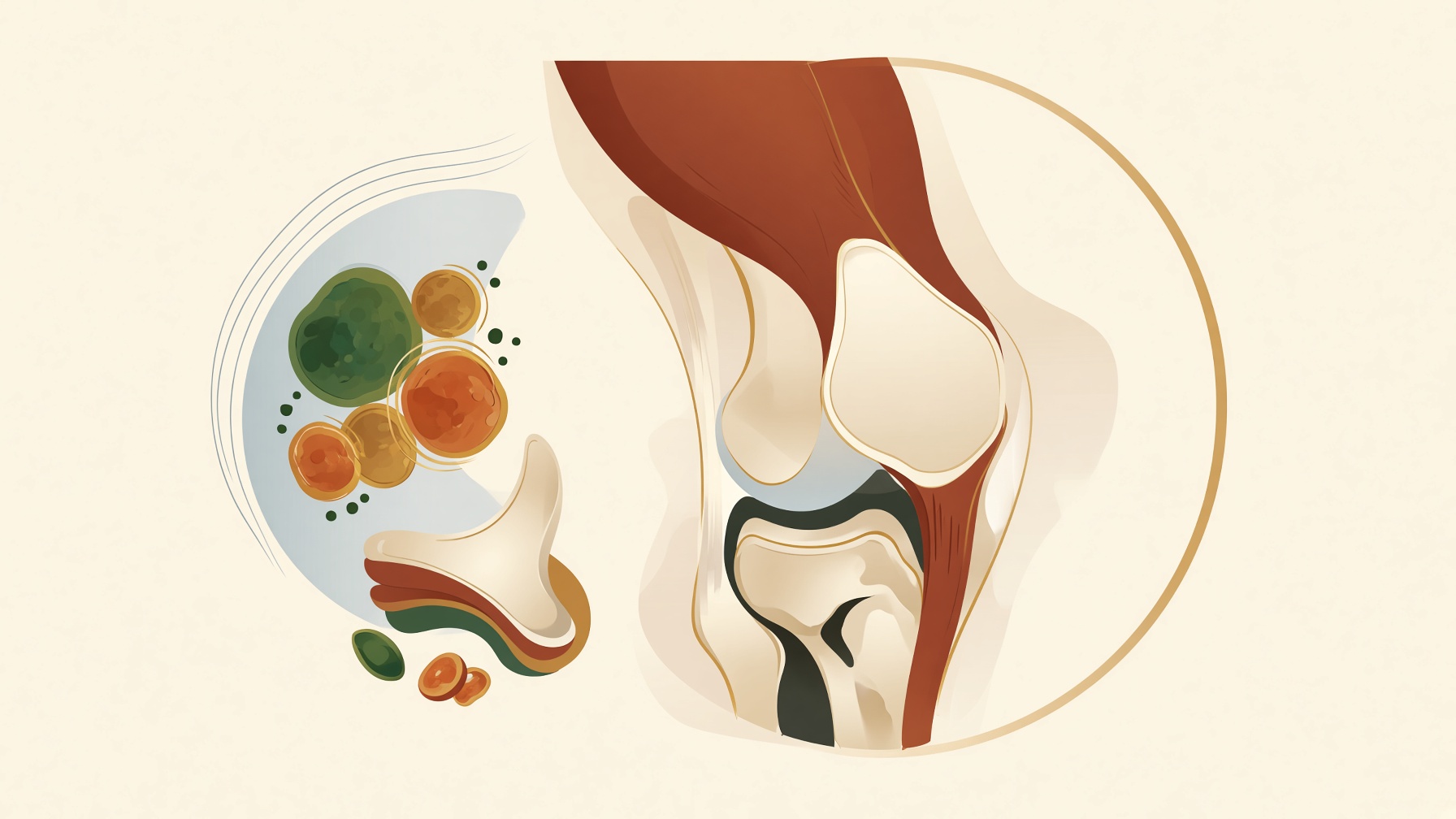
You can feel your kneecap easily enough, but what it actually does is less obvious. Anatomically, it is called the patella. This small bone sits at the front of the knee and plays an important role in how the joint moves.
The patella is the largest sesamoid bone in the human body. A sesamoid bone is a bone embedded within a tendon or closely associated with a musculotendinous structure. In this case, the patella is embedded within the quadriceps femoris tendon .1
The quadriceps femoris is the large muscle at the front of the thigh. Its tendon crosses the front of the knee before attaching to the tibia, placing the patella directly along the path of the quadriceps across the joint.
Within the knee, the patella articulates with the distal femur. More specifically, it meets the trochlear surface of the distal femur, also known as the patellar surface. The tibia, by contrast, does not articulate directly with the patella .1,2
This relationship with the femur helps protect the quadriceps tendon during movement. As the knee moves, the patella helps prevent the tendon from rubbing directly against the distal femur .1
The patella also improves the mechanical advantage of the quadriceps across the knee. By increasing the quadriceps extensor moment arm, it gives the muscle more leverage by holding the tendon farther away from the joint .1
The kneecap is more than just a small bone at the front of the knee. Its position within the quadriceps tendon helps protect the tendon and improves the leverage of the quadriceps as it acts across the joint.
Join the discussion
No account or email is required. Your display name and comment will be public.