
How Your Body Digests and Absorbs Protein
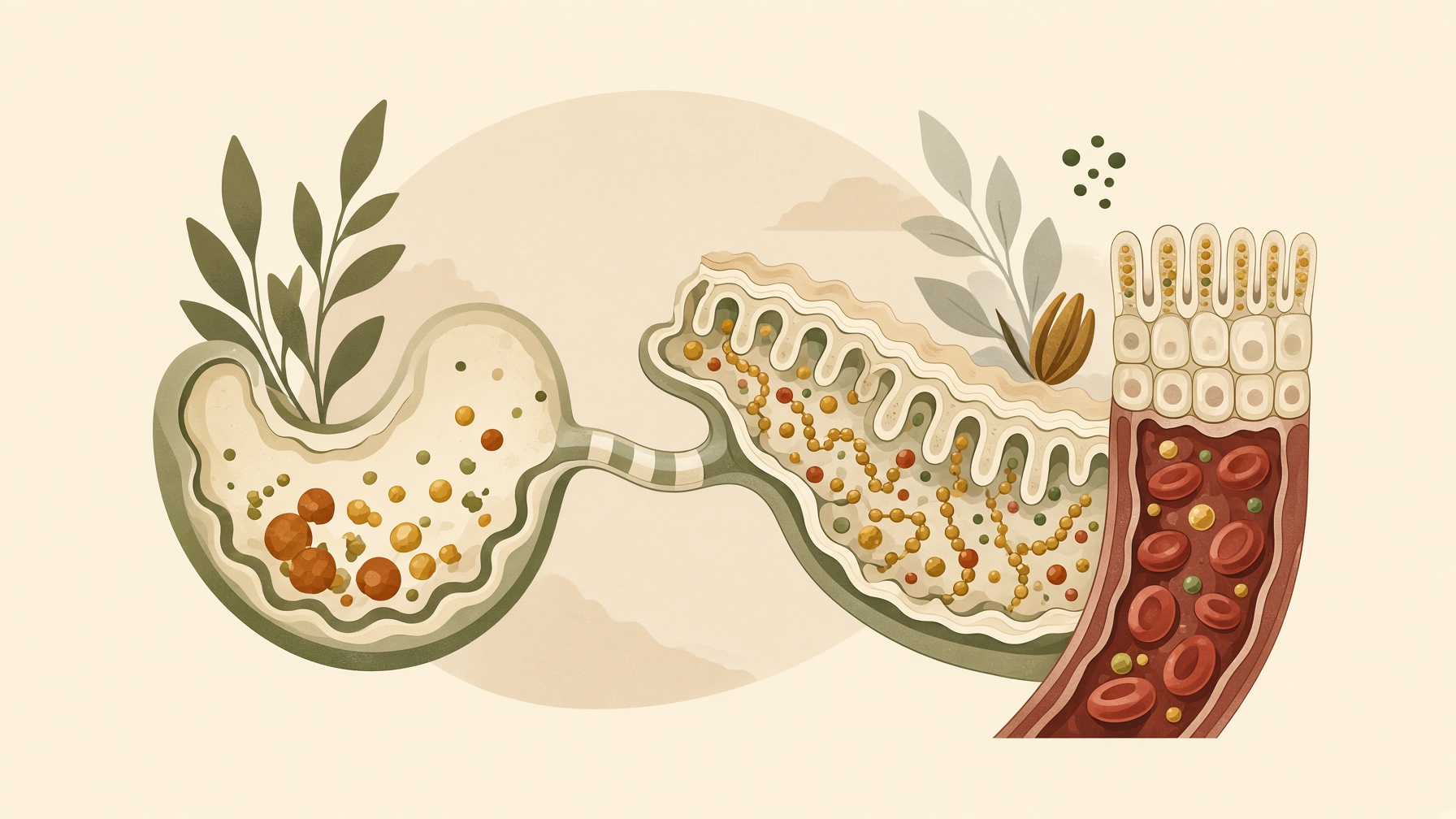
Protein digestion breaks food proteins into amino acids and small peptides that intestinal cells can absorb for the body’s ongoing protein turnover.
Wikis
Pepsin is a digestive enzyme that begins the breakdown of dietary proteins in the stomach. It is an aspartic endopeptidase, meaning that it hydrolyzes peptide bonds within protein chains rather than removing amino acids one at a time from their ends. Its action converts large proteins into smaller peptide fragments that can undergo further digestion later in the gastrointestinal tract .1,2
Pepsin is not secreted initially in its active form. Gastric chief cells release an inactive precursor, or zymogen, called pepsinogen. The acidic environment of the stomach promotes activation and cleavage of pepsinogen to produce active pepsin. Once some pepsin has formed, it can also help activate additional pepsinogen molecules .1
Pepsin is adapted to the strongly acidic environment of the stomach and has greatest activity at approximately pH 1.5 to 2. As stomach contents move into the duodenum and are neutralized, the increase in pH greatly reduces pepsin activity. Protein digestion then continues mainly through pancreatic proteases and intestinal peptidases .1,2
Pepsin and pepsinogen are therefore closely related but distinct. Pepsinogen is the inactive precursor secreted by gastric cells, whereas pepsin is the active protease produced from it. Secretion as an inactive precursor helps limit unwanted proteolytic activity within the cells and tissues that produce the enzyme .1
From this collection
Protein digestion breaks food proteins into amino acids and small peptides that intestinal cells can absorb for the body’s ongoing protein turnover.