
What Happens to Food Before It Reaches Your Stomach?
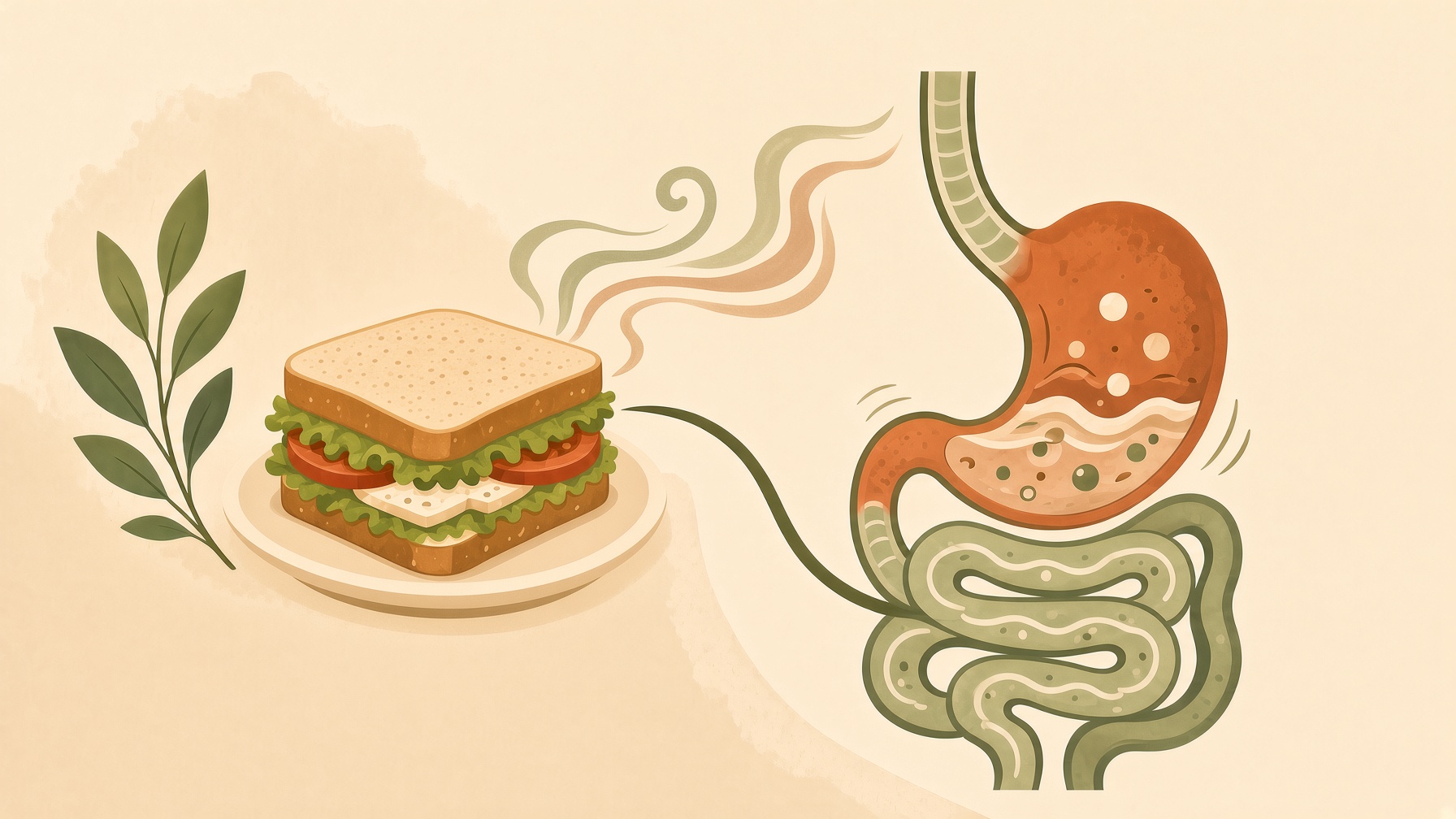
Digestion starts with chewing and starch breakdown in the mouth, while swallowing moves food toward a stomach already preparing for the meal.
Wikis
Peristalsis is a coordinated pattern of muscular contraction and relaxation that moves material through the digestive tract. In the gastrointestinal system, it helps propel swallowed food, liquid, intestinal contents, and eventually fecal material along different regions of the tract. Peristaltic activity occurs from the esophagus through the intestines and is an important component of gastrointestinal motility .1
A typical peristaltic reflex involves contraction of circular muscle behind a mass of contents and relaxation of circular muscle ahead of it. This creates a pressure difference that favors forward movement. Longitudinal muscle also contributes by changing the length and shape of the affected segment. Within much of the gastrointestinal tract, these movements are coordinated in part by neural circuits of the enteric nervous system, the network of neurons in the wall of the gastrointestinal tract .1,2
Peristalsis can be triggered by mechanical or chemical signals within the gut, including stretching caused by its contents. The exact pattern varies between regions. In the esophagus, peristalsis transports a swallowed bolus toward the stomach. In the intestines, peristaltic patterns help move contents through regions where digestion and absorption occur .1
Peristalsis is distinct from segmentation. Peristalsis is primarily associated with propulsion along the gastrointestinal tract, whereas segmentation consists mainly of localized contractions that mix intestinal contents and repeatedly expose them to the intestinal surface. Both are forms of gastrointestinal motility and can contribute to the processing of food during digestion .1
From this collection
Digestion starts with chewing and starch breakdown in the mouth, while swallowing moves food toward a stomach already preparing for the meal.