
How Your Body Produces Energy During Exercise?
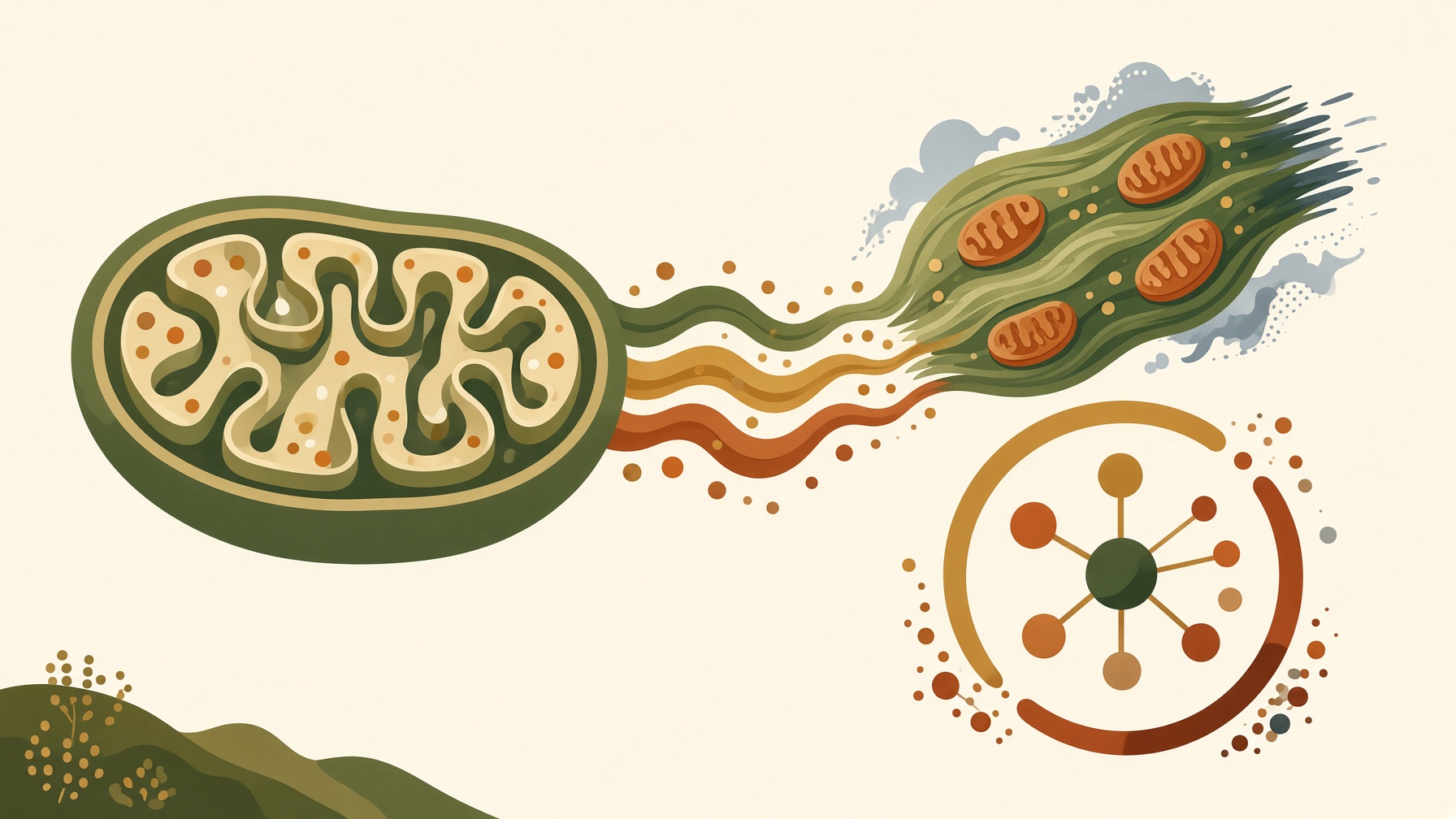
ATP regeneration draws on overlapping energy pathways whose contributions shift with exercise demands, keeping muscle work supplied with usable energy.
Wikis
The phosphagen system is a rapid cellular mechanism for buffering and regenerating ATP using compounds called phosphagens. In humans, the relevant phosphagen is phosphocreatine, or creatine phosphate, and the system is therefore often called the phosphocreatine or ATP-PCr system. It is particularly important in tissues with rapidly changing ATP demands, especially skeletal and cardiac muscle .1,2
The central reaction is catalyzed by creatine kinase. When ATP is being consumed rapidly, phosphocreatine transfers its phosphoryl group to ADP, producing ATP and free creatine. Because this reaction can respond rapidly to changes in ATP demand, it helps buffer ATP concentrations during abrupt increases in ATP use. The related adenylate kinase reaction, which converts two ADP molecules into ATP and AMP, can also contribute to rapid ATP regeneration .1,2
During intense muscle contraction, the phosphagen system can regenerate ATP at a very high rate but has limited capacity because muscle phosphocreatine stores are finite. Its contribution is therefore greatest at the onset of exercise and during brief, high-power efforts. As phosphocreatine declines, glycolysis and oxidative metabolism provide increasing contributions to ATP regeneration. During recovery, phosphocreatine is replenished using ATP, with oxidative metabolism playing an important role in this restoration .2
The phosphagen system is distinct from both glycolysis and oxidative phosphorylation. Its main creatine kinase reaction does not require oxygen, does not directly break down glucose, and does not depend on mitochondrial electron transport. Instead, it rapidly transfers a phosphoryl group from phosphocreatine to ADP to regenerate ATP .1,2
From this collection
ATP regeneration draws on overlapping energy pathways whose contributions shift with exercise demands, keeping muscle work supplied with usable energy.