What Happens to Proteins When You Cook Them?
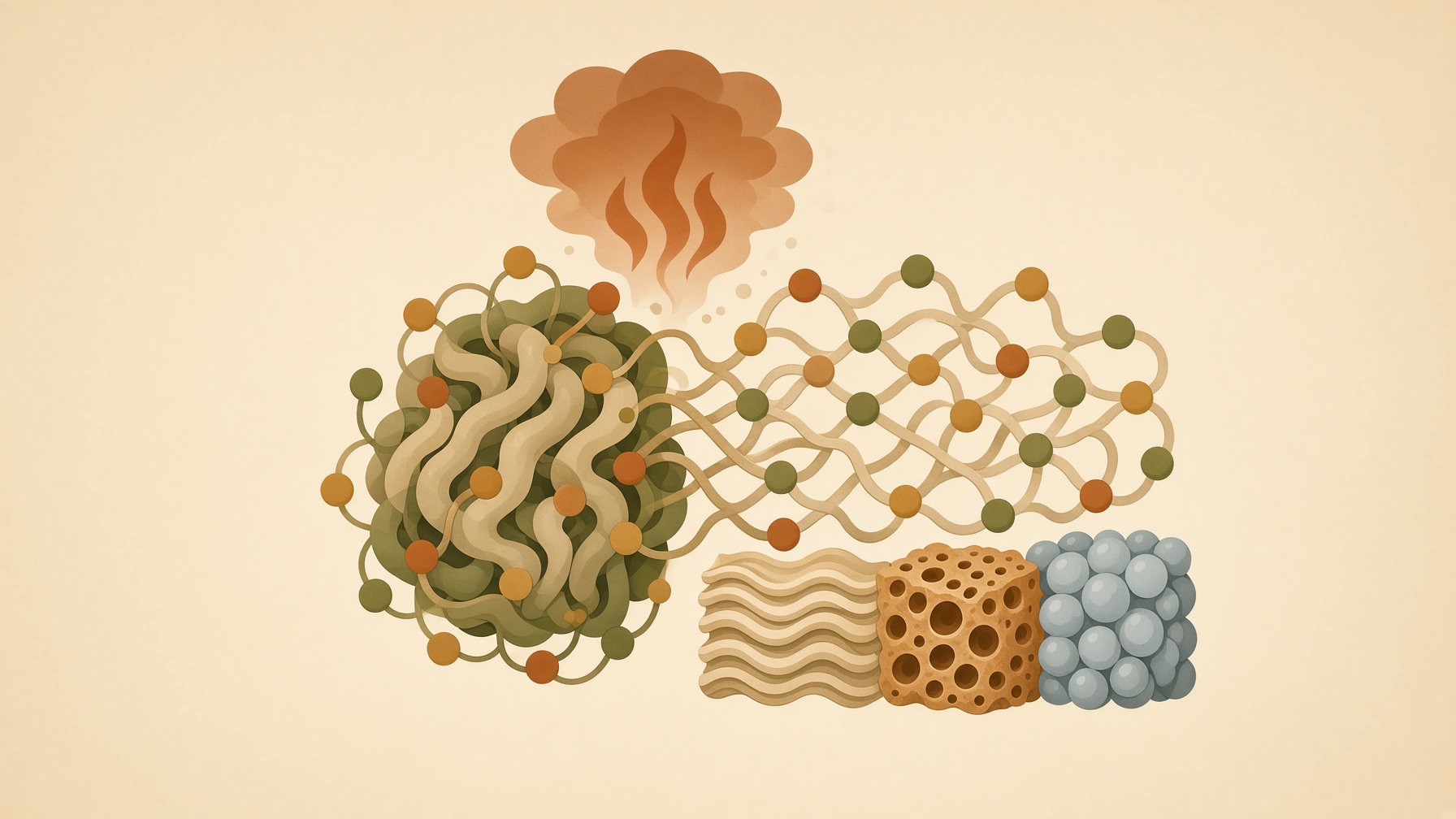
Cooking changes protein folding by disrupting bonds that stabilize shape, while usually leaving the chain of amino acids intact.
Wikis
Protein denaturation is the disruption of a protein's native structure, causing it to lose some or all of the conformation associated with its normal function. Denaturation primarily alters secondary, tertiary, or quaternary structure by disturbing interactions that stabilize the protein. It does not ordinarily involve breaking the peptide bonds that define the protein's amino acid sequence .1,2
Proteins can be denatured by changes in their physical or chemical environment. Common causes include elevated temperature, extreme pH, chemical denaturants such as urea or guanidinium salts, high pressure, and mechanical forces. These conditions can disrupt interactions such as hydrogen bonding, hydrophobic interactions, and ionic interactions that help stabilize protein structure .1,2
A denatured protein is not necessarily a completely extended or structureless chain. Denatured proteins can exist as ensembles of different conformations and may retain some residual structure. Denaturation can also expose normally buried hydrophobic regions, which can promote interactions between protein molecules and lead to aggregation .1,2
Denaturation is distinct from protein degradation. Denaturation changes protein conformation without necessarily cutting the polypeptide chain, whereas degradation involves chemical cleavage of the protein, often through hydrolysis of peptide bonds. Some denatured proteins can refold, or renature, when the denaturing conditions are removed, while others do not regain their native structure or form irreversible aggregates .1,2
From this collection
Cooking changes protein folding by disrupting bonds that stabilize shape, while usually leaving the chain of amino acids intact.