
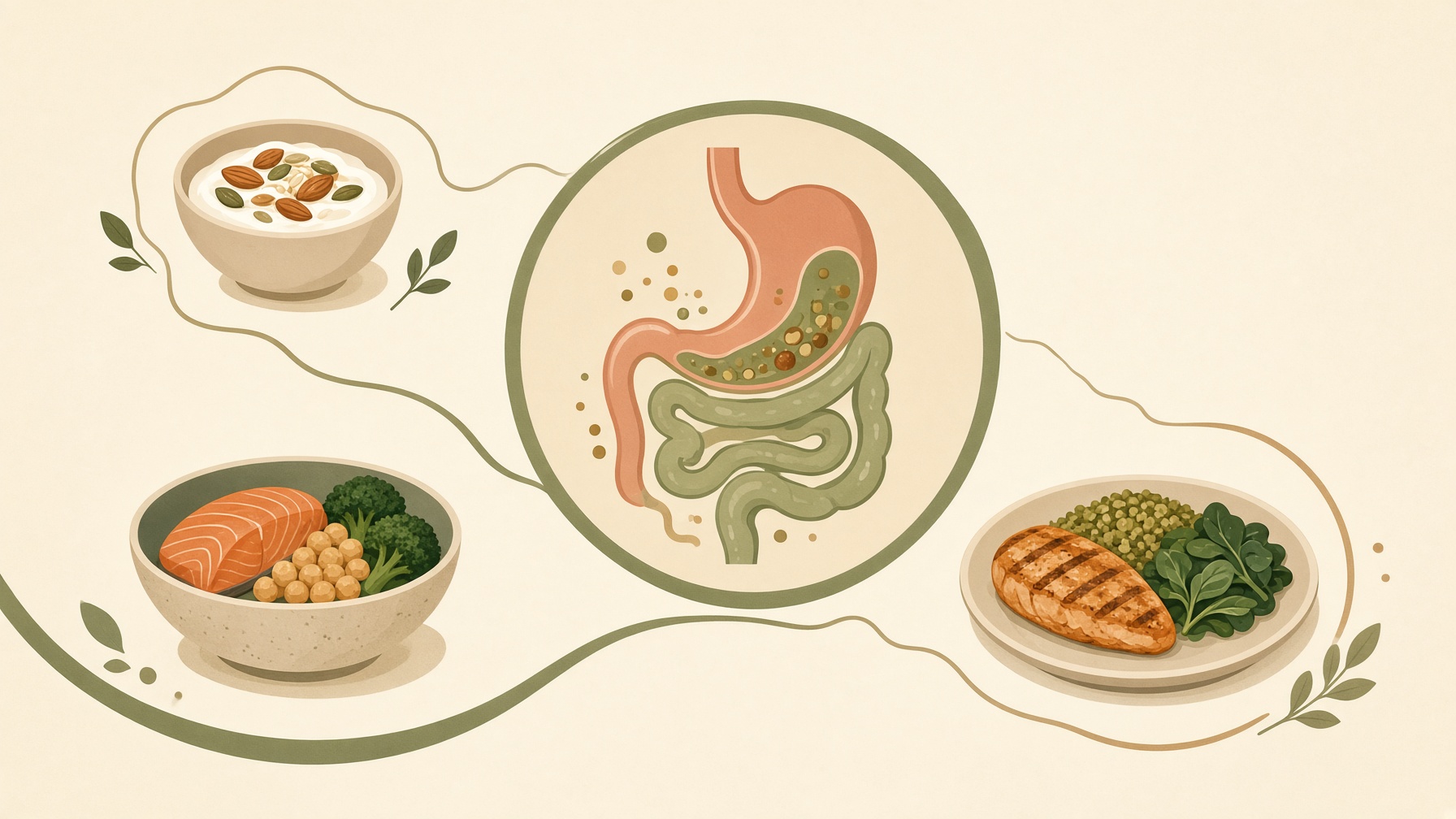
The Daily Protein Target: Why Hitting It Across Ordinary Meals Is Harder Than It Looks
Protein targets can fit familiar meals without perfectly equal portions, since total intake and meal distribution address different questions.
Wikis
Protein supplementation adds concentrated protein to usual intake, with training benefits that depend partly on baseline intake and the exercise stimulus.
Protein supplementation means adding a concentrated source of dietary protein to a person's usual food intake, commonly through powders, ready-to-drink products, or other formulated foods. The purpose is to increase total protein or provide protein conveniently around meals or exercise. The term describes a nutritional strategy rather than a specific protein type or product .1
Dietary proteins provide amino acids that can be used for tissue protein synthesis and many other physiological functions. In resistance-training research, protein supplementation can modestly enhance gains in muscle mass and strength when it increases protein intake sufficiently, but the response depends on factors such as baseline intake, training stimulus, age, total energy intake, and the amount consumed .1
Protein supplementation should be distinguished from muscle protein synthesis, which is a cellular process, and from isolated amino-acid supplementation. Its effect in resistance-training studies depends partly on baseline protein intake and how much the supplement increases total intake. When baseline intake is already relatively high, additional supplementation may produce smaller incremental gains, so results cannot be interpreted from the supplement dose alone .1
From this collection
Protein targets can fit familiar meals without perfectly equal portions, since total intake and meal distribution address different questions.