
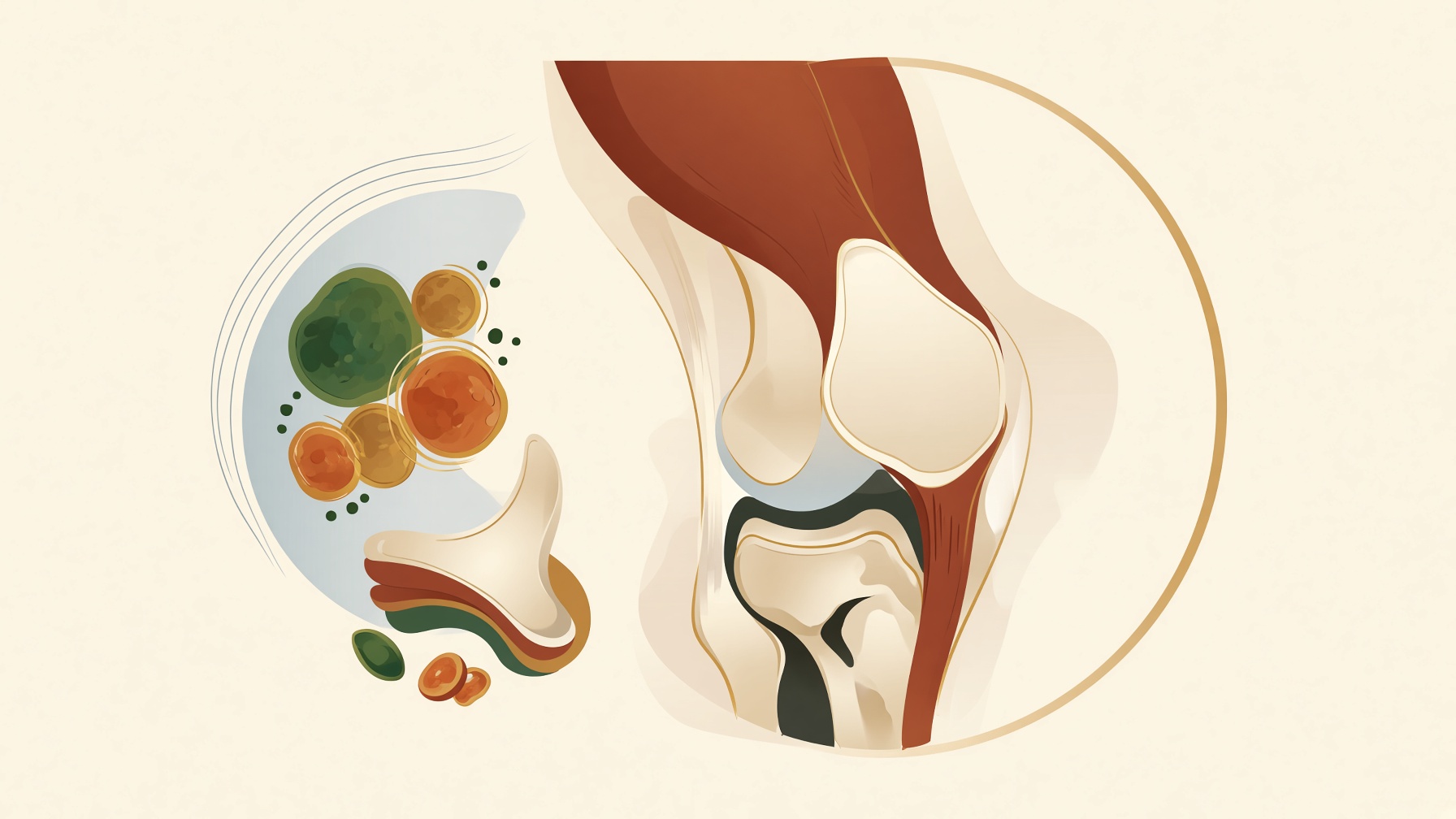
How Your Kneecap Helps You Move
The kneecap improves the quadriceps muscle’s leverage by holding the tendon away from the knee joint, helping the muscle straighten the leg.
Wikis
The quadriceps tendon is the strong connective tissue structure that links the quadriceps femoris muscles at the front of the thigh to the superior part of the patella, or kneecap. It is formed as the tendinous portions of the quadriceps muscles converge near the knee. Together with the quadriceps muscles, patella, and patellar tendon, it forms the knee extensor mechanism, which transmits muscular force needed to extend the knee .1,2
The tendon receives fibers from the rectus femoris, vastus medialis, vastus lateralis, and vastus intermedius muscles. It is often described as having three layers, with rectus femoris fibers more superficially, contributions from vastus medialis and vastus lateralis in an intermediate layer, and vastus intermedius fibers more deeply. However, anatomical studies show that the arrangement and blending of these fibers can vary considerably between individuals .1,2
The quadriceps tendon is distinct from the patellar tendon, also commonly called the patellar ligament, despite both being parts of the same force-transmitting system. The quadriceps tendon lies above the patella and connects the quadriceps muscles to it, whereas the patellar tendon extends from the lower part of the patella to the tibial tuberosity. Together, these structures allow force generated by the quadriceps to pass across the knee joint and produce knee extension .1,2
From this collection
The kneecap improves the quadriceps muscle’s leverage by holding the tendon away from the knee joint, helping the muscle straighten the leg.