
What’s Behind a Six-Pack?
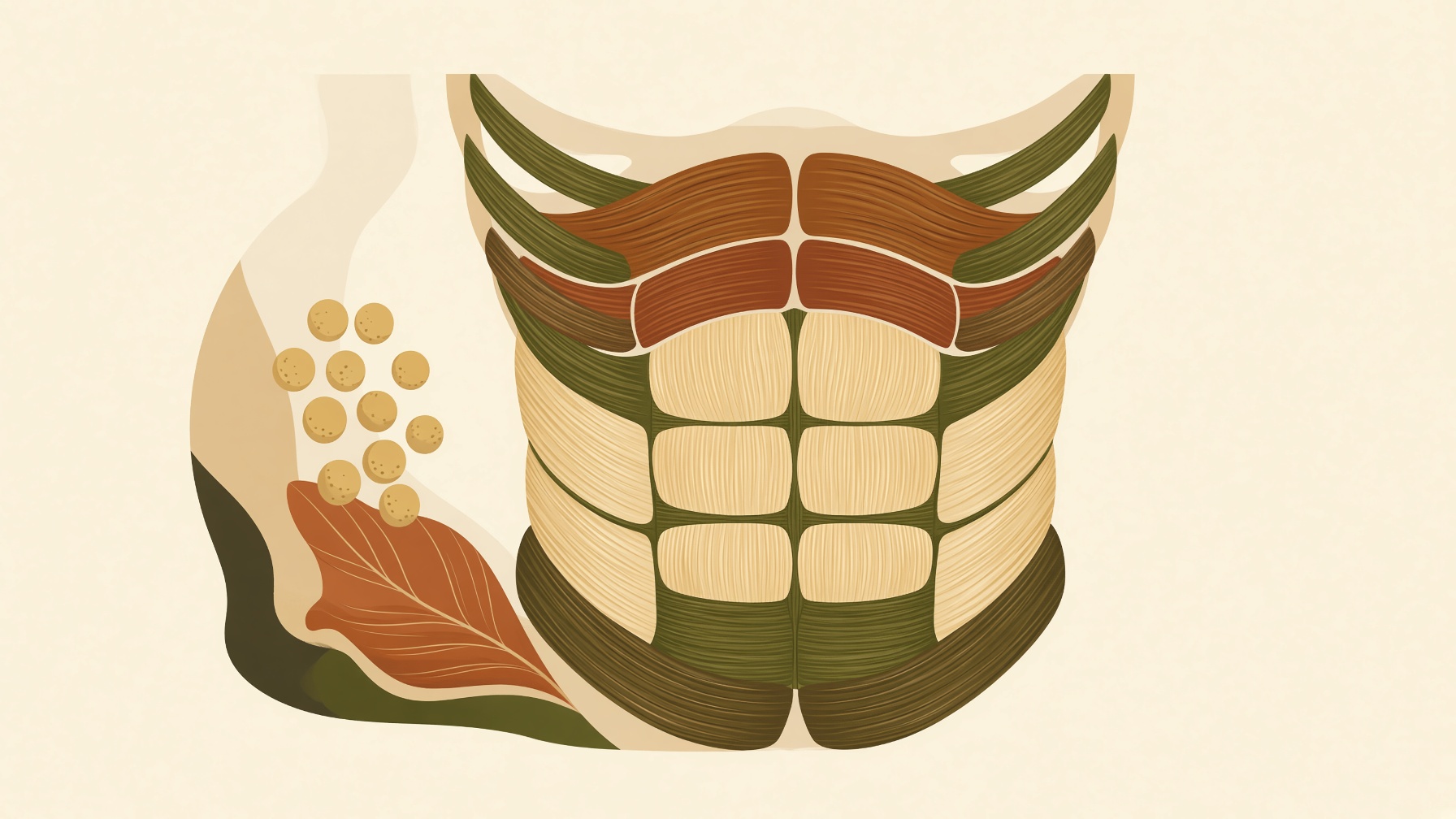
Abdominal muscles form layers with different fiber directions, making the visible six-pack only one part of the anatomy that supports the trunk.
Wikis
The rectus abdominis is a paired, vertically oriented skeletal muscle located on the front of the abdominal wall, with one muscle on each side of the midline. Each rectus abdominis extends from the pubic crest and pubic symphysis upward to the xiphoid process of the sternum and the costal cartilages of ribs 5 to 7 .1,2
Each muscle is enclosed within the rectus sheath, a connective-tissue structure formed by the aponeuroses of the external oblique, internal oblique, and transversus abdominis muscles. The right and left rectus abdominis muscles are separated at the midline by the linea alba. Fibrous bands called tendinous intersections cross the muscle at several levels and divide it into segments, contributing to the appearance commonly described as a “six-pack” when the muscle is sufficiently developed and visible .1,2
The rectus abdominis contributes to flexion of the trunk, bringing the rib cage and pelvis closer together. As part of the abdominal wall, it also helps compress and support the abdominal contents and can contribute to increases in intra-abdominal pressure .1,2
The rectus abdominis should not be confused with the abdominal wall as a whole. It is one component of a larger muscular system that also includes the external oblique, internal oblique, and transversus abdominis muscles, which have different fiber orientations and contribute additional actions and stabilization of the trunk .1,2
From this collection
Abdominal muscles form layers with different fiber directions, making the visible six-pack only one part of the anatomy that supports the trunk.