
When Pasta Becomes Leftovers, Is It Still the Same Meal?
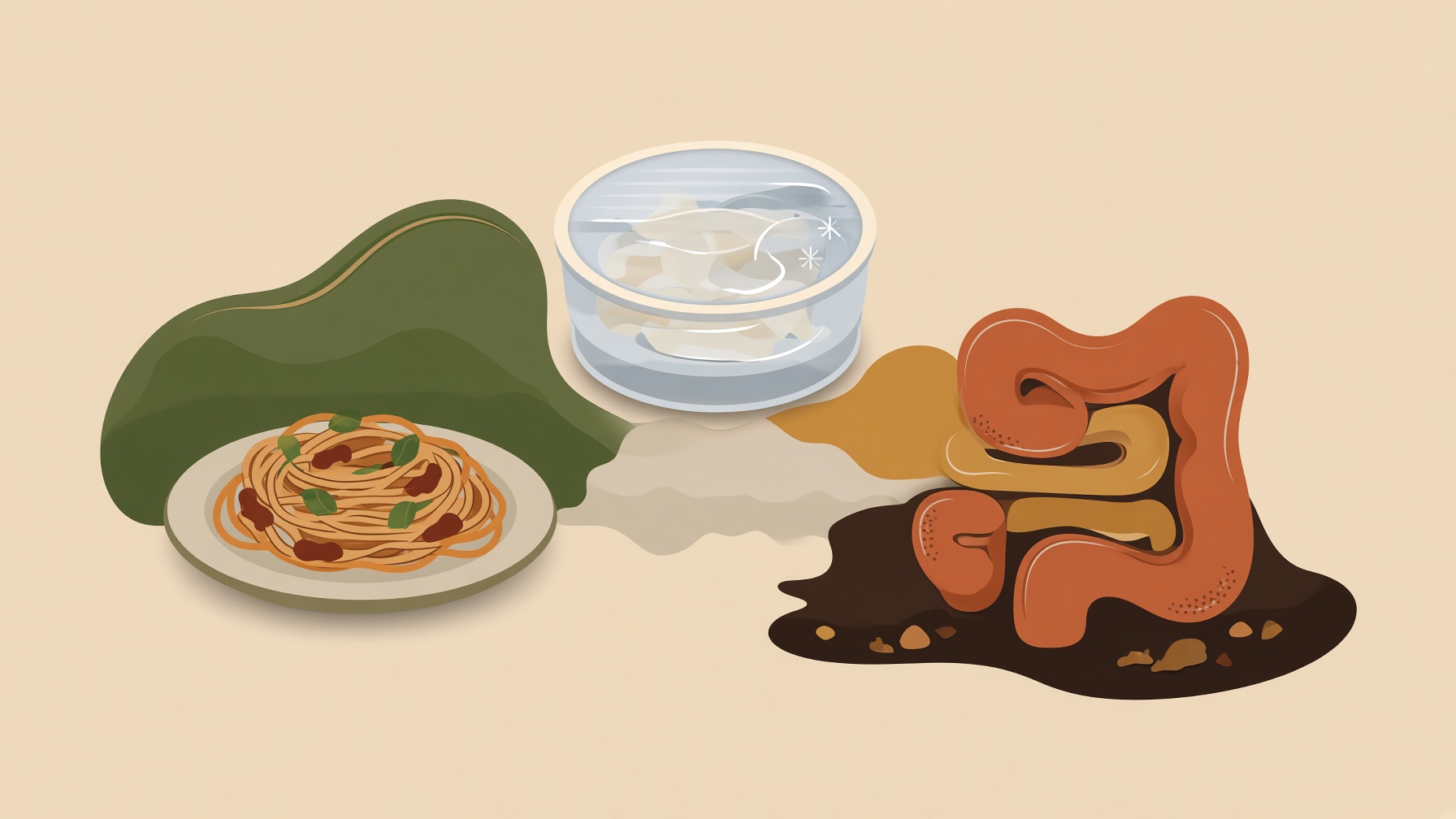
Cooling and reheating pasta can change the blood-glucose response to a meal, but small trials do not establish a reliable reduction.
Wikis
Resistant starch escapes digestion in the small intestine and reaches the colon, where gut microbes can ferment it into short-chain fatty acids.
Resistant starch is the portion of starch that escapes digestion in the small intestine and reaches the colon. Its defining feature is resistance to digestive enzymes, rather than a single chemical structure. It differs from slowly digestible starch, which is broken down more gradually but remains digestible in the small intestine .1
Several features can make starch resistant. It may be physically enclosed within food structures that limit enzyme access, or its granules may have an arrangement that resists breakdown. Resistance can also arise when cooked starch reorganizes during cooling, a process called retrogradation. Other forms involve chemical modification or complexes between amylose, a component of starch, and lipids. These mechanisms explain why resistant starch is a group of starch fractions rather than one uniform substance .1
In the colon, microorganisms can ferment resistant starch, producing gases and short-chain fatty acids such as acetate, propionate, and butyrate. Resistance therefore refers specifically to small-intestinal digestion; it does not mean the starch cannot be broken down by microorganisms later in the digestive tract .1
From this collection
Cooling and reheating pasta can change the blood-glucose response to a meal, but small trials do not establish a reliable reduction.