
What Happens to Food Before It Reaches Your Stomach?
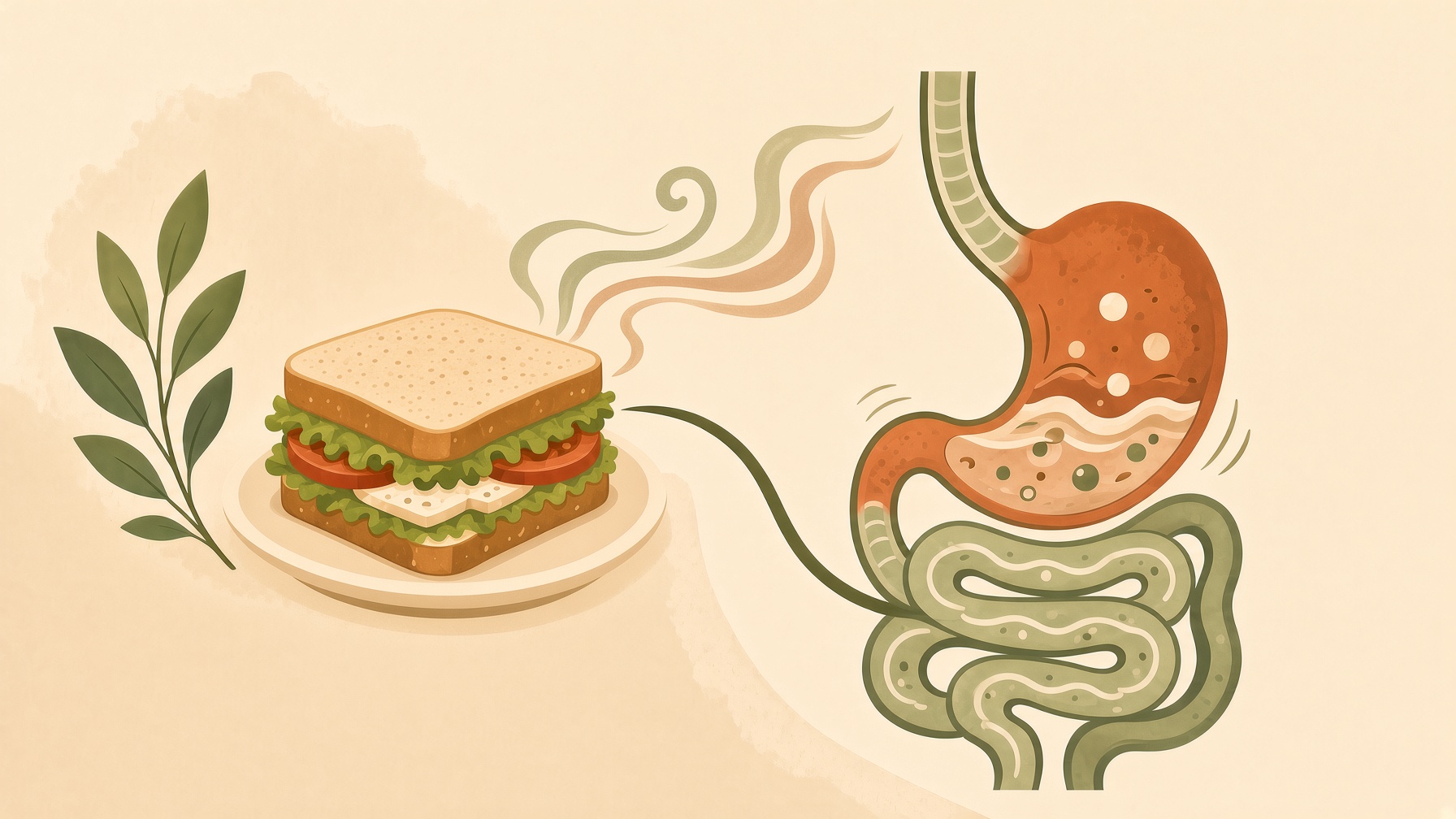
Digestion starts with chewing and starch breakdown in the mouth, while swallowing moves food toward a stomach already preparing for the meal.
Wikis
Salivary amylase, also called salivary alpha-amylase or ptyalin, is a digestive enzyme produced by the salivary glands and released into saliva. Its main digestive role is to begin the breakdown of dietary starch as food is chewed and mixed with saliva in the mouth .1,2
Starch consists largely of glucose units linked by glycosidic bonds. Salivary amylase hydrolyzes internal alpha-1,4 glycosidic bonds in the starch molecules amylose and amylopectin, producing smaller carbohydrates such as maltose, maltotriose, and dextrins. It does not complete starch digestion to free glucose and cannot directly hydrolyze the alpha-1,6 bonds at the branch points of amylopectin .1
Although starch digestion begins in the mouth, salivary amylase can remain active for some time after the food bolus is swallowed. Its activity can continue within the stomach while conditions inside the bolus remain sufficiently non-acidic. As gastric acid penetrates the bolus and lowers its pH, salivary amylase becomes largely inactive .1
Salivary amylase is closely related to pancreatic amylase but is produced in the salivary glands rather than the pancreas. Salivary amylase begins starch digestion in the mouth and can continue acting briefly after swallowing, whereas pancreatic amylase is released into the small intestine and continues the enzymatic breakdown of starch there .1
From this collection
Digestion starts with chewing and starch breakdown in the mouth, while swallowing moves food toward a stomach already preparing for the meal.