
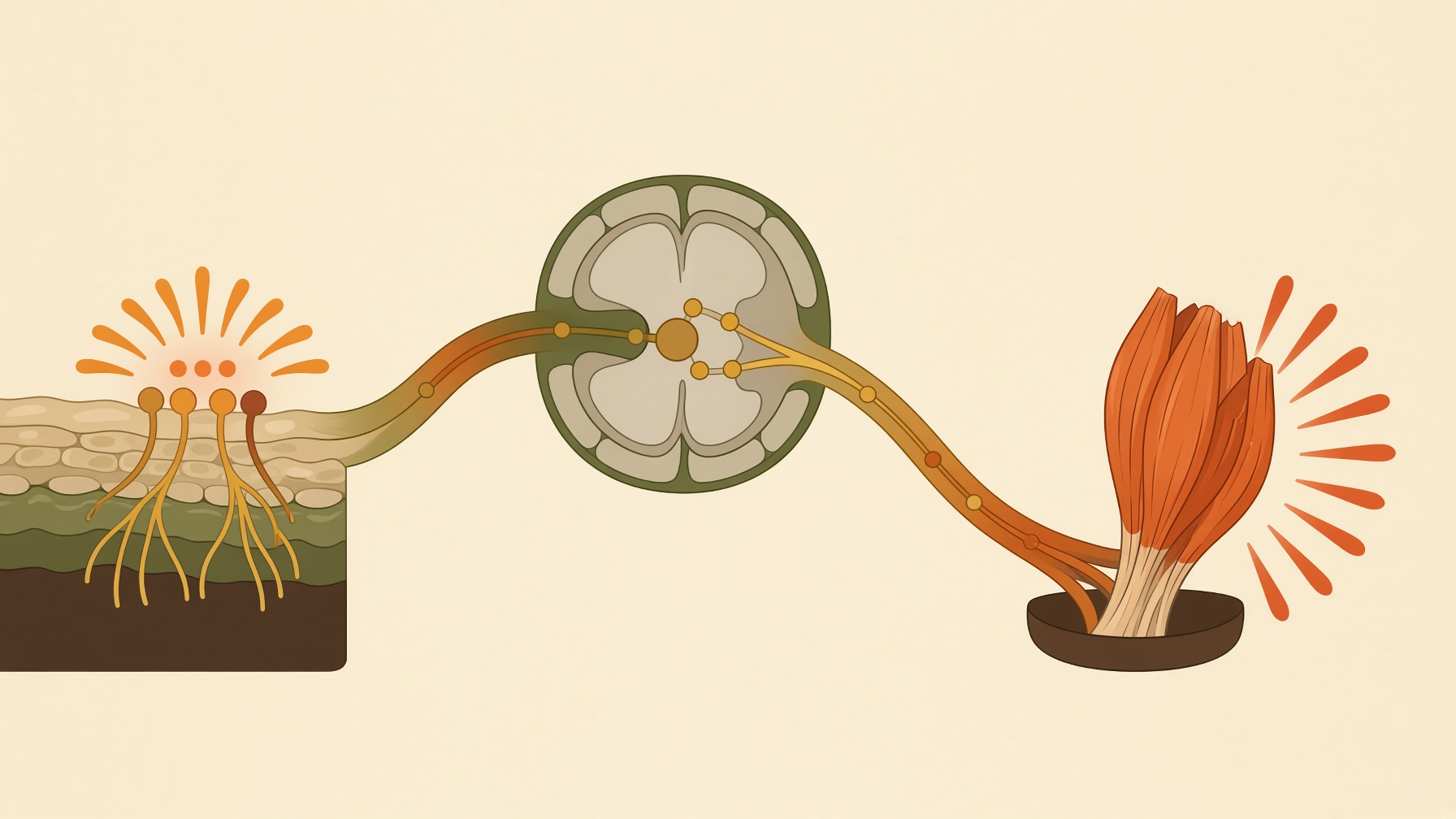
How Your Body Turns a Stimulus Into a Reflex
A reflex arc carries sensory information into the central nervous system and sends motor commands outward to produce an automatic response.
Wikis
A sensory receptor is a specialized cell, nerve ending, or cellular structure that detects a particular type of physical or chemical stimulus and converts it into a signal that can be processed by the nervous system. This conversion is called sensory transduction. Different receptors are specialized for stimuli such as mechanical force, temperature, light, chemicals, or noxious stimuli .1,2
When a sensory receptor is stimulated, transduction produces a graded electrical change, commonly called a receptor potential or generator potential. The size of this electrical response generally depends on properties of the stimulus, including its intensity. In sensory nerve endings, a sufficiently large graded potential can lead to action potentials that travel toward the central nervous system .1,2
Not all sensory receptors are endings of sensory neurons. Some sensory systems use separate specialized receptor cells that detect a stimulus and then release neurotransmitters onto afferent neurons. Examples include the hair cells of the auditory and vestibular systems. Other receptors, including many somatosensory receptors in the skin, muscles, and tendons, involve specialized endings of afferent neurons themselves .1,2
The term sensory receptor should also be distinguished from a receptor protein. A receptor protein is an individual molecule involved in detecting or responding to a signal, whereas a sensory receptor in physiology may be an entire specialized cell, nerve ending, or receptor structure that initiates sensory signaling .1
From this collection
A reflex arc carries sensory information into the central nervous system and sends motor commands outward to produce an automatic response.