
How Your Kneecap Helps You Move
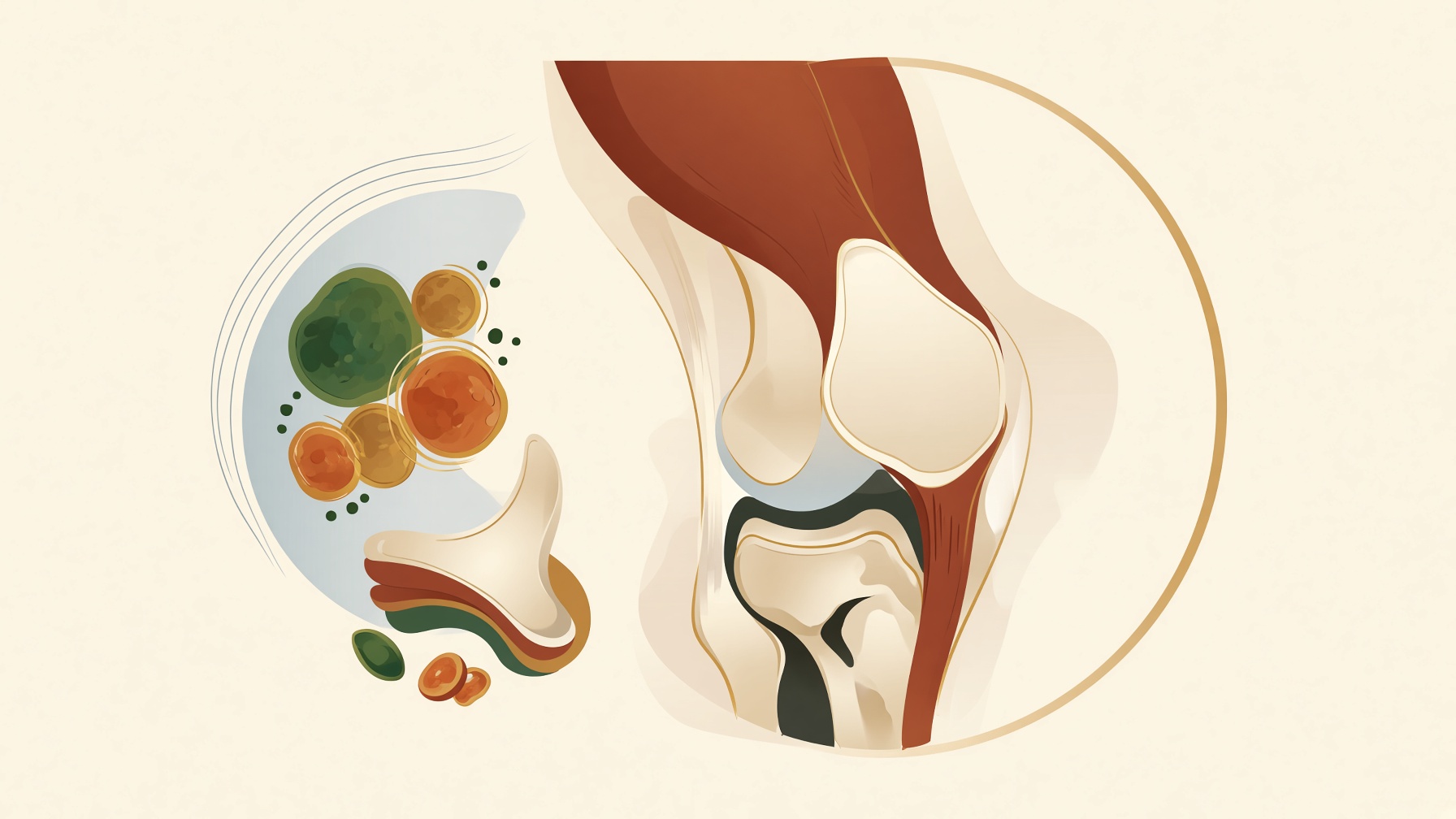
The kneecap improves the quadriceps muscle’s leverage by holding the tendon away from the knee joint, helping the muscle straighten the leg.
Wikis
A sesamoid bone is a bone that is partially or completely embedded within a tendon, usually near a joint or where the tendon passes around a bony prominence. Rather than simply forming part of a chain of bones, a sesamoid becomes part of the tendon’s mechanical system. Most sesamoid bones are small, but the patella, or kneecap, is the largest sesamoid bone in the human body .1,3
Sesamoid bones can change the path and angle at which a tendon pulls. In this way, they can alter mechanical leverage and help transmit forces produced by muscles. Their position can also reduce friction or pressure on a tendon as it moves over nearby structures. The exact mechanical role depends on the sesamoid’s location and the joint or tendon with which it is associated .1
The number and position of sesamoid bones can vary between people. Some, such as the patella, are regular components of human anatomy, while smaller sesamoids in the hands and feet are more variable. A sesamoid bone is also distinct from an accessory ossicle. Sesamoids are defined by their relationship with a tendon, whereas accessory ossicles are extra bones that commonly arise from separate or unfused ossification centers and are not necessarily embedded in tendons .1,3
Sesamoid bones develop through ossification within tendon-associated tissue. Their development can be influenced by intrinsic factors, including genetic influences, as well as local mechanical conditions such as skeletal geometry, posture, and muscle activity .1,2
From this collection
The kneecap improves the quadriceps muscle’s leverage by holding the tendon away from the knee joint, helping the muscle straighten the leg.