
What Happens to Fiber Your Small Intestine Can’t Digest?
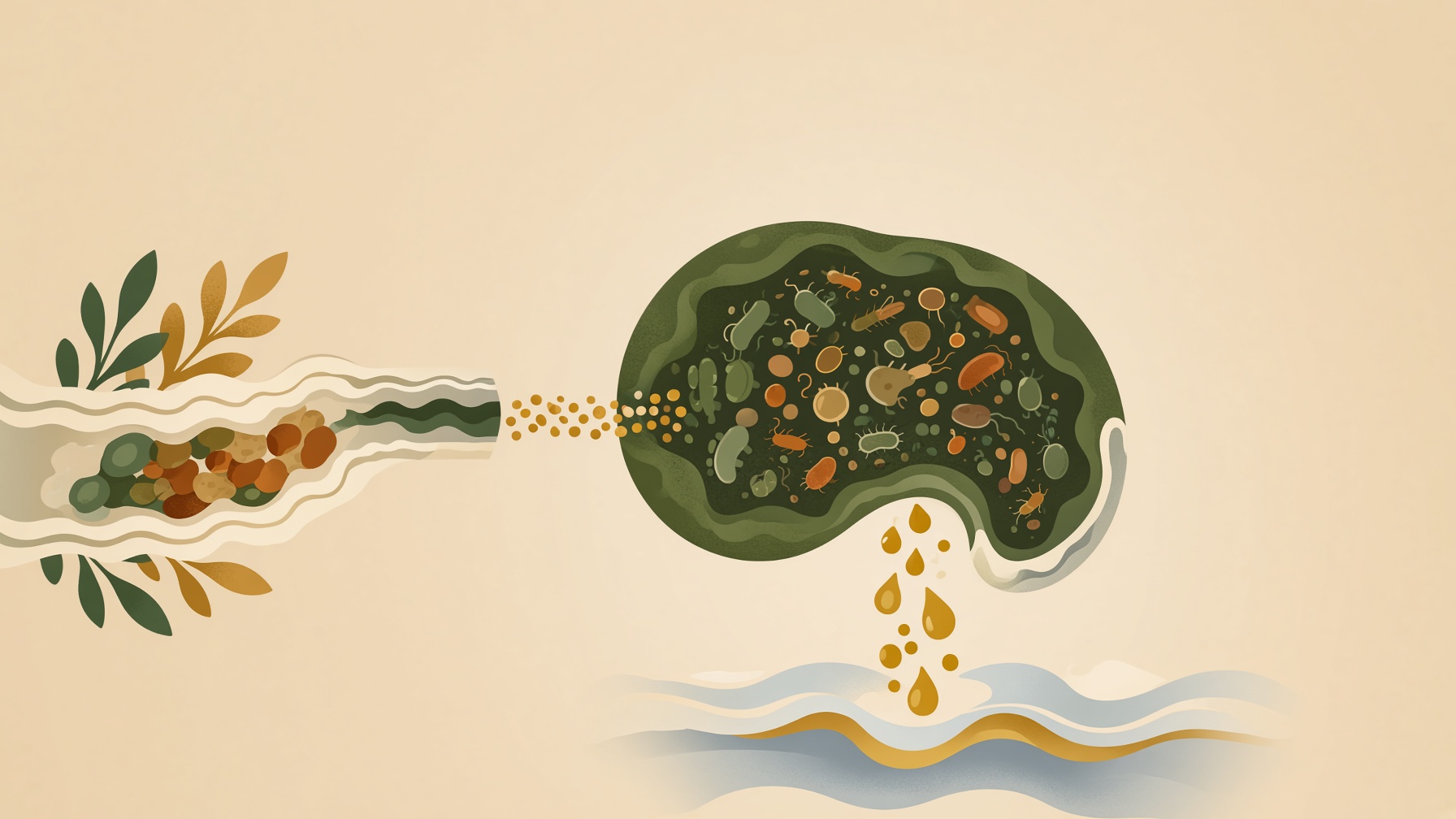
Colon microbes ferment some dietary fiber into short-chain fatty acids that the body can absorb, recovering energy human enzymes cannot release.
Wikis
Short-chain fatty acids (SCFAs) are fatty acids with short carbon chains. In the human large intestine, the principal SCFAs are acetate, propionate, and butyrate. They are produced mainly when gut microorganisms ferment carbohydrates that have escaped digestion and absorption in the small intestine, particularly components of dietary fiber and resistant starch .1,2
Different members of the gut microbiota use different metabolic pathways to produce SCFAs, and microorganisms can also use fermentation products made by other species as substrates. As a result, the amounts and relative proportions of individual SCFAs depend on factors such as the available substrates, the composition and activity of the microbial community, and conditions within the colon .1,2
Most SCFAs produced in the colon are absorbed rather than excreted in feces. They can serve as metabolic fuels and signaling molecules. Butyrate is used extensively as an energy source by cells lining the colon, while acetate and propionate are absorbed into the portal circulation and participate in host metabolism. SCFAs can also interact with cell-surface receptors and other cellular pathways, allowing them to influence physiological processes beyond their role as energy substrates .1,2
Short-chain fatty acids are distinct from the longer-chain fatty acids that make up much of the fat in the diet. In discussions of the gut microbiome, SCFAs commonly refer to microbial fermentation products such as acetate, propionate, and butyrate .1
From this collection
Colon microbes ferment some dietary fiber into short-chain fatty acids that the body can absorb, recovering energy human enzymes cannot release.