
Wikis
Sodium
1
related articles
Open in Explore
Sodium is a chemical element and an essential mineral nutrient. In body fluids it occurs as sodium ions, written Na+, which carry a positive electrical charge. Sodium is the main positively charged ion in the fluid outside cells, including blood plasma and the fluid between cells. It is one of the body’s electrolytes, the dissolved ions involved in fluid balance and electrical activity .1
Sodium helps establish the difference in dissolved-particle concentration between cells and their surroundings. That difference influences water movement across cell membranes. Sodium also contributes to normal nerve and muscle function. The kidneys help regulate the amount retained in the body by filtering sodium and returning much of it to the blood, while allowing some to leave in urine .1,2
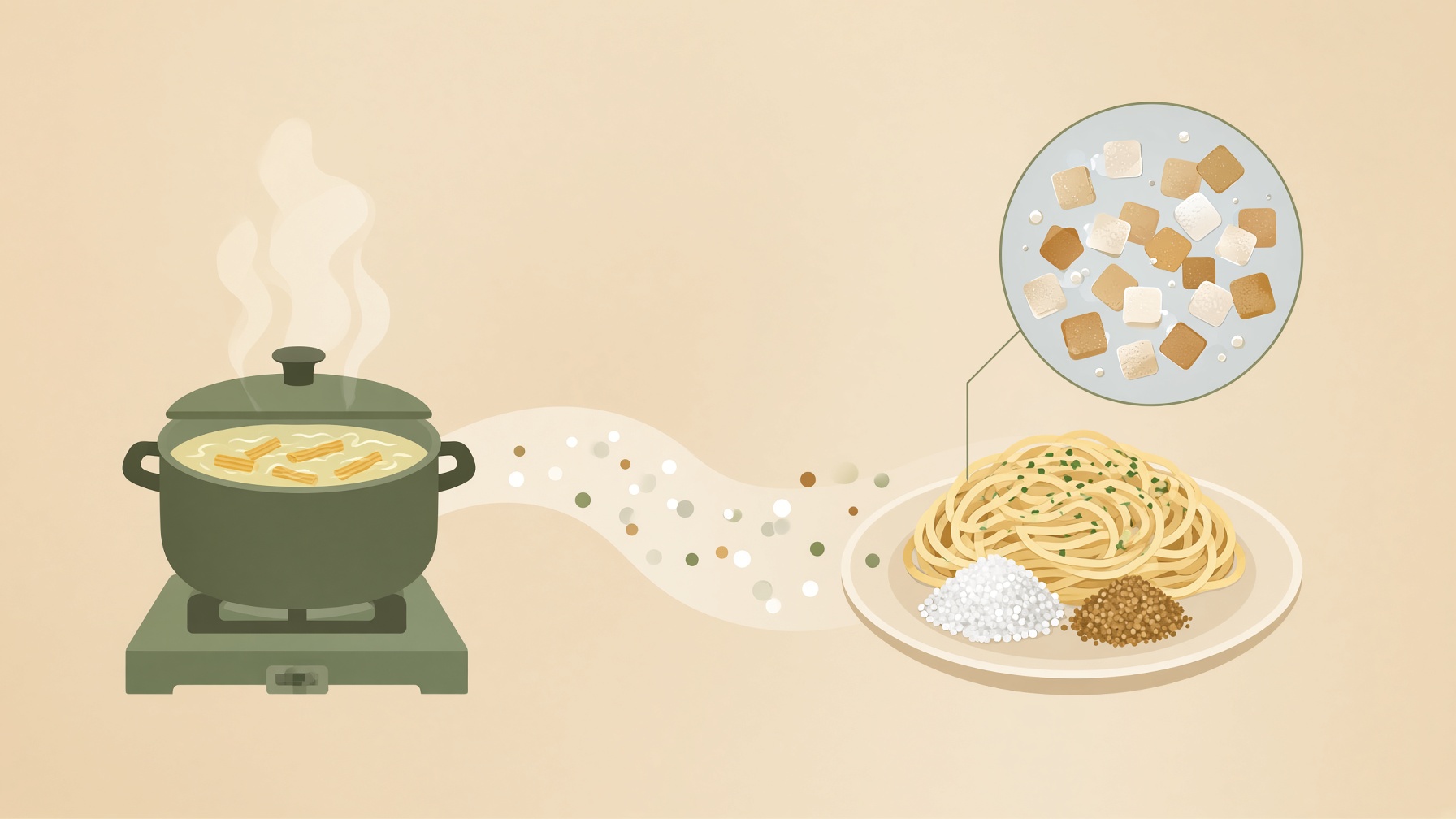
Sodium and table salt are related but are not interchangeable names. Table salt is sodium chloride, a compound containing both sodium and chloride. Other compounds, including sodium bicarbonate, also supply sodium. A food’s sodium content therefore includes sodium from several possible ingredients, not just added table salt. The sodium amount on a nutrition label refers to the nutrient rather than the total mass of all those compounds .2
References
- Betts JG, Young KA, Wise JA, Johnson E, Poe B, Kruse DH, Korol O, Johnson JE, Womble M, DeSaix P Anatomy and Physiology 2e. 2022. About this source Original source
- U.S. Food and Drug Administration Sodium in Your Diet. Original source
From this collection
Articles