
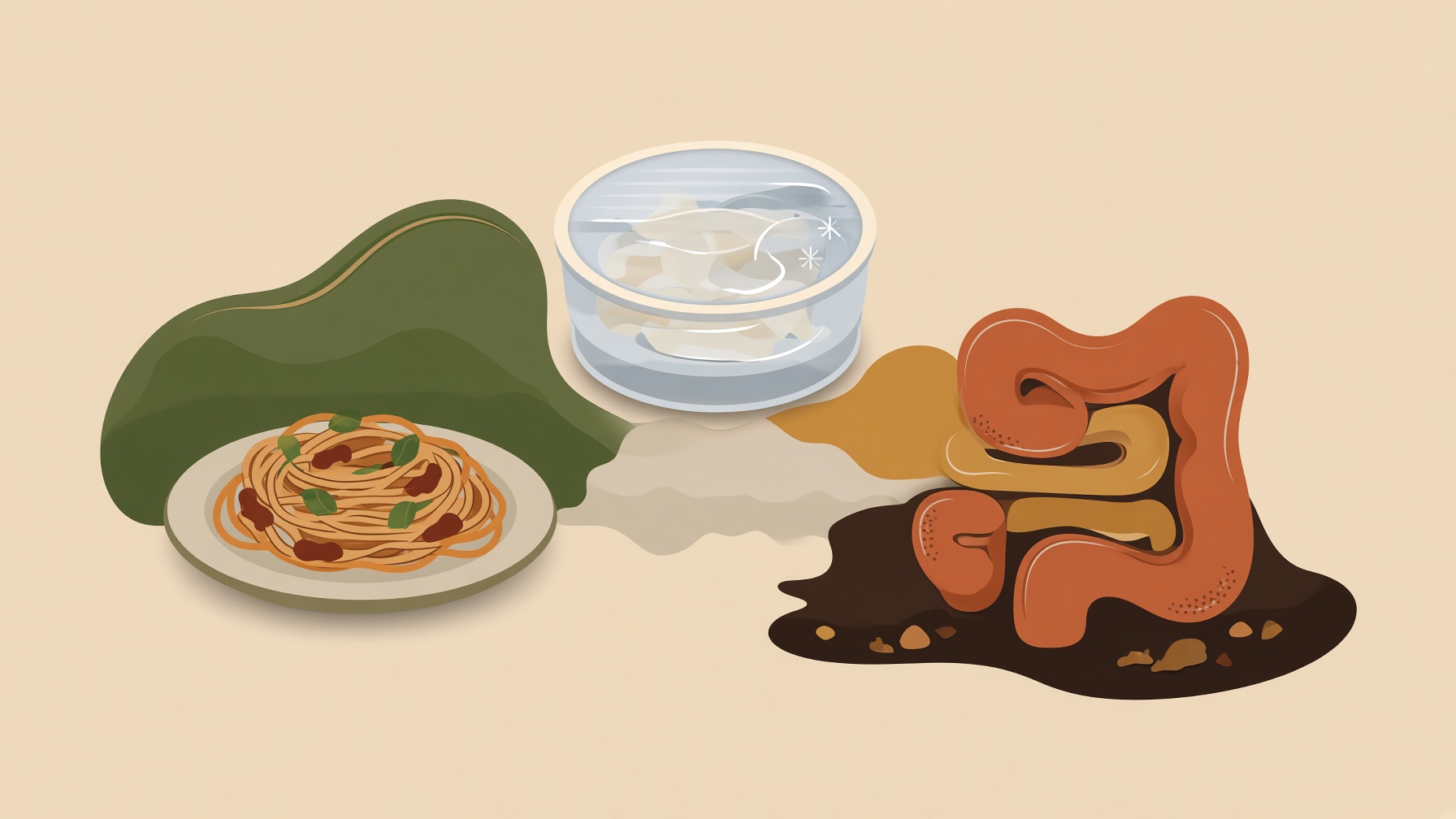
When Pasta Becomes Leftovers, Is It Still the Same Meal?
Cooling and reheating pasta can change the blood-glucose response to a meal, but small trials do not establish a reliable reduction.
Wikis
Starch retrogradation occurs when gelatinized starch chains reorganize during cooling, changing the texture and digestibility of starchy foods.
Starch retrogradation is the reorganization of starch molecules into more ordered structures after starch has been gelatinized. It involves amylose and amylopectin, the two main components of starch, coming together again after their earlier arrangement has been disrupted. The term describes a change in molecular organization that can affect the texture and digestibility of starchy foods .1
Gelatinization and retrogradation are distinct processes. During gelatinization, heating starch with sufficient water causes its granules to swell and disrupts their organized structure. During subsequent cooling, starch chains can associate with one another and form a network. Amylose, which consists mainly of unbranched chains, contributes strongly to the initial network. The more highly branched amylopectin generally reorganizes more slowly, contributing to changes over days or weeks .2
These molecular changes can strengthen a starch gel and make it firmer. Their extent depends on the starch's composition, storage conditions, and interactions with other food components. Retrogradation therefore does not proceed identically in every food .2
From this collection
Cooling and reheating pasta can change the blood-glucose response to a meal, but small trials do not establish a reliable reduction.