
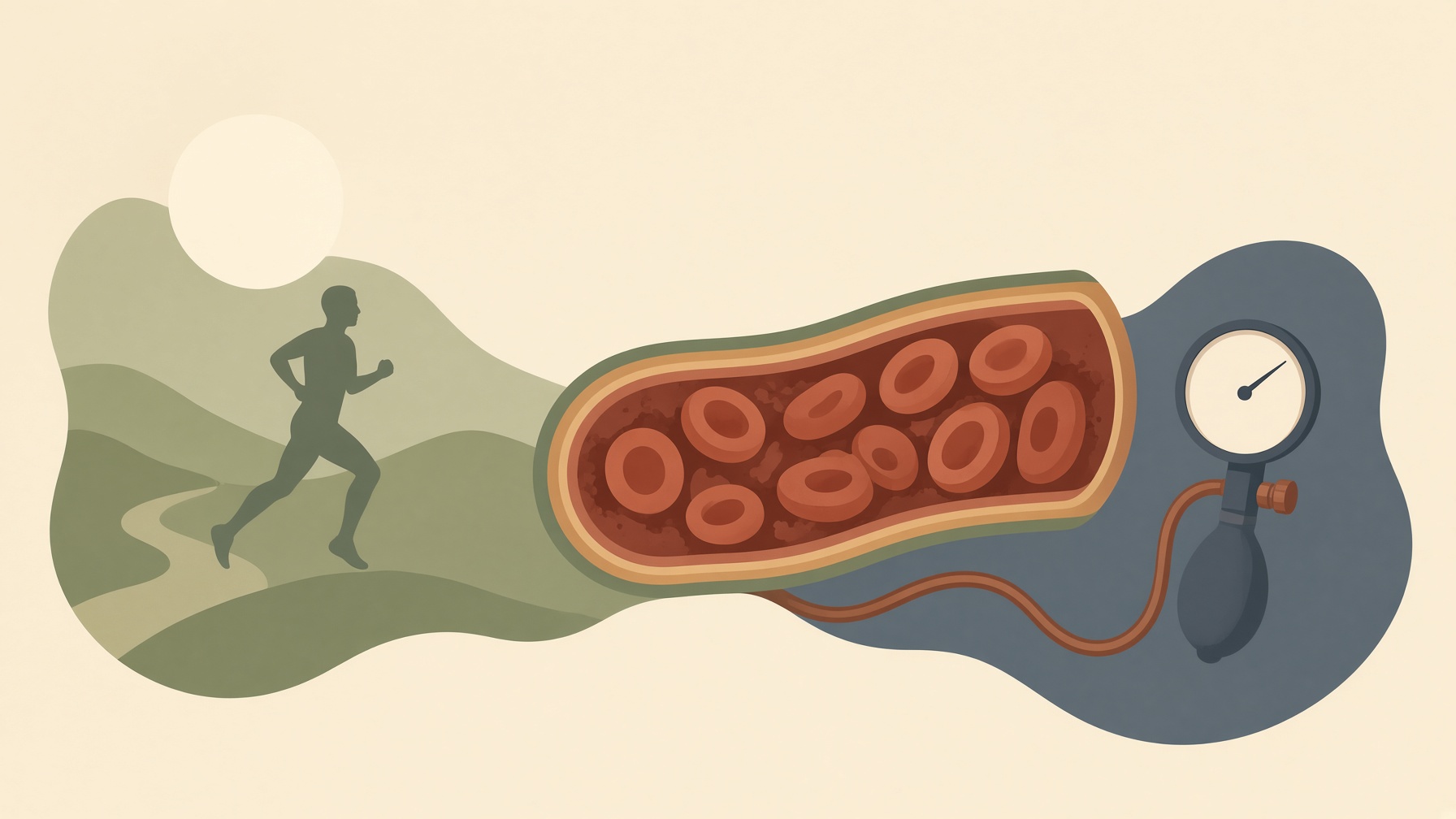
Your Blood-Pressure Reading during Exercise Doesn't Mean the Same Thing as the One at the Clinic. Why?
Blood pressure during exercise reflects physical effort, so a temporary rise does not carry the same meaning as persistent elevation at rest.
Wikis
Systemic vascular resistance describes how strongly the body's blood vessels oppose blood flow, helping determine arterial pressure alongside cardiac output.
Systemic vascular resistance, or SVR, describes how strongly the body’s systemic blood vessels oppose blood flow. It is also called total peripheral resistance. Together with cardiac output, the amount of blood the heart pumps each minute, it helps determine arterial blood pressure .1
Arterioles are major adjustable sites of this resistance. These small arteries have smooth muscle that can narrow or widen the passage through which blood flows. Narrowing, called vasoconstriction, increases resistance; widening, called vasodilation, decreases it. Nerve signals, hormones, and local chemical signals help control these changes .2
Vessel diameter has a particularly strong influence on resistance, but blood viscosity, meaning its resistance to flowing, and vessel length also contribute. SVR therefore reflects both the properties of the blood and those of the vessels it moves through. Changes in vessel muscle tone allow resistance to adjust as the circulation responds to the body’s needs .1
SVR is calculated from the pressure difference across the systemic circulation divided by cardiac output. This distinguishes resistance from pressure itself: a blood-pressure reading alone does not determine SVR because flow also matters. Systemic resistance concerns the circulation supplying the body’s tissues; resistance in the lung circulation is described separately as pulmonary vascular resistance .2
From this collection
Blood pressure during exercise reflects physical effort, so a temporary rise does not carry the same meaning as persistent elevation at rest.