
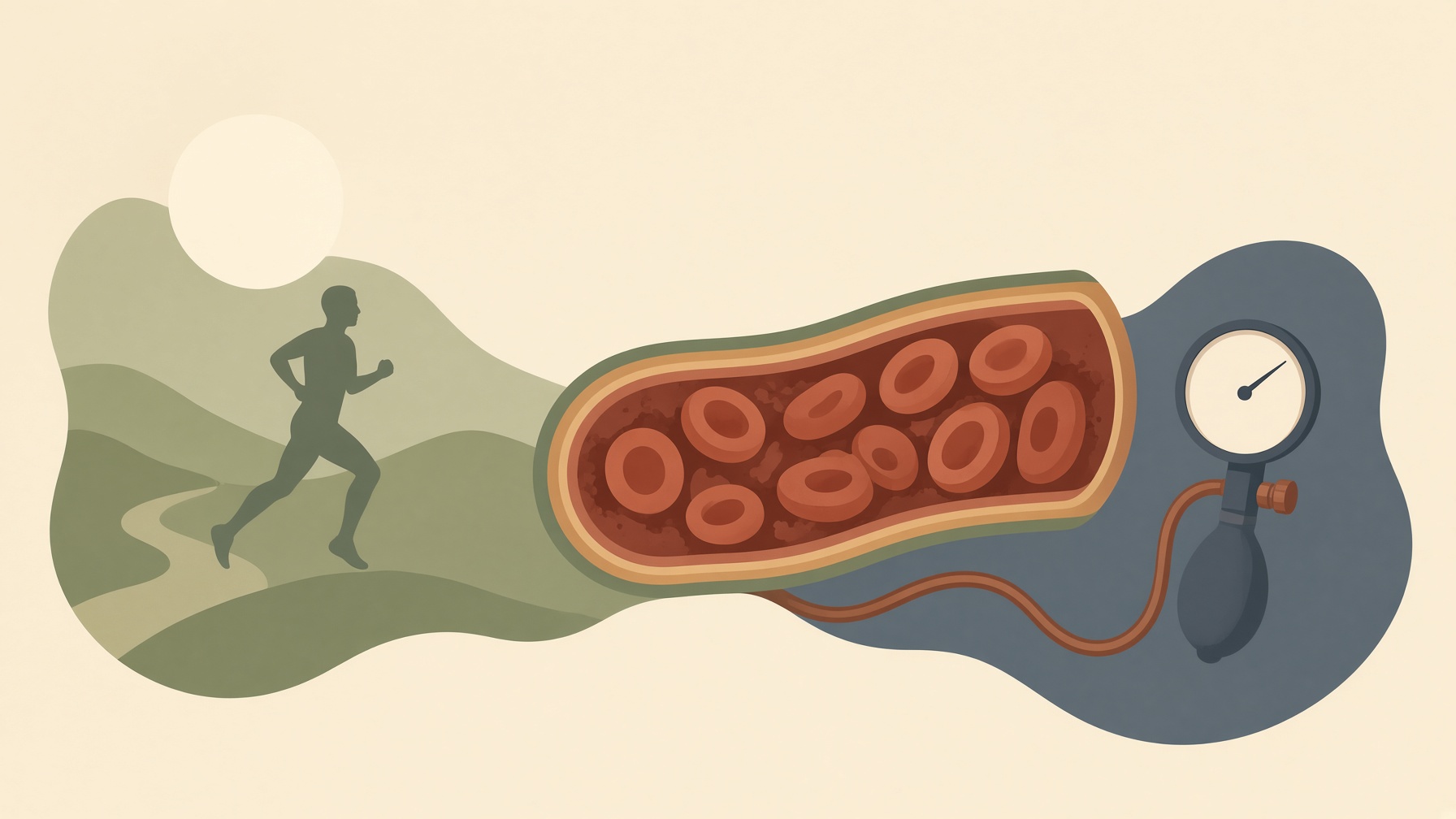
The two numbers on a blood-pressure monitor can feel like a verdict: good or bad, reassuring or worrying. That familiar judgment becomes less straightforward when the reading comes from a treadmill session. If the number would catch your attention in a quiet clinic, what should you make of seeing it during physical effort?
During dynamic exercise such as treadmill walking or cycling, the heart pumps more blood. In generally healthy adults, systolic pressure, the upper number on the monitor, typically rises as this happens. Meanwhile, the blood vessels supplying the active muscles widen, reducing resistance to blood flow. Diastolic pressure, the lower number, usually stays much the same or decreases slightly. Increased pumping and widening vessels happen together, so the two pressure numbers need not climb together. This is the usual dynamic-exercise pattern, with individual variation.1
Pressure that remains elevated at rest describes a different pattern from the temporary rise during physical work. A single resting measurement cannot establish that persistence. In randomized trials that followed adults for several years, blood-pressure-lowering drug strategies reduced stroke events in people with and without previous cardiovascular disease. Those trials compared medication strategies over time, rather than testing exercise or the danger of a single reading. They do not tell us how much risk differs between identical pressures at rest and during exercise, or identify the duration of the elevation as the only reason for any difference.1,2
The pressure shown by the cuff also does not directly measure the amount of blood moving through the brain. The brain actively adjusts the flow of blood in response to pressure changes, through a process called cerebral autoregulation. This buffers some effects of pressure changes, so a rise in systemic pressure need not produce a proportional rise in brain blood flow. The buffering is incomplete, especially when pressure changes rapidly, and flow is not held perfectly constant. Neither this regulation nor a typical exercise response establishes that a pressure peak is safe, prevents strokes, or strengthens vessel walls.1,3
It’s understandable to want one clear answer when you see a blood-pressure reading. To make sense of it, the circumstances matter too: what you were doing, and when the measurement was taken. That gives you a better way to talk about the number without deciding, from the display alone, that it must be either harmless or alarming.

Join the discussion
No account or email is required. Your display name and comment will be public.