
What’s Behind a Six-Pack?
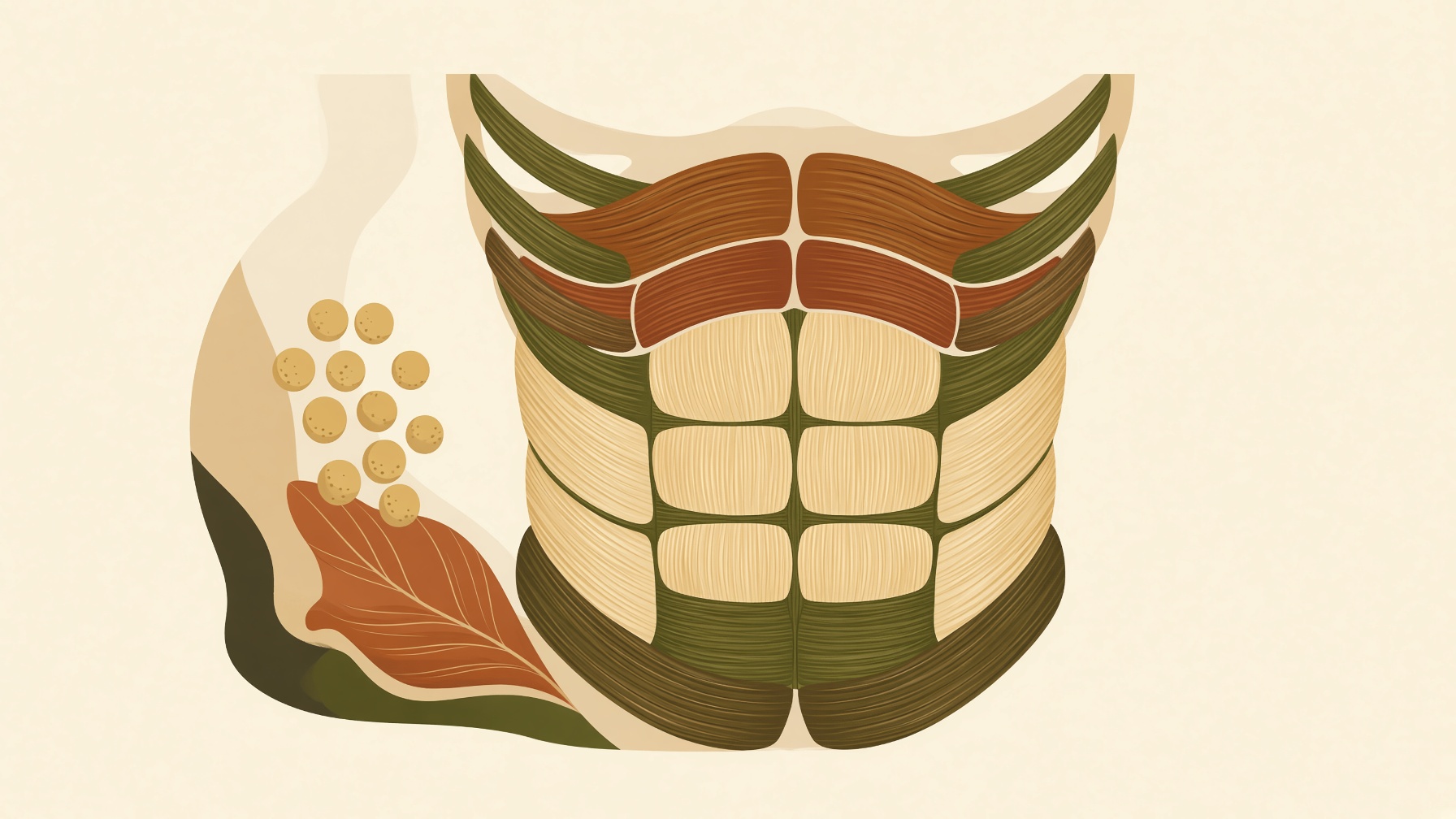
Abdominal muscles form layers with different fiber directions, making the visible six-pack only one part of the anatomy that supports the trunk.
Wikis
Tendinous intersections are transverse bands of dense connective tissue that cross the rectus abdominis muscle and divide it into muscular segments. They are also called tendinous inscriptions. Most commonly, three intersections are present on each side, although anatomical variation occurs and additional or incomplete intersections may be found .1,2
These bands are closely attached to the anterior rectus sheath, the connective-tissue layer covering the front of the rectus abdominis. Their depth varies. Many intersections extend only partly through the thickness of the muscle, while some extend through its full thickness toward the posterior surface of the muscle .2
By interrupting the long vertical muscle belly, tendinous intersections create the segmented anatomy characteristic of the rectus abdominis. When the muscle is sufficiently developed and visible beneath the skin and subcutaneous tissue, these divisions contribute to the familiar “six-pack” appearance .1
Tendinous intersections should not be confused with the linea alba, which runs vertically along the abdominal midline and separates the left and right rectus abdominis muscles. Tendinous intersections instead run primarily across each individual rectus muscle .1,2
From this collection
Abdominal muscles form layers with different fiber directions, making the visible six-pack only one part of the anatomy that supports the trunk.