
How Your Body Digests and Absorbs Protein
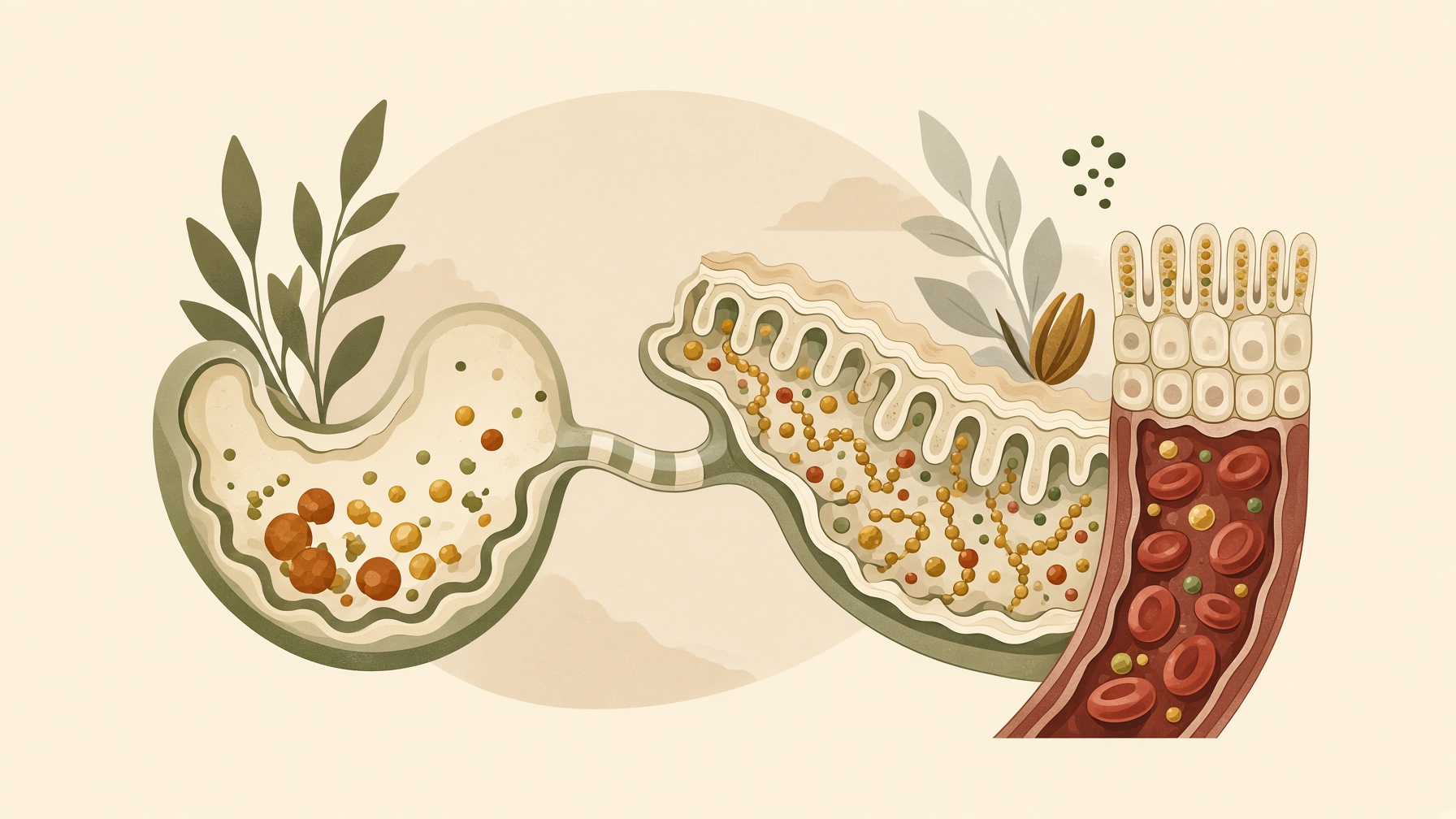
Protein digestion breaks food proteins into amino acids and small peptides that intestinal cells can absorb for the body’s ongoing protein turnover.
Wikis
Zymogens are inactive or weakly active precursor forms of enzymes that undergo a molecular change before acquiring their full catalytic activity. They are also called proenzymes. Zymogen formation is particularly common among proteases, enzymes that hydrolyze peptide bonds, because keeping a protease inactive until it reaches the appropriate location or receives the correct signal helps prevent unwanted protein degradation .1
Many protease zymogens are activated by limited proteolysis, in which another protease, or sometimes the zymogen itself, cleaves one or more specific peptide bonds. This cleavage can remove an inhibitory segment or trigger a conformational change that forms or exposes the functional active site. Because this proteolytic cleavage is generally not reversed under physiological conditions, zymogen activation can serve as a tightly controlled switch from low activity to high activity .1,2
Zymogens are used in several biological systems. Digestive proteases are prominent examples: the pancreas produces trypsinogen, chymotrypsinogen, proelastase, and procarboxypeptidases before they are activated in the small intestine. Sequential zymogen activation also occurs in systems such as blood coagulation, where activation of one protease precursor can activate others in a cascade and amplify an initial signal .1,2
A zymogen is therefore distinct from an active enzyme that is merely being reversibly inhibited. Zymogen activation usually involves a structural conversion of the precursor itself, commonly through proteolytic cleavage, rather than simply the removal of a molecule temporarily bound to an otherwise active enzyme .1
From this collection
Protein digestion breaks food proteins into amino acids and small peptides that intestinal cells can absorb for the body’s ongoing protein turnover.