
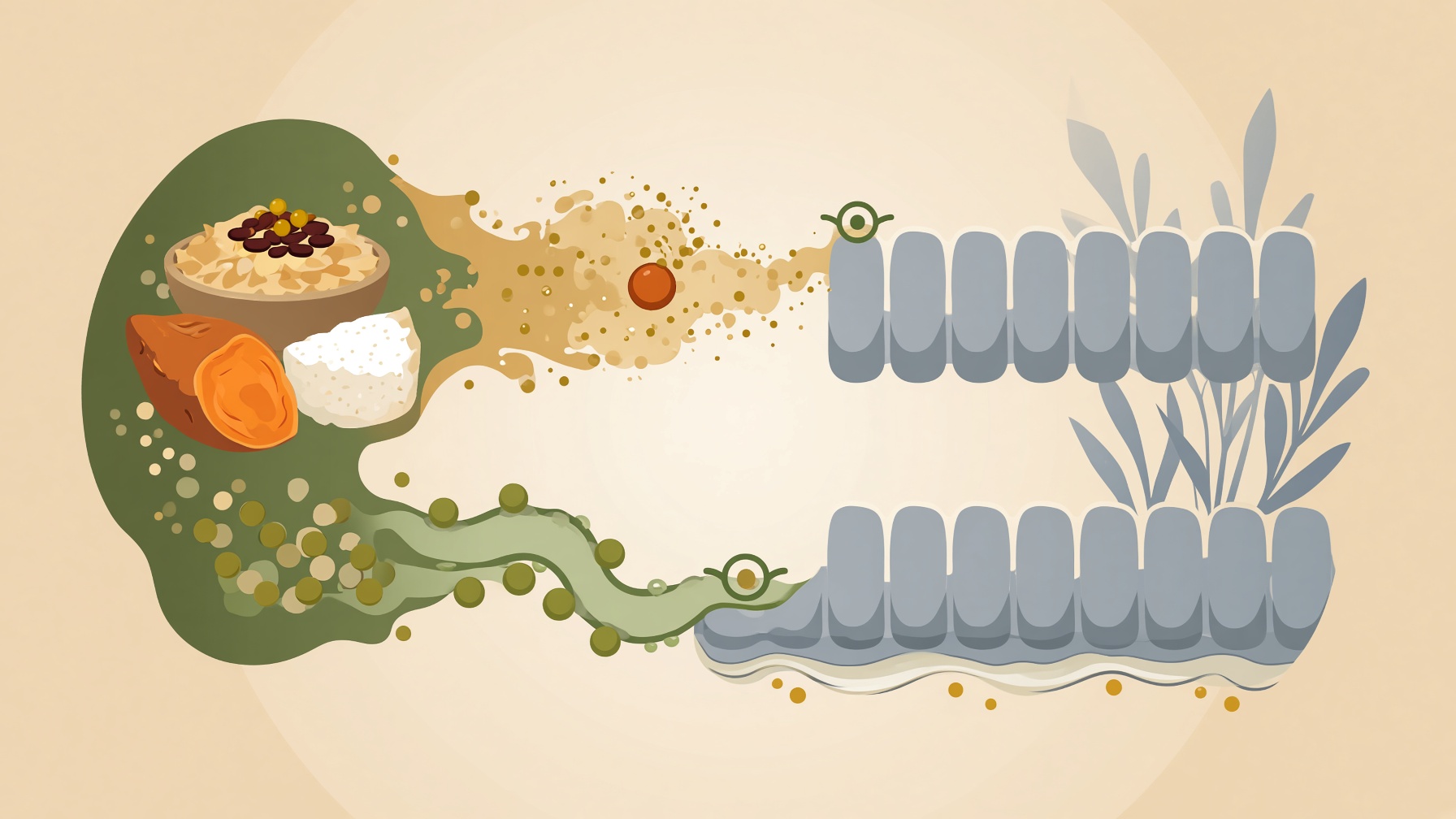
The words “added vitamin B12” can look like a small detail on a familiar food package. You might notice the vitamin name, glance at the amount and move on. But what does “added” change about digestion? Does the body have to do the same work to reach B12 that was already in a food?
Naturally occurring B12 in foods such as milk is bound to protein. Digestion has to free the vitamin before it can be absorbed. Stomach acid and protein-digesting enzymes help with this release. When B12 is added to a fortified food, it starts in a free form and does not need that separation from the original food proteins.1
“Free” describes the starting state, not the entire journey. Released B12 binds to haptocorrin, a protein in saliva. Digestive enzymes separate this pair in the first part of the small intestine. B12 then binds to intrinsic factor, a different protein produced in the stomach.1
The B12–intrinsic factor complex is taken up near the far end of the small intestine, in a region called the ileum. At ordinary dietary amounts, absorption of added B12 normally follows this binding-and-uptake route. Starting free of food protein therefore does not make intestinal uptake automatic or remove the usual role of intrinsic factor.1
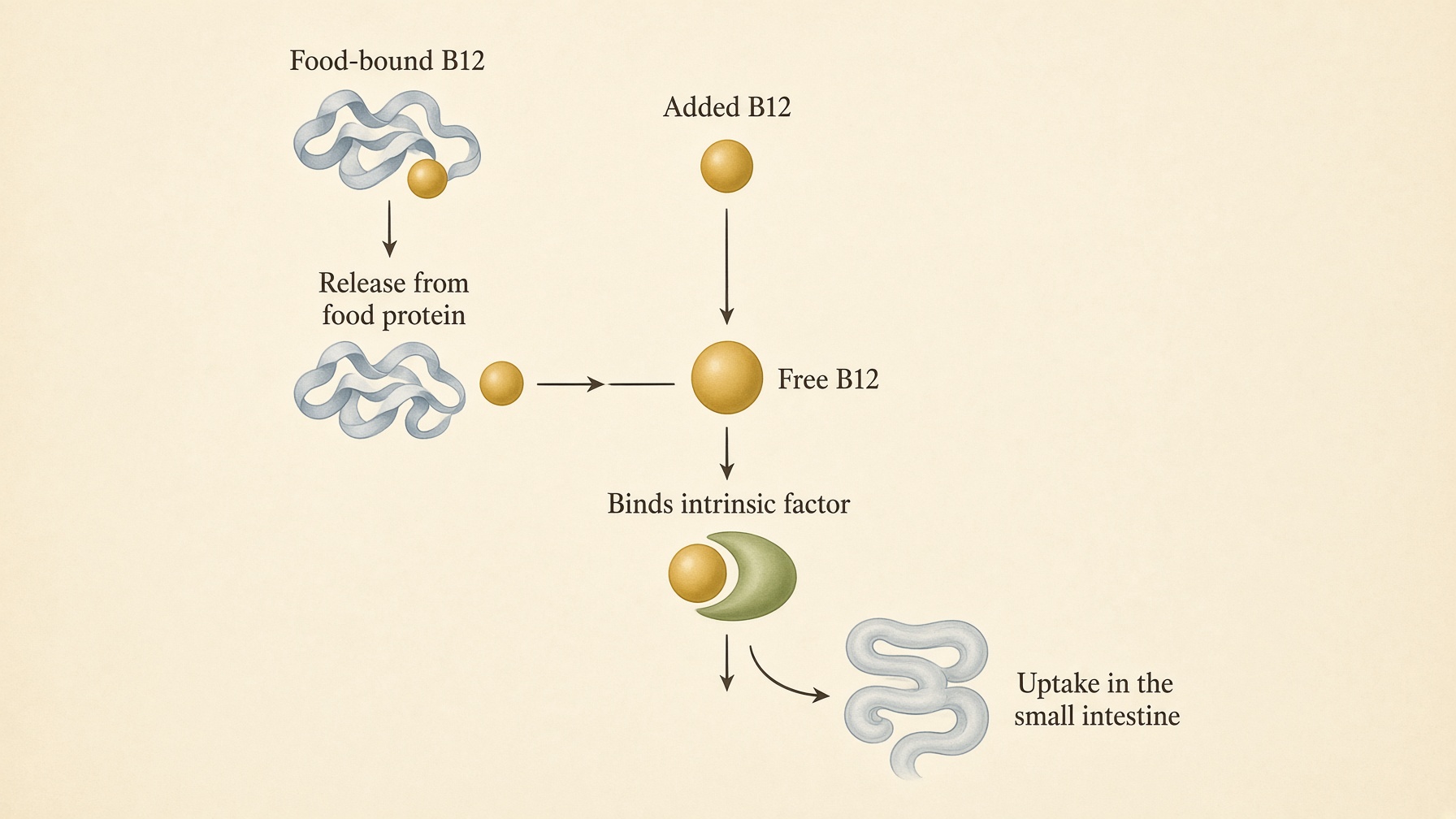
This explains which early step differs, without establishing how much B12 you would absorb from a particular breakfast. A comparison between milk and fortified cereal would also need to account for the foods and quantities involved. The starting form alone cannot rank their delivery of absorbed B12.1
“Added B12” may catch your eye again when you are choosing food or putting groceries away. It is a small phrase on an ordinary package, and it can be interesting without becoming the whole reason for choosing a meal. Taste, convenience and the foods you enjoy are still part of the conversation.

Join the discussion
No account or email is required. Your display name and comment will be public.