
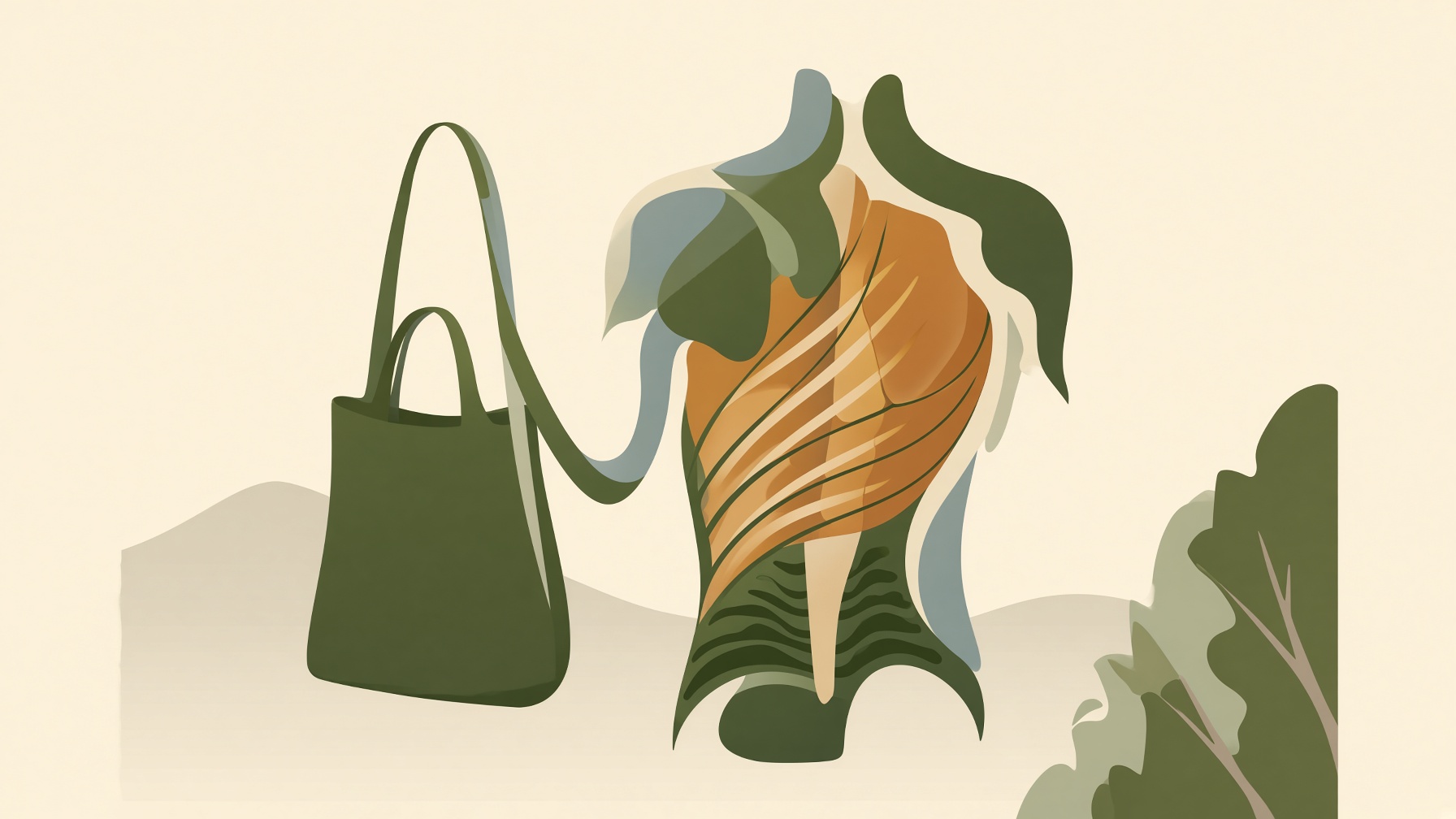
A bag in one hand makes the carrying arm look like the center of the task. The handle, grip and weight draw our attention to that side, while the other hand is free. What is happening on the free side of your back as you walk?
Weight held off center adds a tendency to turn the trunk. In treadmill tests with healthy adults, some back muscles on the side opposite the hand-held load showed higher electrical signals during loaded walking than during unloaded walking. This response is consistent with those muscles helping counter the uneven load. Here, “opposite” describes the muscles in relation to the hand holding the bag, rather than identifying the left or right side in general.1,2
The recordings came from electrodes placed on the skin, using a method called surface electromyography. They captured electrical signals from the sampled muscles while participants walked. The comparison followed the sampled muscles across two conditions: carrying the load and walking unloaded. A larger signal does not by itself tell us how much force a muscle produces. These findings therefore cannot rank which side pulls harder or calculate how the load is shared across the trunk.1,2,3
More electrical activity can also accompany less movement. In one experiment, healthy right-handed men aged 21–24 walked on a treadmill while holding a 5 kg load in their right hand. The speed was kept the same for walking with and without the load, so the comparison did not involve asking them to walk faster. Some back-muscle signals on their left were higher during carrying. A motion model estimated how the angles of selected spinal segments changed as they walked. Some of those segments moved through a narrower range of angles with the load than without it. The smaller ranges appeared in selected lower-back and mid-back segments, with the pattern varying by direction.1
That movement range was the difference between the largest and smallest angle during the task. A smaller range means less excursion in that particular segment and direction. It does not describe a sustained lean, a completely still spine or a lasting loss of flexibility. The movement was estimated from a model, rather than imaged directly at each vertebra. And the simultaneous findings do not establish that the higher electrical signals caused the smaller movement ranges.1
The electrical-response evidence included both women and men, while the segment-movement finding came from the experiment in young men. These were brief laboratory tasks, so they do not describe what happens with every bag, route or carrying duration. They also do not establish whether regular carrying builds strength, improves balance or causes harm.1,2,3
Calling your other hand “free” makes sense when you're using it for a key or a door handle. For the errand itself, that's all you need the word to mean. When the question is how you're carrying the bag, it helps to think about the whole movement, including the side that looks unoccupied.
Join the discussion
No account or email is required. Your display name and comment will be public.