
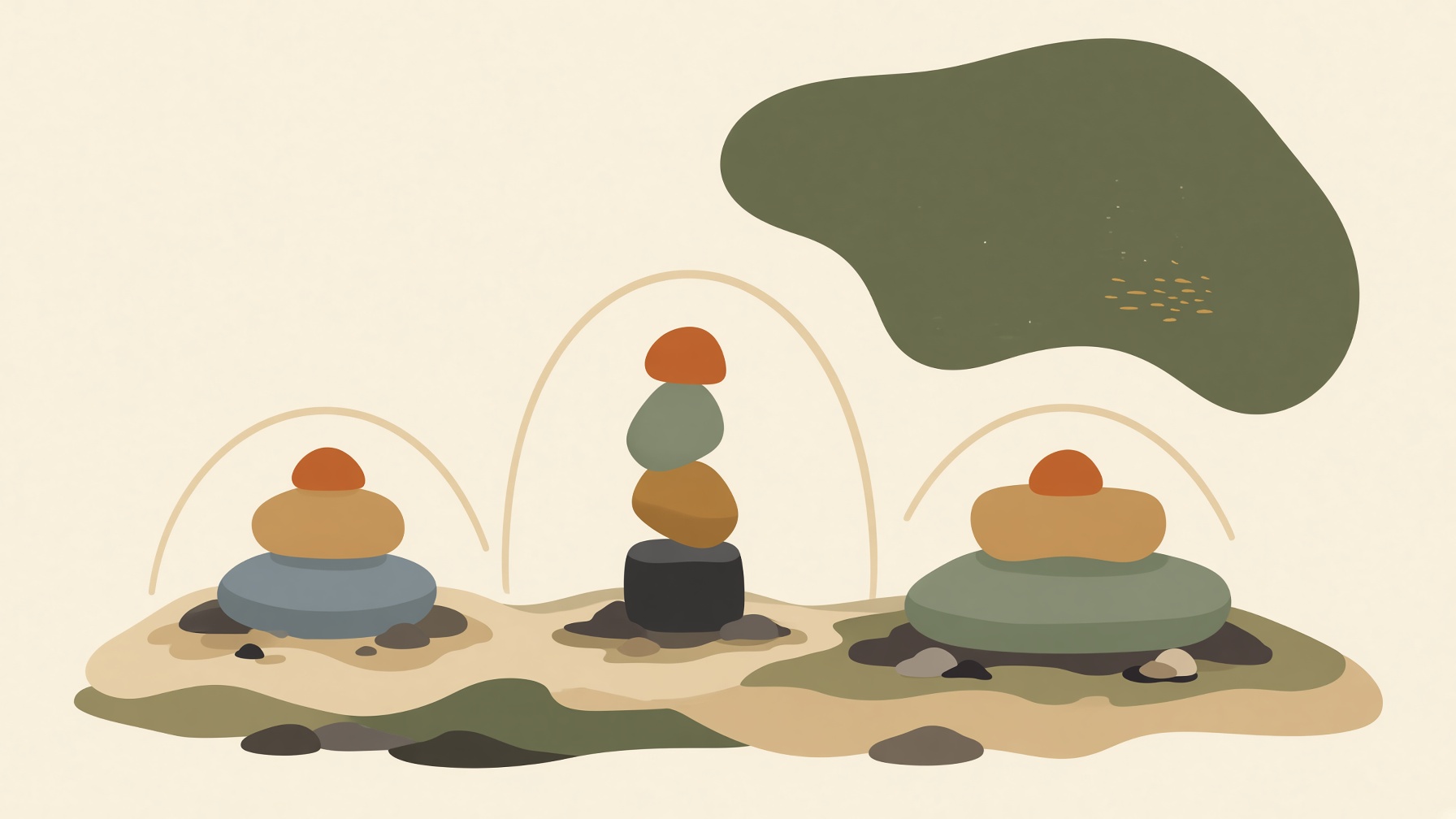
A small change in the way someone stands can noticeably change how easy it is to maintain balance. Moving the feet, bending the legs, or shifting body position changes the mechanical relationship between the body and the ground. Looking at those relationships helps explain why some standing positions feel naturally more secure than others.
For otherwise comparable static conditions, a higher center of mass generally reduces stability against tipping, while a smaller base of support, essentially the area supported by the feet, also tends to reduce stability. In either case, less displacement may be available before the vertical projection of the center of mass reaches the edge of the support base. That relationship is not governed by one universal tipping distance or angle. The amount of displacement required depends on factors such as geometry, starting position, direction, and whether the body is stationary or already moving .1,2
Stance width provides a straightforward example of changing the base of support. Moving the feet farther apart increases the mediolateral, or side-to-side, dimension of the base of support. This generally provides a larger lateral margin for center-of-mass movement, although very wide stances can also change the way postural control is organized .3
Body position can also change center-of-mass height. Bending the knees as part of an overall lower standing posture can lower the whole-body center of mass. Knee flexion is only one part of that posture, however. The positions of the hips, ankles, and trunk also influence where the center of gravity lies. Slight knee flexion can enhance stability during some lateral-perturbation tasks, but that does not mean deeper knee bending is always more stabilizing or that every balance task responds in the same way .4
Standing stability is easier to understand when posture is viewed as a mechanical relationship rather than a single “balanced” position. Changing how the body is arranged changes the room available for sway and the strategies needed to remain upright. A posture that feels more secure in one direction or task may not offer the same advantage in another, which is why stability cannot be reduced to one universal stance.
Join the discussion
No account or email is required. Your display name and comment will be public.