
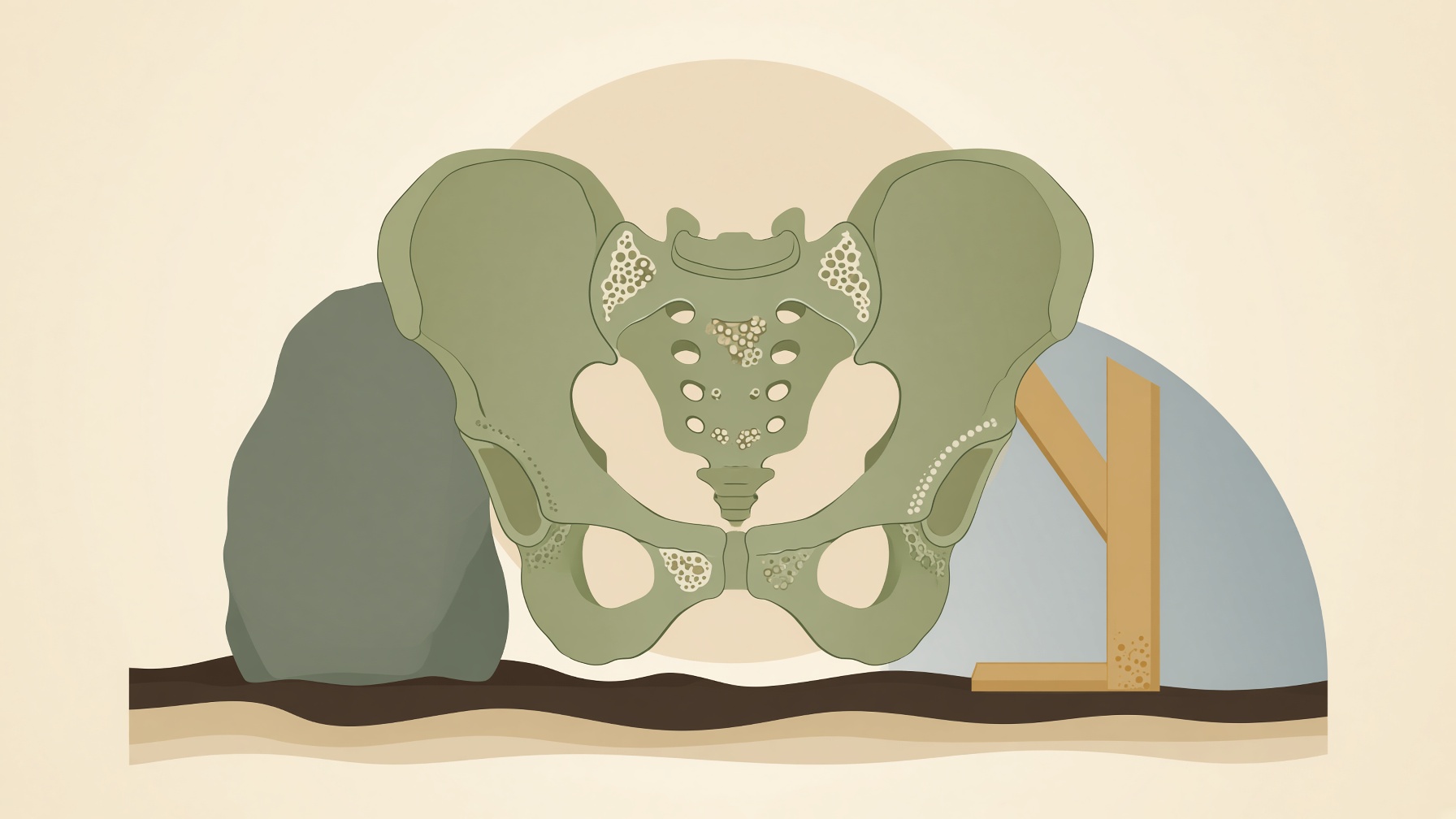
Why Your Pelvis Is Built for Stability
The pelvis limits movement through strong bony connections, providing a stable base that transfers upper-body weight toward the lower limbs.
Wikis
The axial skeleton is the central framework of the human skeleton, forming the longitudinal axis of the head and trunk. In an adult, it consists of 80 bones and includes the skull, vertebral column, and thoracic cage, along with the hyoid bone and the small auditory ossicles of the middle ear .1
The skull forms the bony framework of the head and protects the brain. The vertebral column extends from the skull through the neck and back and includes the vertebrae, sacrum, and coccyx. The thoracic cage consists of the ribs and sternum and surrounds much of the chest .1
Major functions of the axial skeleton include structural support and protection. Its bones protect structures including the brain and spinal cord and contribute to protection of the heart and lungs. They also provide attachment sites for muscles that move or stabilize the head, neck, and trunk .1
The axial skeleton is distinguished from the appendicular skeleton, which consists of the upper and lower limbs and the pectoral and pelvic girdles that connect them to the axial skeleton. Together, the axial and appendicular skeletons make up the bony skeleton of the body .1
From this collection
The pelvis limits movement through strong bony connections, providing a stable base that transfers upper-body weight toward the lower limbs.