
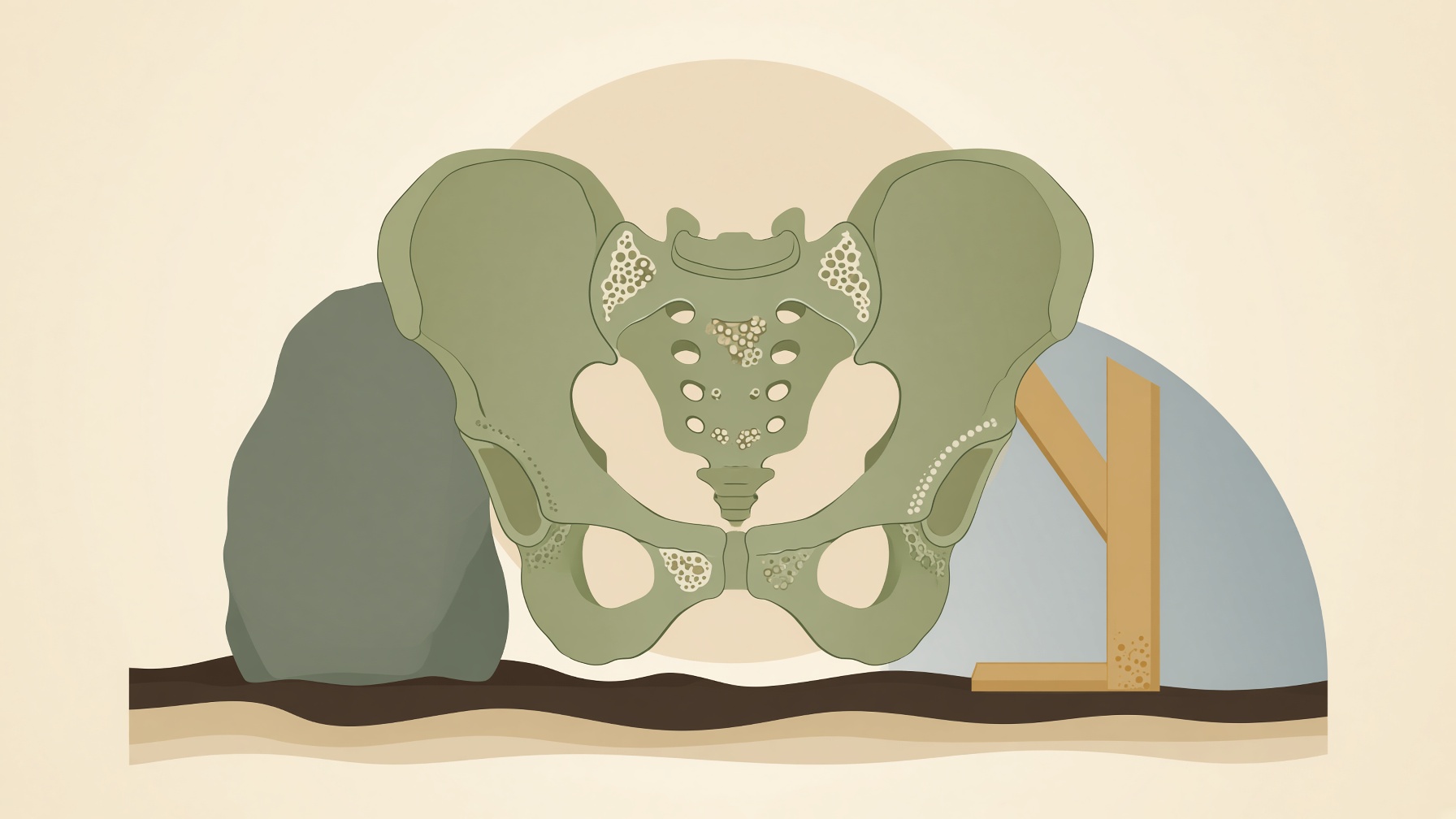
The pelvis does not move nearly as freely as some other parts of the skeleton, and that limitation is part of what makes it effective. Its bones are strongly joined, creating the stability needed to support the body and manage the forces that pass through it.
The bony pelvis is formed by two hip bones, the sacrum, and the coccyx. Each hip bone is firmly joined to the axial skeleton through its sacroiliac articulation with the sacrum. The right and left hip bones also come together at the front of the pelvis .1
This arrangement is quite different from the pectoral girdle at the shoulder. There, mobility helps increase the range of movement available to the upper limb. In the pelvis, the priorities are different. In the pelvis, the priorities are different. Its strongly united structure allows relatively little movement, helping provide a stable foundation for the upper body .1
Stability is especially important because the pelvis also helps transfer body weight. Load from the vertebral column passes through the pelvic girdle and hip joints before reaching the lower limbs. The pelvis therefore sits at an important transition point between the axial skeleton above and the limbs that support the body below.
The direction of that transfer becomes especially clear during phases of gait or stance in which one lower limb bears most of the body’s weight. During those periods of single-limb support, the pelvis transfers body load toward the weight-bearing hip and lower limb .1
The pelvis does not need a wide range of motion and this is where the pelvis’s limited mobility becomes useful rather than restrictive. Its strength comes from stability, allowing it to support the upper body and direct weight toward the lower limbs. Sometimes, less movement is exactly what the body needs.
Join the discussion
No account or email is required. Your display name and comment will be public.