
How Your Body Digests and Absorbs Dietary Fat
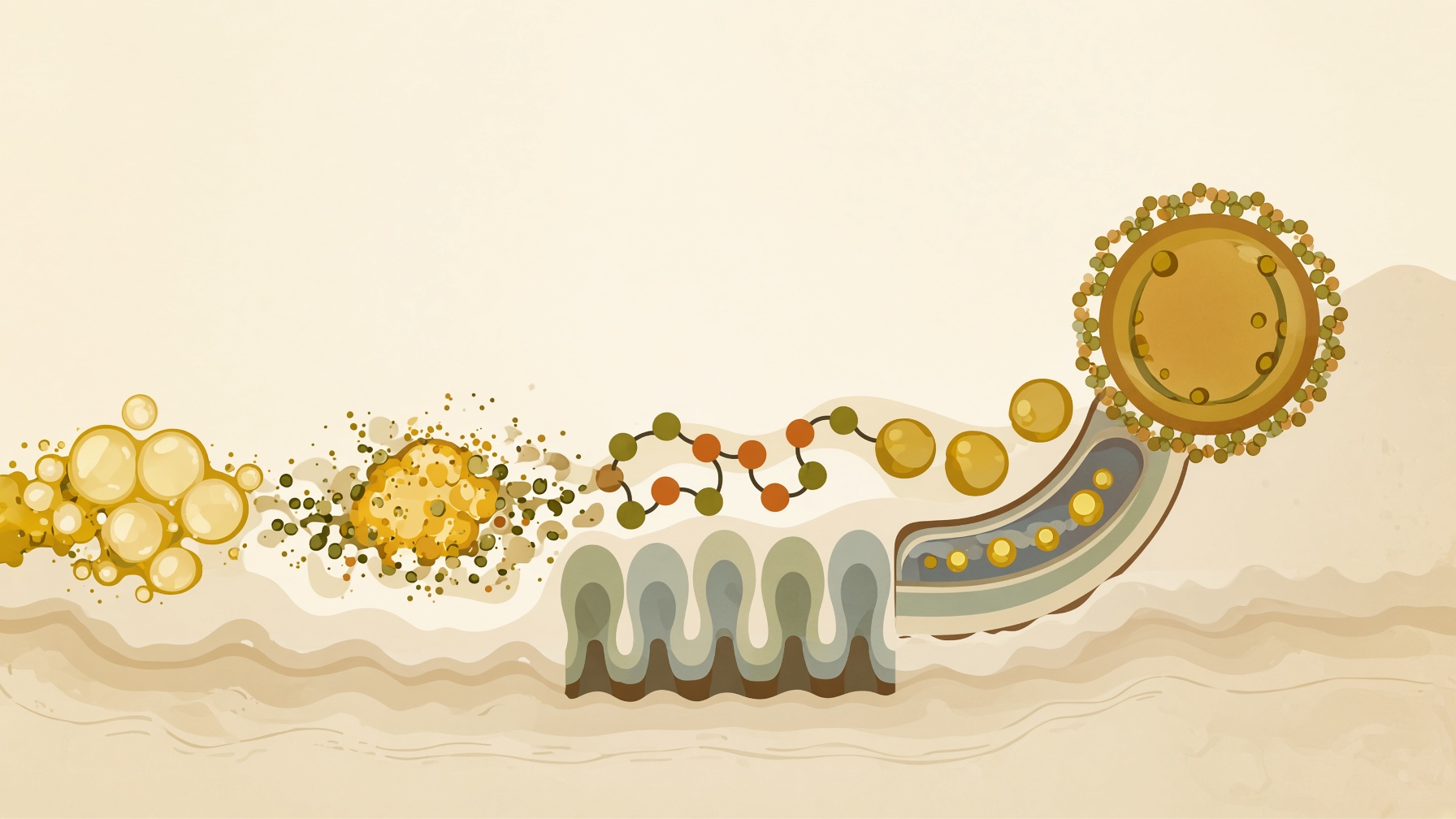
Dietary fat digestion combines physical dispersal by bile salts with enzyme breakdown, producing lipid components that intestinal cells can absorb.
Wikis
The lymphatic system is a network of lymphatic vessels, lymph nodes, and associated lymphoid tissues that helps maintain fluid balance, transport material from tissues, and support immune function. Fluid that leaves blood capillaries enters the spaces between cells as interstitial fluid. Some of this fluid enters small, blind-ended lymphatic capillaries, where it becomes lymph, and is eventually returned to the bloodstream .1,2
Lymphatic capillaries merge into progressively larger collecting vessels containing valves that help maintain one-way flow. Lymph is transported through lymphatic vessels, often passing through lymph nodes, and ultimately enters large lymphatic ducts that empty into veins near the junctions of the internal jugular and subclavian veins. Unlike the cardiovascular system, the lymphatic vascular network does not use a central pump equivalent to the heart. Lymph movement instead depends on mechanisms including contraction of collecting lymphatic vessels and external forces such as skeletal muscle movement .1,2
The lymphatic system also participates in immune surveillance. Lymphatic vessels transport antigens, immune cells, and other material from tissues to lymph nodes, where immune cells can encounter and respond to antigens. The lymphatic system therefore interacts closely with the immune system but is not simply another name for it .1
A specialized part of the intestinal lymphatic system is involved in dietary fat absorption. Lymphatic capillaries called lacteals within small-intestinal villi take up chylomicrons produced by enterocytes. These lipid-rich particles then travel through lymph before entering the bloodstream .1
From this collection
Dietary fat digestion combines physical dispersal by bile salts with enzyme breakdown, producing lipid components that intestinal cells can absorb.