
How Your Body Digests and Absorbs Dietary Fat
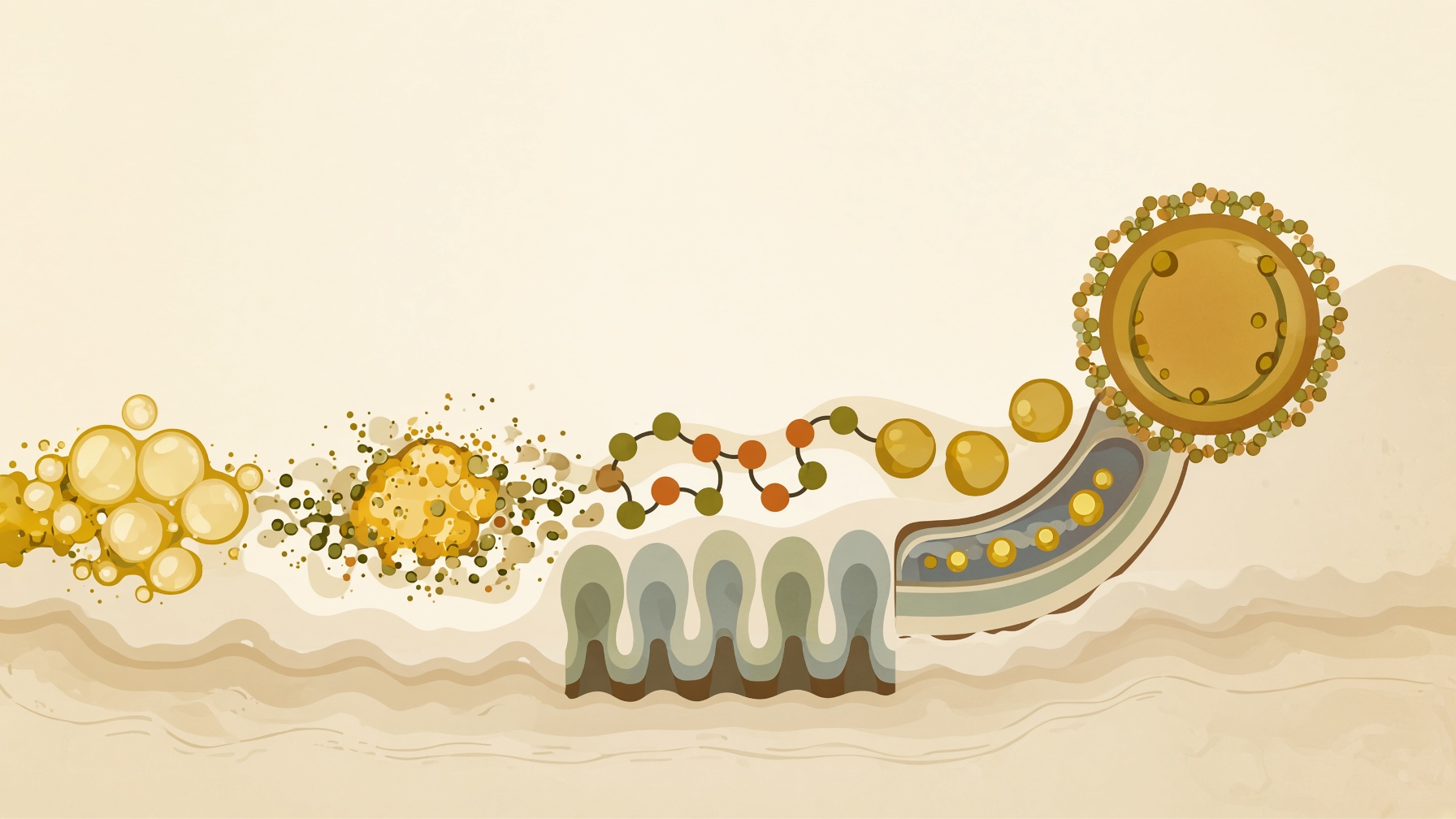
Dietary fat digestion combines physical dispersal by bile salts with enzyme breakdown, producing lipid components that intestinal cells can absorb.
Wikis
Mixed micelles are small, water-compatible aggregates that form in the small intestine from bile salts together with products of dietary fat digestion and other lipids. They commonly contain bile salts, fatty acids, monoacylglycerols, phospholipids or their digestion products, and cholesterol. They are called mixed micelles because they contain several different molecular components rather than a single type of amphipathic molecule .1,2
Bile salts contain both water-interacting and lipid-interacting regions, allowing mixed micelles to keep poorly water-soluble lipids dispersed in the aqueous contents of the intestine. During fat digestion, fatty acids and monoacylglycerols released from triglycerides can enter mixed micelles, as can cholesterol and products of phospholipid digestion .1,2
Mixed micelles help transport these lipids through the aqueous layer adjacent to the intestinal surface, bringing them close to the brush-border membrane of enterocytes. Lipid molecules can then leave the micelles and be taken up by intestinal cells. Mixed micelles therefore facilitate lipid absorption by improving the solubility and transport of poorly water-soluble digestion products within the intestinal lumen .1
Mixed micelles are distinct from chylomicrons. Mixed micelles form outside intestinal cells in the gut lumen and contain bile salts but do not have the apolipoprotein structure of lipoprotein particles. Chylomicrons are assembled inside enterocytes after absorbed lipids have been processed and repackaged, and they transport these lipids away from the intestine through the lymphatic system .1
From this collection
Dietary fat digestion combines physical dispersal by bile salts with enzyme breakdown, producing lipid components that intestinal cells can absorb.