
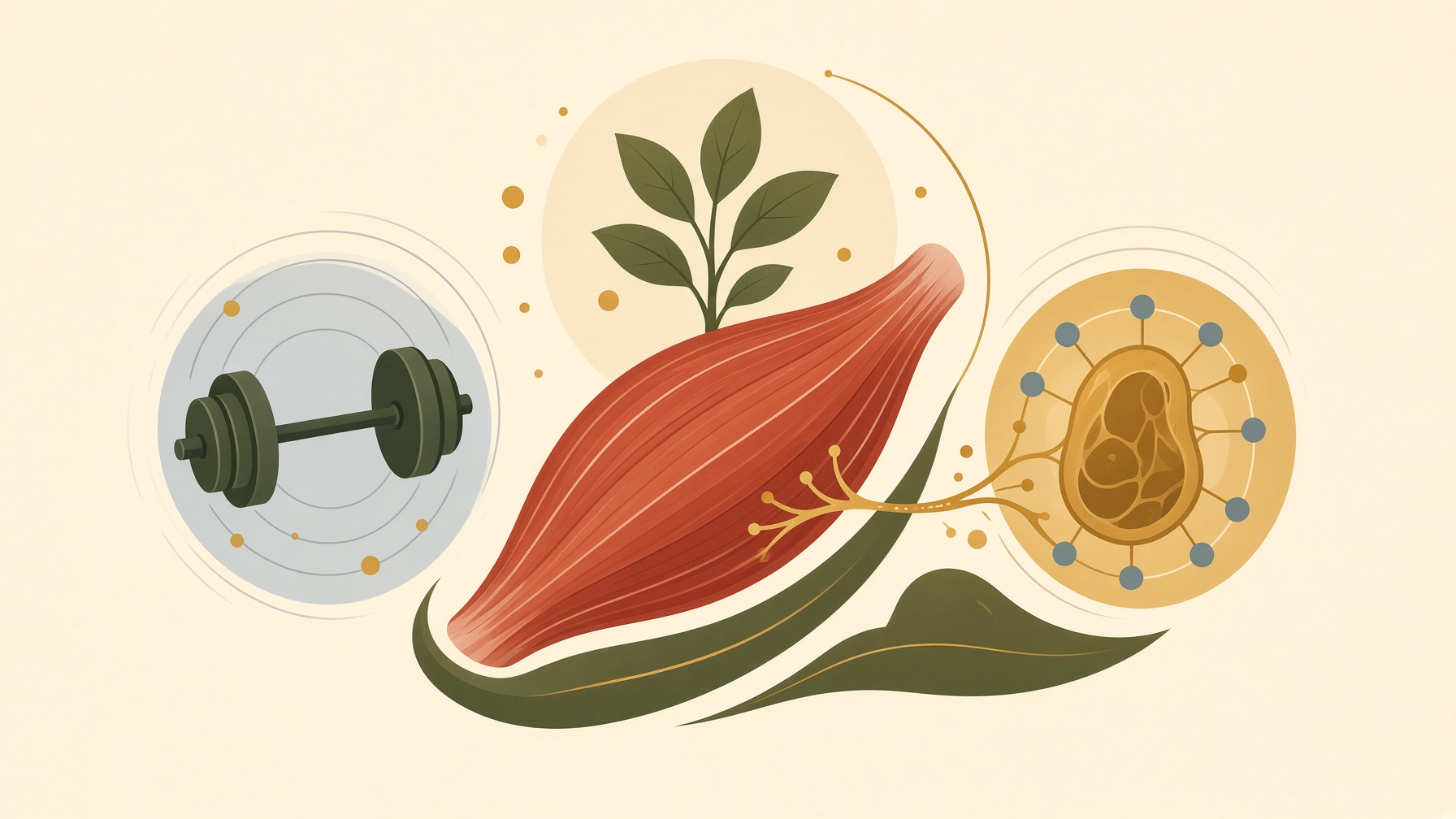
The Routine Feels Flat. Is It Still Building Something?
Repeated training can improve muscular performance and glucose transport capacity, with adaptations that differ from the response to one workout.
Wikis
Muscle quality describes functional or compositional features beyond muscle quantity, with measures that capture different aspects of performance.
Muscle quality is a broad concept describing how effectively skeletal muscle performs relative to its size and the biological characteristics that support that performance. In research, it is often operationalized as muscle strength or power divided by muscle mass, cross-sectional area, or another estimate of muscle quantity. However, there is no single universally accepted measure .1
Two people with similar amounts of muscle can produce different force because muscle function depends on more than quantity. Neural activation, muscle architecture, fiber characteristics, fat and connective-tissue infiltration, mitochondrial function, and other structural and metabolic features can all influence performance. For this reason, a simple strength-to-mass ratio captures only one aspect of the wider concept .1
Muscle quality should therefore be distinguished from muscle mass. Muscle mass asks how much muscle-related tissue is present; muscle quality asks about its functional or compositional characteristics. The term also depends on the outcome being studied, since a measure that reflects strength quality may not capture endurance, power, or metabolic function. Studies should state exactly how muscle quality was defined and measured .1
From this collection
Repeated training can improve muscular performance and glucose transport capacity, with adaptations that differ from the response to one workout.
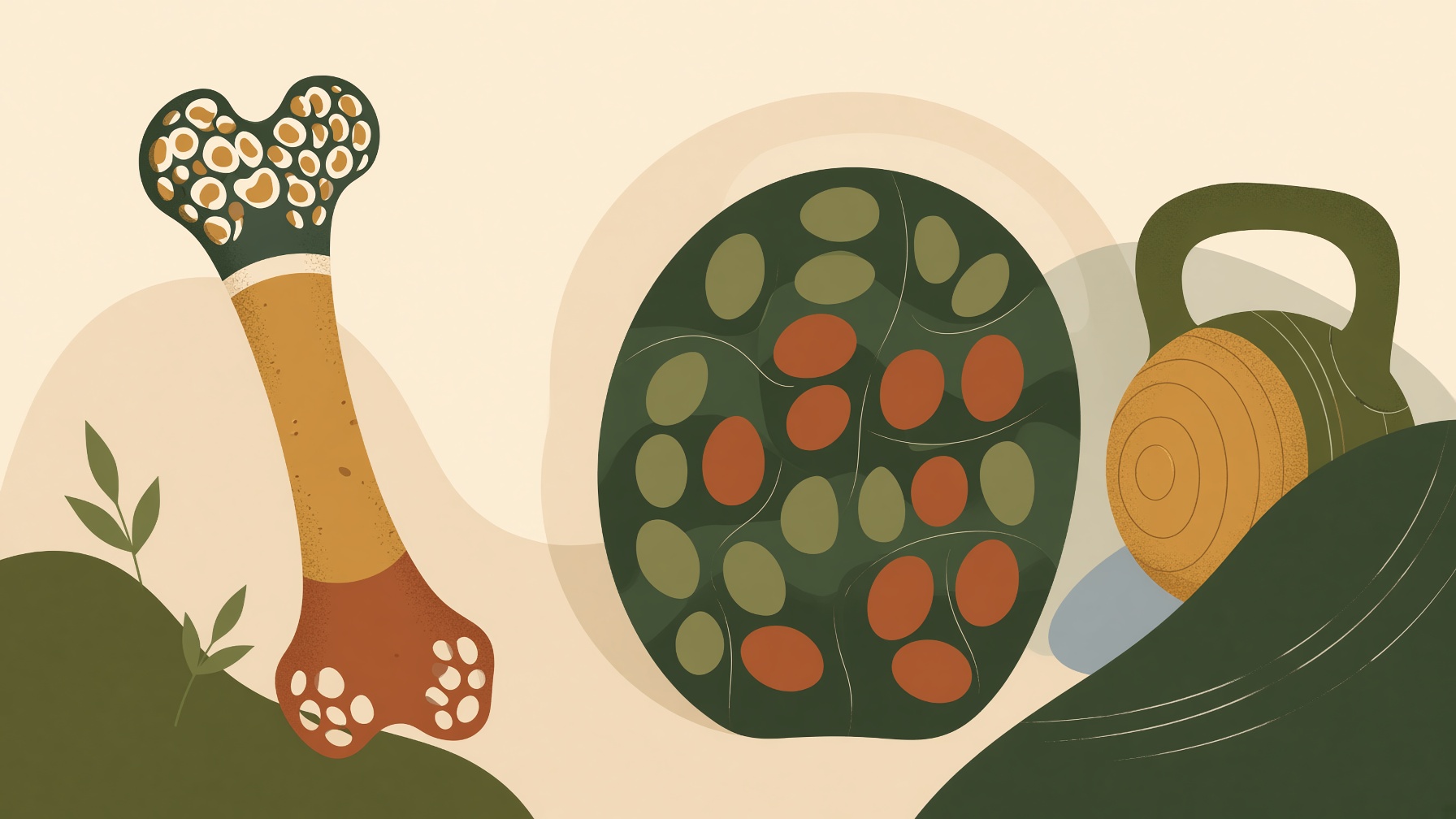
Exercise can improve bone density and muscle fat infiltration in studied groups, but these imaging measures describe different aspects of tissue health.
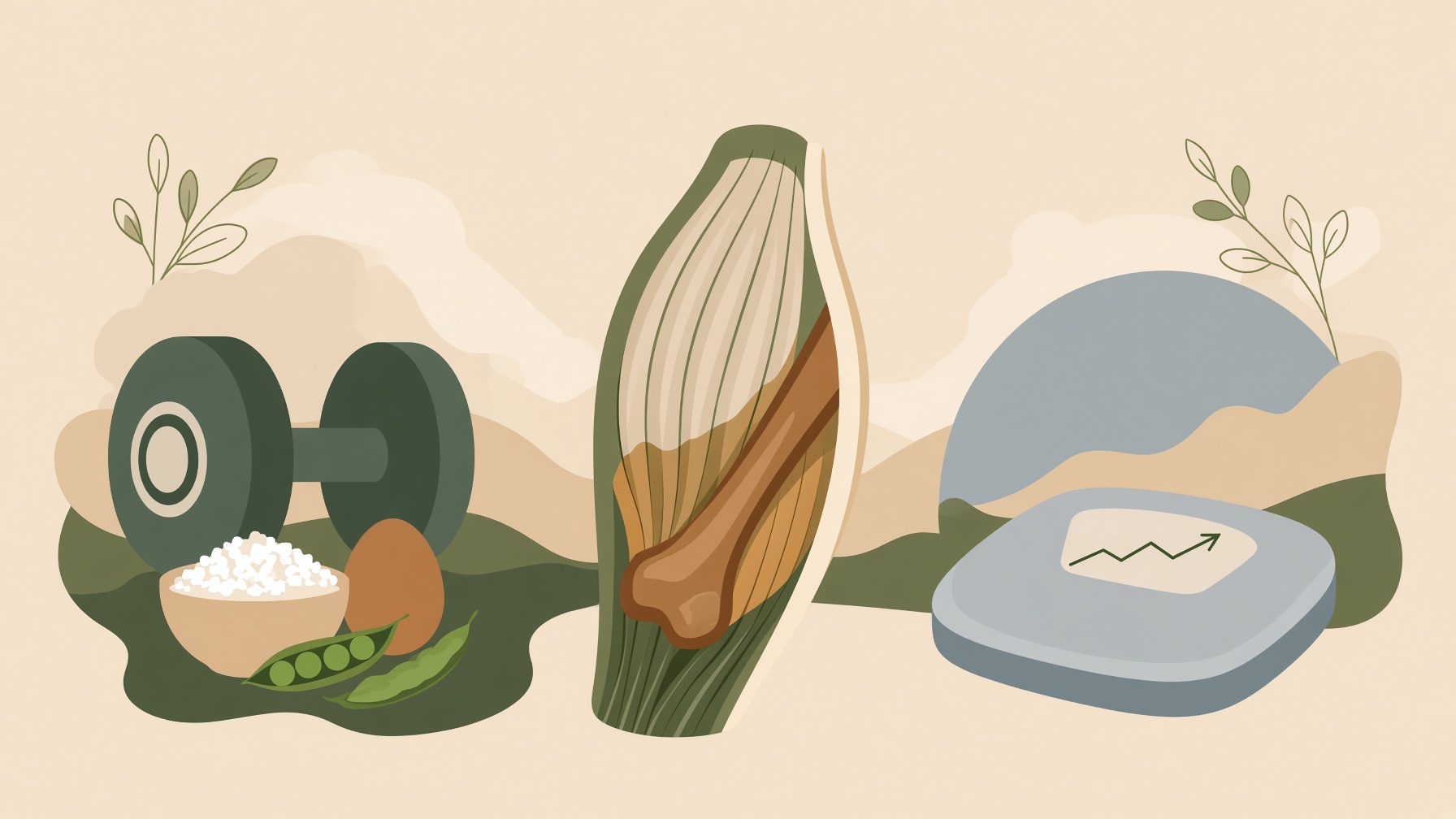
Midlife weight loss can include fat and lean tissue, so changes in body composition and strength provide information that scale weight alone misses.