
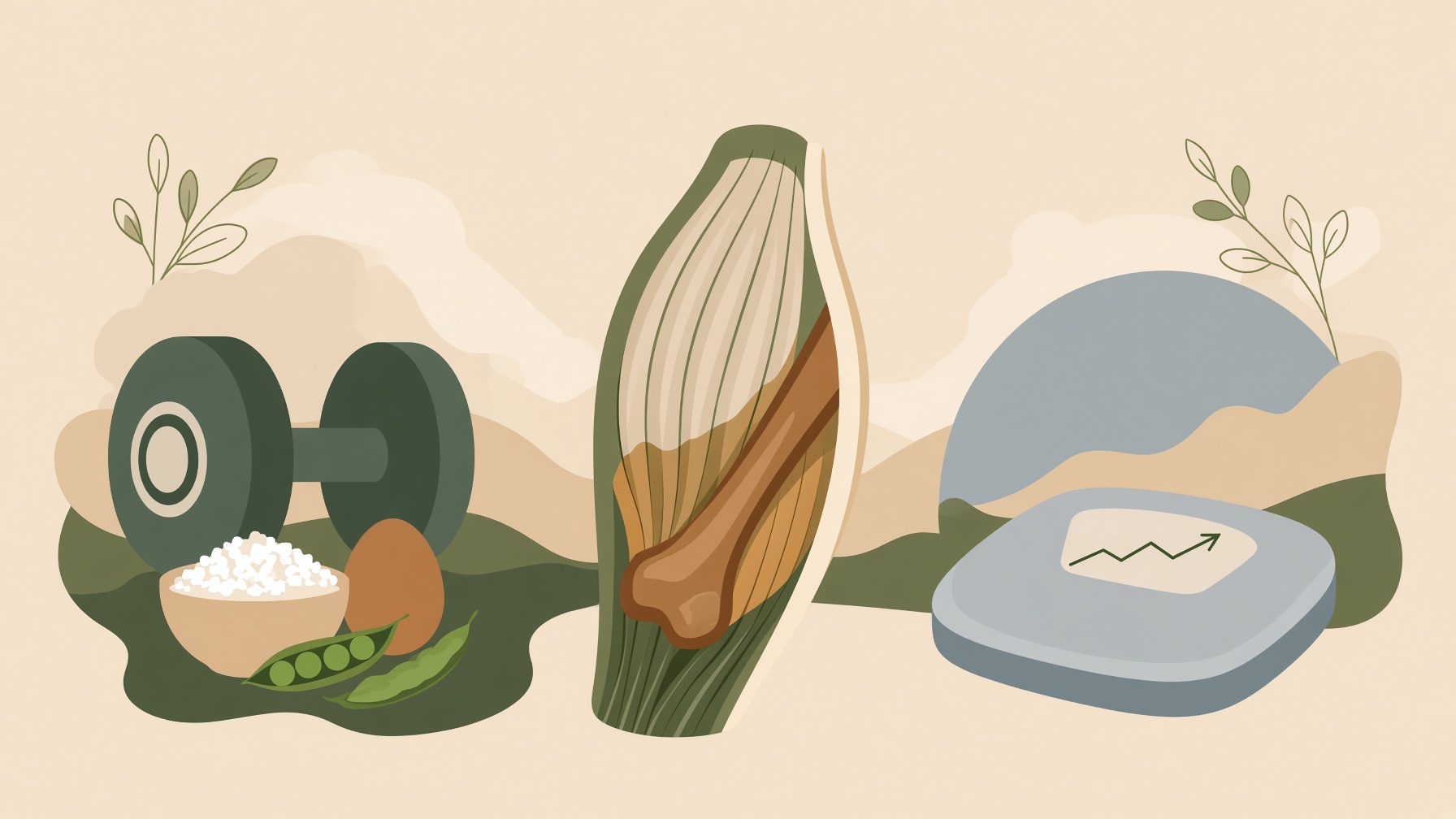
When weight loss is the goal, a lower number can feel like a complete answer. In midlife, though, you may care just as much about carrying shopping comfortably, keeping up with a demanding day or feeling capable during exercise. Those priorities deserve a place in the conversation before success is reduced to kilograms lost.
Body weight combines different tissues and body water into one measurement. Weight loss can include both fat and lean tissue, so the amount lost does not describe the composition of the loss. Lean mass is also broader than muscle alone; a measured change in lean mass cannot automatically be read as an identical change in skeletal muscle. That distinction is central when researchers evaluate weight-loss interventions. 1
A meta-analysis of 114 randomized trials involving people with overweight or obesity examined resistance-based exercise and body composition. Programs combining resistance exercise with calorie restriction reduced fat mass while largely maintaining lean mass on average. This does not guarantee preservation for every participant, and the studies covered a wider age range than midlife alone. It does show why exercise can change the interpretation of a falling scale reading. 1
Strength and function need their own attention. A review from the American College of Sports Medicine found that resistance training improved several measures of muscular performance and physical function in healthy adults. Those findings are not evidence that every person losing weight will gain strength, but they identify outcomes worth distinguishing from body size. A smaller body and a body that performs a task more easily are separate results. 2
Food intake is part of the same discussion. A review of weight-loss trials in adults with a mean age of at least 50 found that higher-protein diets preserved more lean mass than lower-protein comparison diets. The difference concerned average body-composition changes during energy restriction; it did not establish one ideal protein target for everybody. Nor did it show that adding protein alone could guarantee preservation of muscle function. 3
Faster weight loss is therefore not automatically the more informative result. Two approaches can produce changes on the scale while differing in how much fat and lean mass are lost. Evaluating that trade-off requires more than a weekly weight-loss total, and these studies do not justify a single “muscle-safe” rate for every person. Their contribution is to keep the composition of the loss visible alongside its size. 1,3
If your reasons for changing weight include feeling more capable in ordinary life, that is worth saying out loud. The goal can include the activities you want to keep enjoying and the kind of day you want to manage. A number on the scale can sit within that larger conversation without having to carry all of it.
Join the discussion
No account or email is required. Your display name and comment will be public.